Many symptoms. Many tests.

I’m going to start with the last things first:

In the next month, I am having a colonoscopy under anesthesia, a fluoroscopic barium defecography, an anorectal manometry, an ACTH (Cortrosyn) stimulation test, a transvaginal ultrasound, a thoracic MRI, skin prick allergy testing, a teeth cleaning and exam, an eye exam, and two blood draws. As well as trying to do IVIG every week and regular online doctors’ appointments.

What I really want to do is cancel everything, drive to the desert and live in peace.

The one thing I know for sure is that the more I rock this body’s boat, the worse things get, so I usually freeze and do nothing. But, lately, there seems to be a new mini-crisis most days, even though I took a long break from everything during the Omicron spike. It was lovely and peaceful for a while, but my body has been scaring me this month.

One day last week, my legs started to shake and then just buckled with no warning and I couldn’t walk. I had been moving a side table, so I guess I injured something, but I didn’t feel an injury, I just suddenly couldn’t walk and it is always in the back of my mind that I have a tethered spinal cord and leg/gait issues may get worse (many symptoms — like nerve pain — that could be attributed to tethered cord have gotten better, so I’m not convinced that “detethering” surgery is the answer for me).

Over the following days, unusual deep pain traveled from my buttocks to the back of my thighs to my left calf and then disappeared. During that time, I became desperate for a house with no stairs. I bought a bedside commode. I gave up a foster dog with whom I’d already fallen in love. Losing the limited mobility I have is terrifying. My husband would have to manage so much more and my quality of life would quickly plummet considering the energy it takes to keep my intestines working and food moving through. Not to mention losing dog joy, which is almost all joy in my world.

This week has been awful whack-a-crisis every day. Over the weekend, I was hit with terrible vertigo. This is one of the most sickening feelings — like your eyes are tumbling around in their orbits and you have to keep very, very still to stop from groaning outloud. It got mostly better the next day, but I still feel like I’m walking on a ship.

Monday, I had a pelvic spasm or bowel cramp so painful, I thought it was going to trigger a vasovagal collapse because I started to tremble and got weak and breathless.

Tuesday, I spent the day on the dog bed in front of the fireplace in a 76 degree room, shaking, chilled to the bone, with blood pressure all over the place, trying not to black out. I thought I’d left these episodes behind.

Yesterday, I developed an extremely bad right-sided migraine, which woke me out of sleep, panting from the pain and dreaming of IV narcotics — which I’m allergic to, but the pain was bad enough that I thought it wouldn’t matter if I stopped breathing, I’d let them inject anything to take the pain away.

So — it’s like that. In 14 days, I’ve gone on 3 scooter walks with Penny and I’m going out of my mind, desperate to get my slow, predictable days back.

In the midst of all this, I tried to continue weekly IVIG, which is undoubtedly the cause of some of this. I don’t know why it has turned on me and I don’t have words to describe the despair if I lose the one treatment that has helped me so profoundly.

I also saw another pelvic floor surgeon who was so rough while fitting me with a pessary, that I cried out involuntarily in her office. Her exam wasn’t even that bad in the grand scheme of things, but I was mute on the drive home, feeling traumatized by the brusque anal/vaginal invasiveness of it all. I only managed to keep that torture device inside me for 3 days because it made urinating very difficult. $100 down the drain and the only reason I was able to remove it was because I joined a FB pessary support group to get tips. Thank dog for other patients!

My biggest fear at the moment is the looming colonoscopy. I’ve been rescheduling it for 7 years. Before covid, I was cancelling out of fear — feeling the information gleaned from this test was outweighed by the risks. Just in the last 2 years, I’ve cancelled 8 times. They were legitimate reasons — covid spikes and my body being too unstable — but my GI doctor is frustrated and I still don’t feel confident that this is the right decision, even though it’s now 4 days away. My blood pressure is chronically low. I can’t get it to budge above around 85/55 — often lower. I wanted to try Fludrocortisone (a corticosteroid that can boost blood volume by increasing sodium in the body) before doing this procedure, but it takes me an excruciatingly long time to first get the nerve to try new medications, then to find a good day when I feel stable enough and then it takes weeks of eating little slivers to work up to a meaningful dose. It didn’t happen, along with dozens of other meds in my cupboard, waiting to be opened.
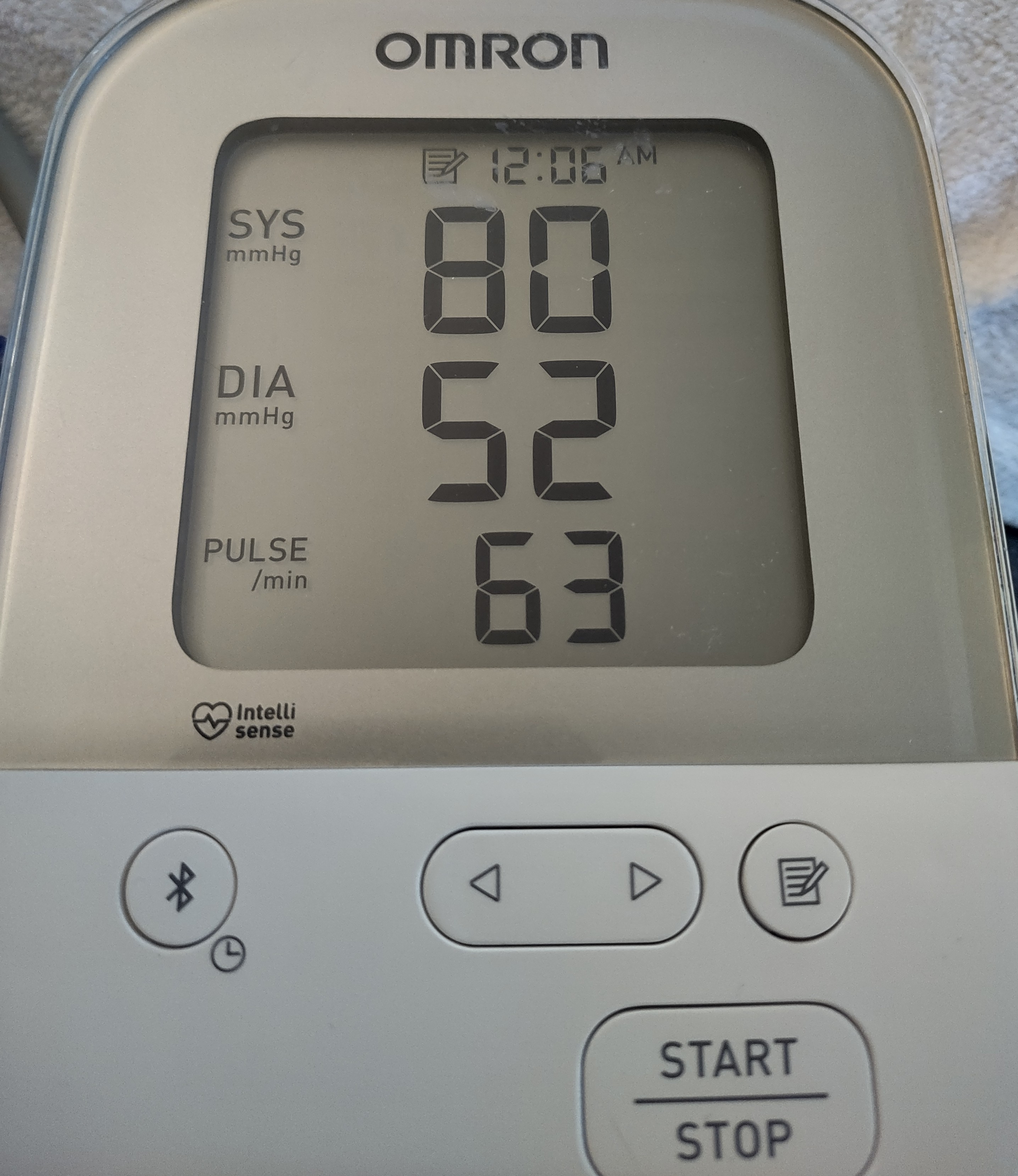
I was going to give myself IV fluids at home during the colonoscopy clean-out (I do my own peripheral IVs), but, in the last year, I’ve been having scary episodes and just this week realised they might be from IV saline. My vision starts to darken, like I’m going to black out, I get very cold and shake badly, my blood pressure spikes — this can go on for hours. It’s always the day after IVIG, so I stopped my infusions for 3 months, but then it happened when I did IV fluids without IVIG. I thought it must be the saline coupled with Midodrine, the low blood pressure medication I was on, so I stopped taking Midodrine and for 6 weeks, I was sure that was the answer. Until this week when it happened again.

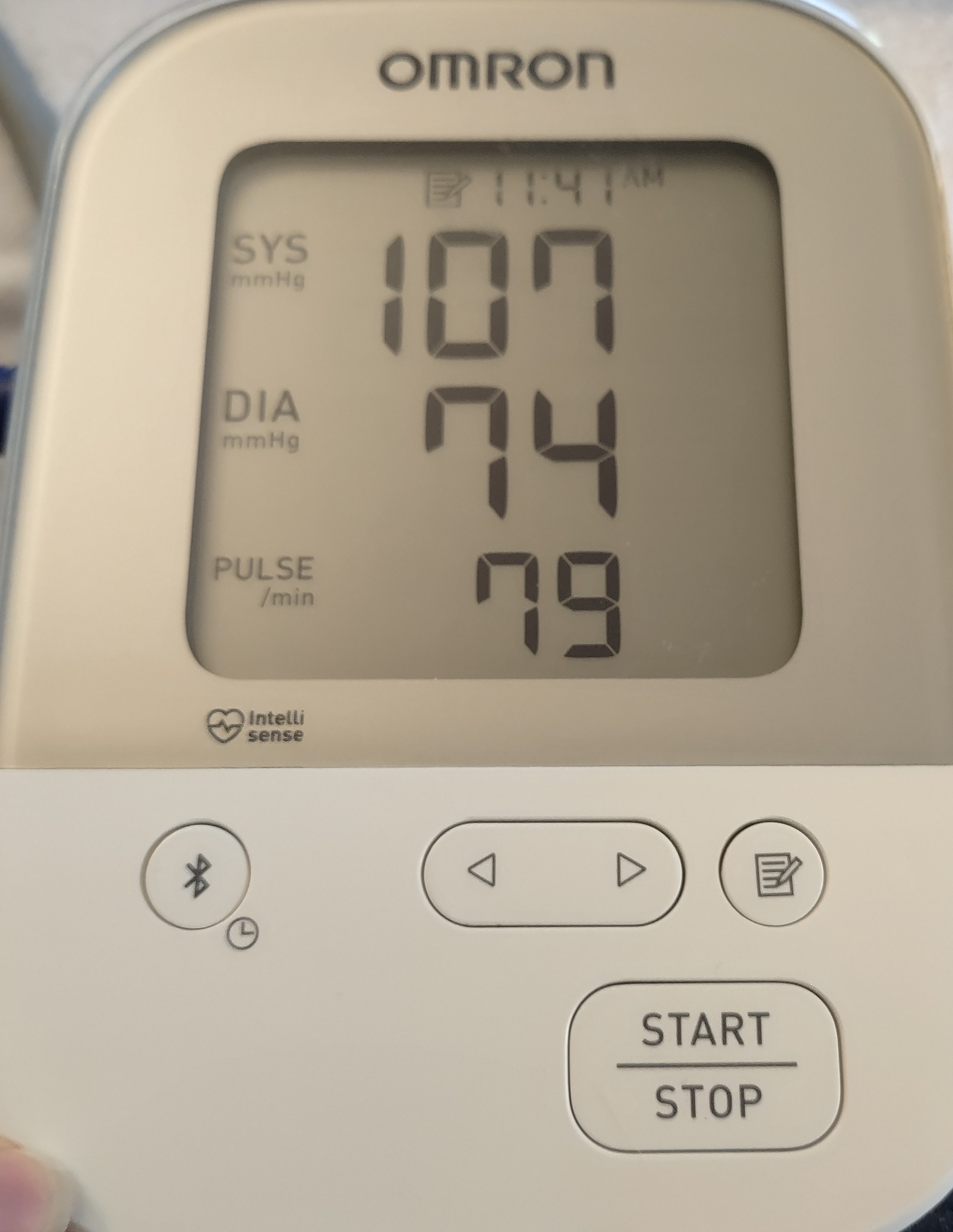
My blood pressure has been dropping very low during IVIG, so, on top of the liter of IV saline, I’ve been drinking around 3 liters of salt/electrolyte water on infusion days (and eating a ton of salty snacks). It didn’t help boost my BP during the infusion, but I had another one of those episodes the day after. It almost feels like volume overload because my eyes get swollen, my BP spikes and I feel breathless, but my “high” blood pressure is still low by other people’s standards. During this episode the other day it was spiking to 107/74. How do you explain to a doctor that you’re in a “hypertensive” crisis when your BP is still lower than normal?
So, I’m about to start a dehydrating colon cleanout when I’m already weak from chronic hypotension, hemodynamically unstable, battling presyncope, having pelvic floor spasms and bowel pain, prone to hypoglycemia, my heart is tripping all over the place, and my brain feels like it’s going to explode out of my right eye. If I get through the prep without having to call the paramedics, I’m then meant to volunteer to let a stranger inject powerful sedatives and painkillers into my vein and hope that I don’t go into anaphylaxis or have my vitals bottom out. Or catch covid, for that matter, since vaccination is too risky, yet I have a primary immune deficiency, which feels like the worst combination during a pandemic.

Being released from the hospital and coming home almost feels the most reckless because all hell breaks loose in my body AFTER the fact. It’s in the middle of the night or the day after that the adrenaline wears off and the real problems start. I wish they’d admit me afterwards for observation, honestly, but it would be ludicrous to even ask. These are routine procedures that everyone gets done, after all.

But it doesn’t feel worth it. It feels dangerous. Which is part of why I’m writing this, I guess. I got out my advanced directive and durable POA. FFS.

We also found out this week that my healthy rock of a husband has a brain aneurysm and will need surgery. Surprise! That’s a story for a different time. But, really, forget all of my stuff. If anyone out there is going to send good thoughts/juju/prayers this way, please send them directly at my husband’s brain.
In Amber

A DECADE

A decade since I felt well.

A decade since my body and health were not on my mind. 

A decade since my last cold, flu or bronchitis.

A decade since my last vaccination.

A decade since I enjoyed Halloween, my favourite holiday.

A decade since I was in a lake or ocean.

A decade since I was on a train.

A decade since I stood up at a concert.

A decade since I didn’t wear a mask on a plane.

A decade since I went to a wedding.

A decade since I went to a barbecue.

A decade since seeing so many friends.

A decade since I married my longtime boyfriend because “I feel like something is going to happen to me and I want you to be able to legally speak for me, if I can’t speak for myself.”

A decade since I was in Ireland, in my childhood home, walking the streets of my heart.

I thought about this anniversary so many times in the past. For a long time, I thought there was no way it would come–I couldn’t possibly stay sick this long. Every other illness had a beginning and an end, so, surely, one day my body would recover and this spectre would leave, it was just taking a little longer than the usual virus.

Once I realised it was lifelong, I thought the 10-year mark would be a momentous and heavy occasion. It turns out, it’s not. 2 years seemed much harder to accept. Back when isolation was still harrowing and loneliness still suffocated. You get used to both. It helps if you can develop a deep disdain for humans, so you can trick yourself into believing you’re not missing out on anything. And the 5-year mark was hard. I’d felt small, but miraculous changes from IVIG and then had an epic autumn backslide that year. The dowsing of that little flame of hope was devastating and it was inconceivable that I would be physically or mentally resilient enough to continue the maybe-I’m-getting-better!-Oh-no-what-fresh-hell-is-this? cycle for years to come.

But, then, suddenly, 10 years have passed. I could almost believe the rest of the world is trapped in amber, frozen in time, awaiting my return. As soon as I kick this thing, I’ll drive back down to the office–each street scene melting and returning into motion as my car passes by–and get back to work. Thanks for waiting, guys.

INFECTIONS

What’s far more unbelievable to me is that I haven’t had a muggle illness in a decade. [Please don’t let this jinx me.] No head cold, no flu, no stomach bug, no chest/ear/sinus/bladder/any-other-part-of-the-body infection. The more time that went by, the more ominous was the thought of contracting an acute virus. For years, I had relentless flu-y symptoms–headaches, sore throats, muscle pain, weakness, chills (and still do, sporadically)–and I have many high out-of-range infection titers*, so the thought of another malady compounding the daily slog was harrowing.

*HHV6 IgG; HSV IgM; EBV IgG; M Pneumoniae IgG; S. Cerevisiae IgG; Varicella IgG and IgM; Coxsackie A7, A9, A16, A24, B1, B2, B5 and B6; Anti Streptolysin O Titer, and Candida IgM and IgA. Yes, really.

Three years into my illness, Dr. Chia told us unequivocally that a run-of-the-mill cold could make me permanently worse, so we have always taken great precautions to avoid exposure, which have only intensified during this pandemic. I honestly wonder if I’ll ever be indoors and maskless with anyone besides my husband again. Even worse, will my husband ever be indoors and maskless with anyone besides me? It’s one thing to choose this life for myself–I’ve made peace with only having remote communication with friends and family; I have a partner and a dog to keep me sane–but my healthy husband’s life has shriveled to keep me safe and the guilt from that is indescribable. I imagine if he weren’t yoked to someone at such risk for serious complications from viruses, he might be out gallivanting and socialising, as well he should be.

VACCINES

One of the first doctors I saw after falling ill said, “You are very sick. We don’t know what’s wrong with you, but you should never get another vaccination as long as you live.” I was confused because, until that moment, I hadn’t linked whatever this sickness was to the flu shot I’d gotten a week before Halloween. I was also confused because, in my healthy ignorance, I thought vaccines only bolstered your immune system. I really didn’t understand, in certain unique circumstances, that they could break it. I used to get every immunization available in an effort to protect myself.

Before I traveled to Central America, I was vaccinated for polio, live typhoid, hepatitis A and B, tetanus, diphtheria and gammastan–all on the same day. In the years after, I got the live varicella vaccine, the 3-shot hepatitis B series, measles, mumps, and rubella and, of course, the flu shot every year, along with a pandemic flu vaccine (H1N1) when they were offered. I didn’t get majorly sick while traveling, I didn’t get chicken pox when I tended to my horrifically poxy husband and I never got the flu despite working very long hours in restaurants, among infectious people (note to the public: restaurant staff work when they’re sick; you have to be on death’s door to ask someone to cover a shift), so I guess the vaccines helped… until they harmed.

COVID

There’s such polarization these days when it comes to covid vaccines. There’s a lot of hatred directed at those who are trying to protect themselves and others by getting vaccinated and wearing masks and there is an equal amount of contempt directed at anti-vaxers. I have yet to see a single news story talk about those of us who want to get vaccinated, but cannot. Or those of us who have to make the agonizing decision to live a life of extreme isolation or risk very serious repercussions from a vaccine–any vaccine. I wish individuals would always take the collective into consideration and try to protect those that are vulnerable, but that’s not human nature, unfortunately. People will refuse vaccinations or not wear masks or not get tested because they don’t want to quarantine. And, all the while, those of us with weakened, damaged or overactive immune systems–be it from chemo or old age or autoimmunity or ME/cfs or steroids or stress or another condition–will have to choose seclusion over risk.

Against one of my doctor’s advice, I will be getting the first covid vaccine next month–but I’m getting a pediatric dose. We will see how I do and then I’ll get a second dose and test antibodies. They will be keeping me for observation in the clinic for an hour because of my history of anaphylaxis, but that’s not what I’m worried about.

I’m worried about being bedbound again. I’m worried about volunteering for an injection that could further damage my autonomic nervous system and intensify dysautonomia and hyperadrenergic symptoms. I’m worried about triggering more vasovagal collapses or making myself more hemodynamically unstable. I’m worried about a cytokine storm and/or a mast cell meltdown that creates a permanent worsening of reactivity when I’m already so limited in medication options and trying so hard to keep on weight. I’m worried about a blood clot causing sudden death because IVIG, oral hormones and inactivity already put me in a high-risk category. I’m worried about losing the limited amount of independence and mobility I have now (but it’s enough for a happy life) and becoming too weak to even wash my hair again. I’m worried about being that burden to my husband again, especially now that it takes so much work to make my GI tract function–it would be a monstrous task for him to take on. Mostly, I’m worried about once again losing the small joys, like taking Penny on our scooter walks, being able to talk on the phone for hours and laughing. I spent years without those gifts and I’m not sure I can claw my way back over another decade. 

It feels good to write out those fears. There are very few people with whom I can have these discussions because not many healthy friends understand the risks involved when dealing with such complex conditions. Everyone in my family has had at least 2 covid vaccinations with no side effects, but, in my support groups, it’s a different story. Even there, though, I am careful–I want everyone to get vaccinated, if they can safely, and I never want to dissuade others by voicing my concerns. And doctors aren’t much help because the vast majority take the practical stance that, statistically, the chances of negative repercussions are low and that the risks outweigh the benefits. That’s absolutely true for the typical bell curve of the typical population. Not true for me.

Let’s just hope it’s all smooth sailing. I’d like the next decade to be different.

Update: My doctor pretty much talked me out of getting the C vaccine. I’m too high-risk for long-term reactions. I’m going to have to get surgery next year, so not being vaccinated in a hospital setting adds another layer of fear, but I won’t be stable enough for surgery if the vaccine caused damage. So I will be remaining in strict isolation and putting my life in other people’s hands.

Title Credit

what is and what should never be

Yesterday, I was in a very dark place. I was (and am) beaten down by relentless bowel symptoms that eclipse all others and continue to monopolize every day.

What food to buy, how to prepare it, when to eat and * whether to eat it, how much to eat and how much to blend it, what digestive aids to use — bitters, ginger, HCl, enzymes, castor oil, Digest Zen, massage — how to move it through, what medications to take and in what combinations, at what times, how to ameliorate the side effects, how to improve my bathroom situation — padded toilet seat, squatty potty, head rest, neck brace, lubricant, pillow — worried that I’ll be an 80-year old trying to get up and down off the floor to give myself enemas, worried that my husband will be giving me enemas, scouring support groups, researching surgeries, praying for someone to cut out my colon and replace it with a bag… Fearing that this will kill me. Or that it won’t and I’m trapped in this body with no easy exit.

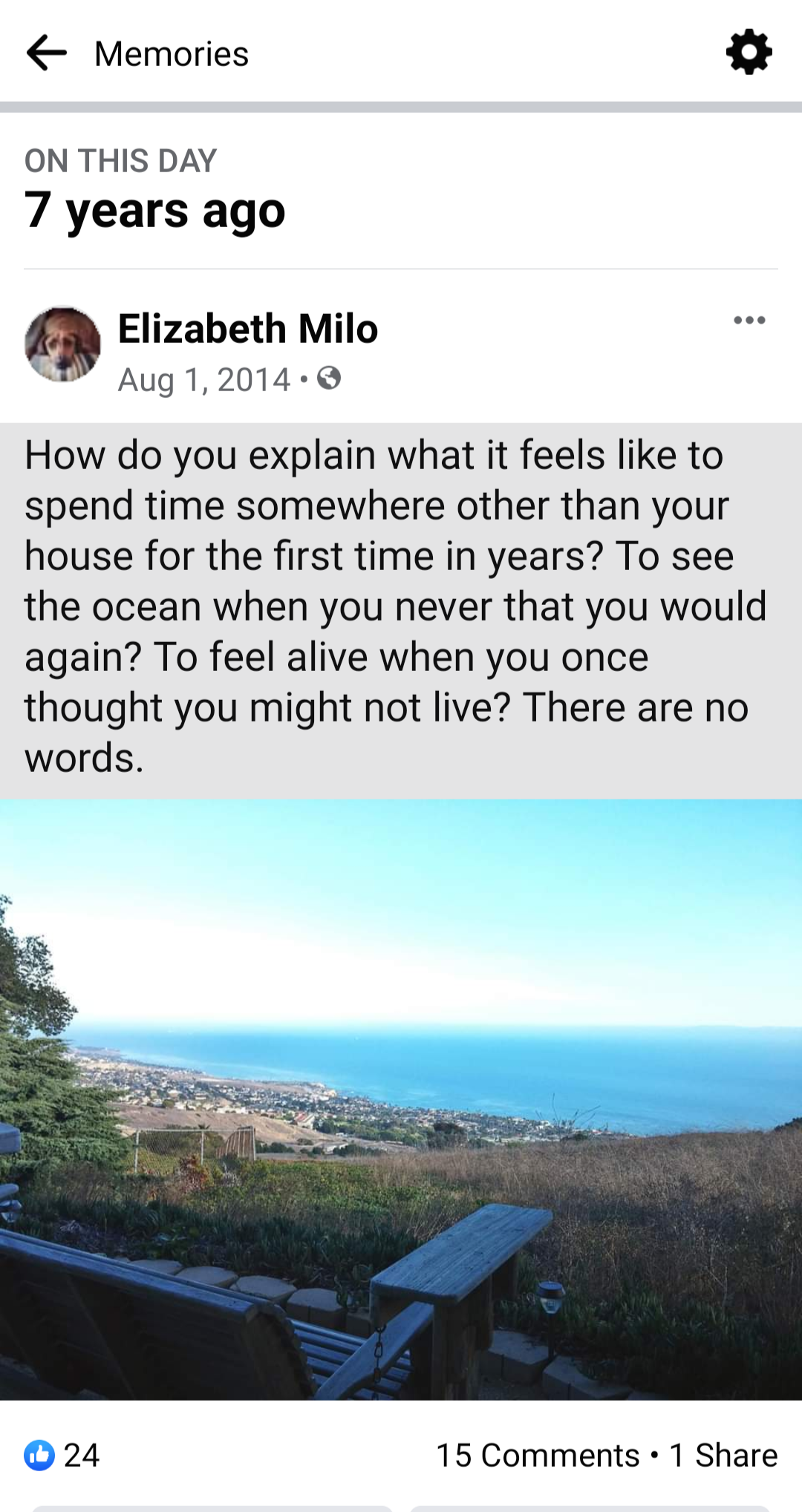
Today, I saw this memory and it immediately brought tears to my eyes. At this point, I’d been sick for almost 3 years and mostly bedbound for almost 2. I was so, so sick. I shudder to think of it. Sure, I could still eat solid food and poop, but only if I managed to get up and leave my room. They were the most terrifying years of my life. A privileged “terrifying,” I realised even then — I had family, a home, resources — but gratitude didn’t quash the symptoms, fear and confusion about what was happening to me.

It took Herculean efforts on the part of my mother, husband and friends to get me to California to see Dr. Chia (where I took this photo) and it felt like the effort might kill me. But the emotion from seeing the ocean when I truly thought I never would again (shit, even the feeling of seeing Seattle as we drove to the airport) was completely overwhelming and magical. And, also, very sad because I didn’t know how or if it could happen again.

Anyway, I needed this slap in the face today to remind me of what was and what is no longer my situation. My illness now is structural and neurological. It’s just as scary and uncertain, but I can take my dog for a walk with my mobility scooter and cook some soup and talk on the phone and watch a movie. Without a pandemic and if my gut behaved, I could even have a social outing.

From 2012 through 2015, I white-knuckled-it through every single minute of every single day, concentrating on taking the next breath and making it to the next hour. I still find it exhausting trying to keep my body functioning, but it did get better, just like my Mom told me it could. I’d once had a rare better day with less poisoned pain, fewer flu symptoms, an uptick in energy and she said, “If it happened once, it can happen again. And for longer.” I clung to those words like a drowning person, trying to swim up towards the light.

For everyone in this situation, for people with severe ME, for all the long covid patients, it does get better. Or, at least, things will shift and change. Grab hold. Hang on.

Title Credit

Pandemic MRI Tips

Wednesday night, I spent 3 hours in an MRI tube getting brutal imaging done of my brain and cervical spine. In general, I actually enjoy MRIs — I find them soothing and almost always fall asleep (the keys to making it relaxing are really good earplugs and eye shades that you never take off) — but the majority of the scans I had done the other night were in extreme flexion and extension of my neck, so it was very uncomfortable. I didn’t get home until 10:30pm.

I’ve already seen the radiology reports and they’re not great, unfortunately. I hoped things would be stable, but there are further degenerative changes to my cervical vertebrae with herniations impacting my spinal cord. More concerning to me is the lack of CSF flow in my cerebellum (posterior foramen magnum) is still noted (was first seen in a previous CINE MRI two years ago) and now there also is restricted CSF flow in the cerebral aqueduct. This is probably being caused by low-lying cerebellar tonsils, which is probably being caused by my tethered spinal cord pulling down on my brain stem. It’s overwhelming. But more on all that some other time.

I had some thoughts about managing these sorts of tests, especially with covid concerns. I’m unvaccinated (inching closer and closer every day to taking that gamble, though), so it was especially nerve-wracking as I pictured Delta shedding off the MRI techs in thick clouds (during those 3 hours, they probably spent a total of about 20 minutes standing a foot or less from my face as they had to add and remove bolsters and adjust me in different ways. They were both wearing very flimsy surgical masks, like limp paper towels. No well-fitting N95s here. Shudder).

I should have asked the techs to back up because they really didn’t need to be so close, but… well, it’s complicated. It comes down to the really embarrassing fact that I think I’m trying to be liked. A people pleaser. I expend an enormous amount of energy during appointments because I always wind up chatting and making jokes and acting normally due to adrenaline surges. And, in this case, because I am so bloody complicated, I tried to be easy and low-maintenance when I was in the hospital.

The lead tech went to unbelievable lengths to help get these MRIs approved and executed properly. He talked to my neurologist, he got the appointment moved to the Northwest campus, he emailed me updates, he let me fax the orders and doctor’s notes to him since they were having such a hard time getting my doctor’s clinic to do it. He left his shift at the UW Medical Center and drove across town to do my scans (at night) to make sure they were done properly (which was good because the other tech had never seen anything like them — we did a dynamic motion series, which involved moving my neck/head fractionally from full flexion into full extension, stopping 16 times to hold still for an image to be taken).

The imaging orders took over a month to be written properly and get approved (one of the schedulers was almost in tears talking with me. She said, “I told my supervisor: ‘We need to get this done! Our motto is patients first. Help this woman!’ I was shaking!”), so the upshot is, I didn’t want to cause waves or be a pain in the ass by asking him to step way back. Really hope that decision doesn’t give me covid. But I’d already told him my immune system was compromised and I was unvaccinated, so I guess he must have been pretty confident that he was not asymptomatically infected. I’m feeling weak-willed, though. I advocate for myself at every turn and then I don’t make sure we’re distanced? Ridiculous.

Back to the reason for this post:

Oh, wait! I had the craziest thing happen. The tech stopped the imaging at one point and said, “There’s something metallic in your armpit area. Can you see what it is?” HUH?

I have my eyeshades on, so I can’t see and I’m fishing around in my armpit and I find a little metal stick. “What is this??”

The tech has come into the room and he says, “It’s a bobby pin!”

“But I don’t wear bobby pins, I swear!”

And he says: “Oh, you know what, there’s a chest pocket inside the scrubs we gave you because they’re reversible, I bet it came through the laundry.” WTF?

Sure enough, there’s a little pocket and I guess the bobby pin was sucked out of it and into the armpit of the scrubs by the giant MRI magnet.

And then what do I do? I drop it, thinking it’ll just fall on my stomach. Not sure why I did that, but I hear him say, “OH NO, DON’T” and, in a flash, the bobby pin has bulleted straight into my face. It stuck to my chin by one end, the length of it horizontal to the floor, like a teeny arrow. WTAF?!

It didn’t hurt because I had a mask on, which cushioned it, but I had no idea everything was so magnetized when the machine wasn’t taking images. I couldn’t help thinking: What if my eye shades were off and it had torpedoed into my eyeball?! Jeesh. Luckily, we all got to laugh about it.

Ok: 

Here are my top tips for getting an MRI during a pandemic when you’re unvaccinated and your immune and autonomic nervous systems are haywire:

* You can’t have metal in an MRI machine, which means removing the nose piece from most masks. I didn’t want to wear my Cambridge or Airinum masks because I wanted something disposable (albeit an N95 rather than the equivalent of an N99 in the case of the cloth masks). I taped the mask all around my face with paper tape because, without the nose piece, it didn’t fit well. The paper tape was a bitch to get off and stretched my skin off my face alarmingly, but, hey, better than covid. I had a face shield, but didn’t wind up wearing it since I had to take it off as soon I got in there. I also put a surgical mask over the N95, which was undoubtedly useless, but I felt better “double masking.” These N95s are legit (I called the company, Kimberly-Clark and they gave me the Amazon link) and even though the duck bills look silly, they are much easier to breathe in. After being in the MRI tube for so long, I was really happy not to have one of my heavier reusable masks on. 

* These are the other precaution suggestions I’ve collected over the past year: Some ME doctor (Klimas?) said xylitol nasal sprays can help in a protective sense before possible exposure and saline nasal rinses might help afterwards. I also bought Nasal Guard (a gel that you put around your nostrils and mouth that might catch allergens/germs before they enter your airways) and Nasal Screens (little sticky “filters” that cover your nostrils). You could also use WoodyKnows filters, but I can’t seem to get them to stay in my nose. So, during my MRI, underneath the taped-on paper N95 mask, I used the nasal screens and gel.

* Make sure to bring good earplugs. They have some for patients, but a) who wants to use the hospital ones? and b) they are never good enough. I like these chunky foam ones that expand to totally seal my ear canals. They don’t cost much for a huge box (I wear them to sleep) and I cut the ends off of them, so it’s not sore sleeping on my sides. Make sure you know how to insert earplugs. I literally needed a lesson: roll them in between your fingers until they’re as skinny as possible and then put them into your ear (you can pull down on your earlobes to get them further in) and then gently press the outside to keep them in place as they expand. These changed my sleeping life. After hours, the pressure inside the ear canal can get sore, but your ear toughens up pretty quickly if you stick with it. Anyway, they are a necessity in an MRI because the headphones do sweet FA. Plus, in my case, I couldn’t wear the headphones in any position except neutral. 

* I usually bring my own eye shades, but because of covid, I used theirs, which are in a plastic bag and disposable. They smell new-plasticy/nylony, but, with my mask on, I didn’t notice. Like I said, put them on before you’re moved into the MRI tube and then DON’T TAKE THEM OFF. You don’t want to see how close the antenna (face cage) or the walls of the tube are to your nose. It breaks the “I’m fine” spell and can freak you out. MRI machines these days are pretty roomy and they have cool air blowing, so you really wouldn’t know you’re in a restricted space as long as you don’t look. (Another tip: you can ask them to turn the blowy air up or down.) I had to move the padding under my head and shoulders over and over again for the different positions and my elbows kept hitting the walls of the tube, which is a sure way to break the spell that you’re lying on the beach, just fine. Luckily, I don’t have claustrophobia. For the dynamic scans, the tech asked me to just leave my arms above my head, which was the only time I felt slightly unnerved because it was so cramped (back arched, neck in extension, arms above head, but not too bent because he didn’t want me to touch the tube and create some sort of looped current or some shit. Yikes).

* If you’re getting an MRI, ask for it to be done on a 3T machine, so you have the best quality images and don’t have to redo them.

* If you’re getting a supine cervical MRI ask to add in flexion, extension and rotation, so you (hopefully) don’t have to do an upright MRI (agony), which the tech called “garbage” since they are done with a 0.6 Tesla magnet (most neurosurgeons prefer 1.5T or higher).

* Find out the location of the 3T machine. In my case, I could get them done at a company called CDI, which is right by my house and it’s inside a small imaging clinic versus a hospital (less covid risk). But, it turned out, the 3T machine was in Bellevue (much further away from me) and would involve my husband taking the day off of work and sitting in a lot of traffic etc. I was switched to the University of Washington Medical Center, but the radiology suite is a long walk through a big hospital and would, again, necessitate my husband leaving work (and expose himself to covid risk) because, although I could probably drive there myself and walk to the MRI, I didn’t know how the flexion and extension would hurt my neck or exacerbate my symptoms and there was a chance I wouldn’t be able to walk back to my car and would need a stranger and a strange wheelchair. Or I might not be able to drive myself home and would be forced to get an Uber. Hell no. Ubers were bad before covid.

More importantly, the other location option — UW Northwest — is a few minutes from my house and I already know that the 3T machine is in a quiet building, separated from the hospital and that the MRI room is literally a few steps down from disabled parking, which is always empty. It’s a small suite and it’s always been just me and the tech every time I’ve been there. Last time I had an MRI at the big UW Medical Center, there were dozens of people teeming around and I had to wait for over two hours because of a backlog of scans. 

* Ask for an appointment on a weekend and/or the first appointment of the day and/or the last appointment of the night to avoid humans.

* After you check in, wait outside, if you can. For those in my area, this is really easy at Northwest Hospital. They just pop their head out the door when they’re ready and I’m right there at my car.

* Wear hardly anything. I left everything I possibly could at home. Jewellery, purse etc. I only brought my phone, hand sanitizer and my emergency MCAS stuff that I bring everywhere. I wore nothing but underwear, a long skirt pulled up to be a “sun dress” and shoes.

* If you are getting any imaging done that involves different positions, bring something for support and bolstering of your skull and neck. I brought a big pile of washcloths from my house so I wouldn’t be using the hospital’s foam wedges. I rolled them under my head and neck to help with the flexion and extension images and under the sides of my face to give support when my head was in rotation.

* Ask the MRI tech to let you know in advance how long each sequence will take and whether you can move and adjust yourself. It can get sore staying so still, but every time you move off of the mid-line, they have to recalibrate the machine with a “scouting series.”

* Pretend you’re in a medical pod and the MRI is healing you. I usually drift off to some sci fi place, imagining all the blerp blerp blerp gramma gramma gramma patel patel patel noises are curing my disease. 

* I bagged the washcloths and my clothes when I got home so I could wash them later and took a shower. I also sprayed alcohol on my shoes and backpack. Oh and I used mouthwash for the first time in a decade and just hoped that I didn’t have some weird reaction to the alcohol/flavourings/colourings (I didn’t).

What I did wrong: I didn’t eat and drink enough before leaving. Everything takes longer than you think it will, it seems, and with a taped-on mask, there was no sneaking a lozenge or anything. I was parched and ravenous and wound up eating dinner at 11:30pm.

20-year An(aphylaxis)iversary

20 years ago today (I started writing this on May 27th), I stopped taking health for granted. It would be another decade before life as I knew it abruptly disappeared with the collapse of my immune system and the descent into severe ME/CFS, but this day in 2001 was the beginning of the end of health ignorance and body confidence.

My husband and I were at my friend’s birthday party, sitting at an outdoor table in the dark, chatting, drinking beers, smoking cigarettes. My breathing started bothering me to the point that I mentioned it to my boyfriend (at the time). He put his ear on my chest and said he didn’t hear anything abnormal. But that’s why it got my attention — I’d had many, many chest infections and asthma issues in my life, but this was different, this was like a vice around my lungs. I was smoking, though, so it was easy to explain away. And I was drinking, so I didn’t want the party to stop.

A while later, I went to the bathroom and, when I looked in the mirror, I saw a huge defined rash on the bottom of my face, down my neck and onto my chest. It looked like I’d drawn a distinct outline and colored it in with a bright red marker. I’d never, ever dealt with hives or rashes and I always thought they were blotchy and maybe raised, maybe itchy. This was nothing like that; this looked like a slab of raw steak. 

We decided to go home and, on the way, I called the consulting nurse service at my doctor’s clinic. The nurse asked me if my tongue was swollen and I replied: “Yeah, actually, it’s so big, I’m chewing on it. “ She very calmly said: “Hang up the phone and call an ambulance.” When my boyfriend heard this, he turned around and drove through every red light to get to the emergency room. It was such a weird experience — the triage nurse took one look at me and brought me straight back to get hooked up to an IV. I was drunk, totally oblivious to the seriousness of the situation and then quickly doped up on diphenhydramine and mellow. Before we went home, the nurse said it was the worst case of anaphylaxis she’d ever seen. 

But when you’re young and healthy, it’s easy to ignore these things. It happened twice more before I went to see a specialist and all the RAST and typical allergy blood tests came back negative. I told the doctor that every time it happened, I was at an event or party (after the first birthday party, it happened at another birthday party, an Oktoberfest gathering and an Easter celebration), I had been drinking alcohol and it was the start of my period. Those were the common denominators. I was dismissed by the allergist at the University of Washington Medical Center — he actually threw the Pub Med articles that I had printed out at the library into the trash can in front of me with a flourish — and so I dismissed it, too. They know best, right?

The last time I went into full-blown, classic-presenting anaphylaxis, I almost died. I was a rag doll, carried down the stairs on a stretcher by the paramedics. They kept asking what drugs I had taken, not believing that this was an “anaphylactic reaction to alcohol.” It traumatised my boyfriend and mother. It was the last time I had a drop of booze.

My body, my health, and our lives have never been the same. 20 years of collapses and tests, specialists, diagnoses, treatments and medications, pain, reactions, research, fear, loss of career, social life and hopes for the future. 

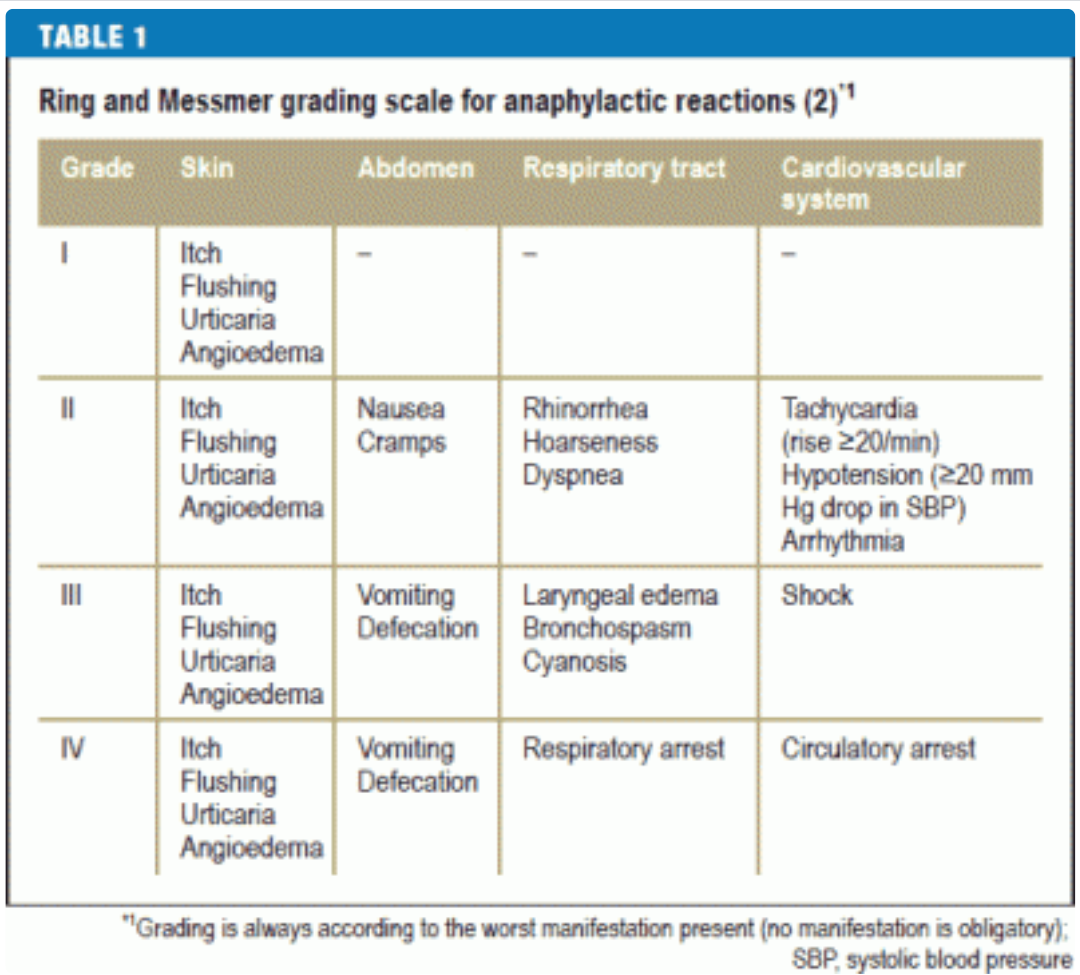
I haven’t gone into grade III anaphylaxis (bordering on grade IV that last time) since 2002, but the spectre is always there. Hypotension, heart arrhythmias, angioedema — they’re barely managed and always providing a low-level thrum of unease in my days. I could escalate at any time if you’re not hypervigilant, they say. But I’m not very careful and I like to test the boundaries. I found over the years that the negative effects from hypervigilance just slightly outweigh the fear that is borne of risk-taking, especially when each time I throw caution to the wind and come out unscathed, I gain a little bit of confidence and hope that I’m safe now and it won’t happen again. 

I don’t do parties, though, and I try to keep menstruation at bay with prescription hormones. And I’ll never have another drink as long as I live, even if I woke up healthy tomorrow. My mast cells will continue to find new and creative ways to wreak havoc on my body without my help.