Going to California

After two years of being housebound, only leaving my house for doctors’ appointments, never going to a friend’s house, coffee shop, grocery store or cinema, never taking a drive to look at the ocean or waterfalls or mountains, my longest excursion being a 45-minute journey to a doctor out of town, I’m going to California to see Dr. Chia.

I made the appointment months ago after rereading No Poster Girl’s advice for the newly diagnosed. I’ve seen 40 healthcare providers in Washington and really, truly feel that the only substantial help they have been is ruling out brain tumours and cancer. Countless visits, horrendous amounts of money and unimaginable energy expenditure… all wasted, unfortunately. Although, my physical therapist has helped my pain but, alas, I must stop seeing him after Monday because my private health insurance coverage ends.

I based my decision to see Dr. Chia mostly on geographical proximity, assuming that we would have to drive wherever we went. His practice is in L.A. I also considered Dr. Peterson (Reno), Dr. Kogelnik (San Francisco) and Dr. Bateman (Salt Lake City). The latter would probably be my first choice, but it seems she really isn’t taking new patients. I battled between Dr. Kogelnik and Dr. Chia, but decided on Dr. Chia mainly because I knew more about him. I have followed my friend Patrick’s experience with Dr. Chia closely, have read Christine McLaughlan’s articles on Health Rising, and have watched all of the ME/CFS Alert video interviews with him.

In a nutshell, Dr. Chia is an infectious disease specialist who believes enteroviruses are at the heart (or gut) of ME/CFS. I will never forget reading Patrick’s account of his ME onset. He said he had surfed at a dirty beach, became ill a few days later, recovered and then got the Tdap immunization and, 5 days later, crashed with ME and never recovered. I swam in a lake in Virginia, came down with a GI illness a day or two later, recovered and then got the flu vaccination and, 11 days later, had acute-onset ME. We had such similar etiologies, although, I believe Patrick was otherwise healthy and, in my case, these came on top of a plethora of other issues such as working too much, never resting, lots of dental work, lots of traveling, bronchitis, vasovagal syncope, angioedema, anaphylaxis, unknown detox issues, IBS-C blah blah blah. But I knew the diarrheal hell was the penultimate cause and the flu vaccination was the shot that broke my immune system’s back. So to speak.

I was in such bad shape last December, I didn’t think there was any chance of my being able to keep this appointment. Five months flew by and my husband and I hadn’t discussed the logistics of the trip or renting an RV or whatever (I don’t even think he knew I had made an appointment), but, before I called to cancel (because, seriously, who goes to California to see a doctor for an hour?), I asked the good people of Phoenix Rising whether they thought I should do it. They were incredibly supportive and answered with an overwhelming YES! Uh oh. Really? But, at this stage, I’d have to fly. I assumed I’d never fly again. I don’t know what a flight would do to my symptoms, let alone the whole trip. So, I asked my family what they thought and they answered with an overwhelming yes and, not only that, but they all offered to help in so many ways: come with me on the trip, stay in my home to watch the dogs, research rentals, help with money, accompany me to the appointment, donate miles for a plane ticket etc. I was flooded with love and encouragement and, suddenly, for no other reason than I wanted to ride the wave of excitement, I decided to go. If not for Dr. Chia, for me. To know that I could leave this house. To create new memories — even hard-won ones — that aren’t these four walls, this bed, this garden. The truth is, I’m terrified and I know enough about Dr. Chia’s treatments to know that it may be a one-off visit and it will probably be a dead-end. But, I’m still going to do it. And I’m going to close my eyes everyday until my departure date and envision safe travels with stable blood pressure, steady legs, no vertigo, no headaches, comfortable body temperature, no chemical or food reactions, no collapsing or swelling or bowel issues, and good sleep. I’ll write more details in my next post.

Doctor Love/Hate

A few weeks ago, I had the follow up with the rheumatologist I saw in January. The one who came highly recommended by multiple doctors I’ve seen. The one who spent over an hour and half with me at our initial appointment. The one who wrote the most thorough and accurate notes on my history and even sent them to me. The one who ordered spine x-rays, a DEXA bone scan, blood work for inflammatory bowel disease and who did a quick ultrasound of my shoulders. The one who knew about the pretty much unknown mast cell activation disorders and even knew most of the tests to order. The one who wrote a book called, “You Don’t Look Sick.” … So, you’d think he’d get it.

At one point, he asked, “Why are you in bed so much?”
I wasn’t sure how to answer. This was my second appointment in a row; I’d previously spent a useless hour with my therapist, not having anything to talk about and feeling out of place. Maybe my brain was ticking over even slower than I had realised.
“Because I’m sick…”
I thought he understood my illness because of the thorough chart notes, but I’d have to reread them. Maybe he didn’t understand the key part about ME and post-exertional malaise (second worst description of anything, ever, after chronic fatigue syndrome). Maybe he didn’t quite get that my battery dies very quickly and, if I push through, I’m in a world of hell and the battery never quite fully goes back to where it once was.
He said (and this is a direct quote), “If your hope for the future depends on getting disability, you’re not going to get out of bed.”
And then my brain blew up.

Screenshot_2014-05-21-07-41-55-1

I know many, many people have dealt with this sort of thing before — this blatant skepticism about their illness — but I hadn’t. Nobody had ever questioned me to my face. I didn’t really hear anything else he said after that because I did a white-out with fury. This manifested itself with me bursting into tears, unfortunately. I told him I wanted to make it clear that I wasn’t in bed to try to get disability. He said something along the lines of: “It may not be that you’re a malingerer [I remember that word clearly], but that you subconsciously are staying in bed because you need the money.”
Wow.
I was raging. After waiting two years to apply for disability in the desperate hope that I could go back to work… after going from a happy, high-functioning person to practically an invalid… it was too much to think this might cross somebody’s mind. Why would I want to give up my whole life to get 1/10 of the money I used to make? I cried the whole way home. I kept thinking about it and crying the whole evening. Granted, I was premenstrual, but my anger can’t come out in yelling and stomping anymore, so it just bubbled out in tears. Would he have said that if my husband were with me? Would he have said that if I were bedbound with cancer?

Screenshot_2014-05-21-08-42-46-1

There was slight vindication when he told me I had to try increasing my steps and I told him I have: from 500 in January to 1500 now.
Then he said I had to try “bicycle yoga”, lying down and I said, “I do! I try to do yoga poses and gentle stretches whenever possible.”
Then he said, “You need to come in here with a list of your current symptoms, your meds, your questions and concerns.” I waited for him to finish drawing an example of the page he wanted me to write and then I told him: “I did — it’s on the back of that sheet of paper.”
“Oh, I didn’t look at that,” he said. “A+.”

Amazingly, after this conversation, he told me my clinical diagnosis was mast cell activation syndrome (MCAS) and prescribed Cromolyn.

I smoldered for a week and then went to see my therapist who works in the same clinic and has known Dr. O for 37 years. I let loose on him. I railed for a full 45 minutes and was completely supported and validated. He said he’d seen it happen before and that, typically, when Dr. O is called out on his behaviour, he is blind to what he did and remorseful. He read me the notes that Dr. O had written and they were great — he wrote that he wanted to treat me for MCAS and also continue to look at inflammatory conditions, that I wasn’t depressed… There wasn’t a mention of ME in the notes and that’s how I wanted it. I went to him in the first place for his diagnostic talents, to have someone search for other possible answers. So, I’ve decided to give him another chance. My therapy session completely calmed my outraged soul and I’ve let it go. I think I will write Dr. O a letter when I feel up to it, explaining professionally why he was bone-headed and offensive. I’m actually looking forward to seeing him again, so I can be the calm, assertive person I normally am with doctors.

So, about MCAS: I haven’t dealt with scary symptoms (anaphylaxis, tongue swelling) in years and I react terribly to most medications, so I’m hesitant to start treating with mast cell stabilizers, histamine blockers or other anti-inflammatory drugs besides Prednisone. However, I wonder how many of my daily symptoms could be caused by mast cell problems (GI issues, bowel swelling, headaches, fatigue, brain fog, sinuses, pain etc.), so I’m also excited to have this diagnosis and the treatment options available. There’s also a teeny tiny part of me that whispers, What if your only problem is MCAS? What if mast cell problems caused everything from anaphylaxis until now? I don’t believe that — of course it’s multifactorial and involves many different pathways: immune, neurological, endocrine, gastrointestinal, vascular — but, there’s still a seed of excitement that something might make a difference.

DIETS Part II: compounded eliminations and low-histamine hell. I mean help. :)

It’s 8am and I’ve already been awake for 3 hours. I’m sick and unemployed, I should be sleeping ten hours a night. I should be sleeping late and luxuriating in the fact that I no longer have an alarm clock going off, a company to oversee, and bosses to answer to (… and bosses to whom to answer). My brain should be able to shut down and heal. It’s February, for fuck’s sake. Time to hibernate. I’ve been missing exciting life and getting absolutely nothing done for 17+ months now ~ why does my brain feel like it has to be on high alert ALL. THE. TIME?

Throughout the day, I’m a dizzy zombie, unable to accomplish anything, but my mind is weakly turning over like the Little Engine that Could trying to get up that hill: What do I need at the store? What could be causing my forehead rash? What will I eat for dinner? Will I try a sleep drug tonight? And then the night rolls around and that little engine reaches the top of the hill and starts to fly down the other side: HOW DO WE NOT END UP DESTITUTE? HOW CAN I MAKE MONEY? I NEED AN M.E. DOCTOR! WE NEED TO MOVE!

So, it feels like ~ and I think it’s the reality ~ I never deeply sleep and I never truly awaken. I am existing in a netherworld, a slightly off-center plane of existence where everything is blurry and too bright, where everything is too loud, but also muffled under ear-ringing… a place where you try to do something month after month, but, during the day, it’s too much energy and, at night, it’s too… sepulchral.

Case in point: I honestly thought it had been about one month since I wrote my diet post, but I see it has been more than three months. That’s a quarter of a year. Three months from now, I will be 41 and it’ll have been a year since I wrote “birthday present thank you cards” on my to-do list (they’re still on the list). Actually, three months from now it will be exactly 5/19 (in American date writing) and those closest to me know that that number means something (what, exactly, I don’t know. One day I’ll write a post about my weirdness with numbers).

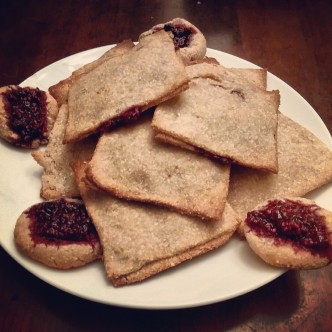
raspberry pop tarts

raspberry pop tarts

Today, I woke up starving. It’s now 11:30am and I have already eaten a raspberry “pop tart” (click above image for recipe), some apple, a beef breakfast burger with acorn squash and coconut cream, and a mug of bone broth with sauteed kale, asparagus and parsley.

To continue the saga of how I got to this strange way of eating: When we last discussed food, I had just started a strict low-histamine diet. Before ME, my crazy heath history included idiopathic anaphylaxis, autoimmune urticaria and angioedema, flushing, vasovagal syncope/shock, and a slew of other things that could be caused by histamine intolerance and/or a mast cell disorder, such as medication reactions, dysmenorrhea, osteopenia, headaches, tinnitus etc. I thought if I were very strict with the diet, I’d be able to quickly tell whether or not it would make me feel better. I poured over online histamine lists for weeks. Information is very conflicting because histamine levels fluctuate based on where the food was grown, when it was harvested or slaughtered and how long it has been in storage. Also, if you listened to the interview with Dr. Joneja, you know that histamine is a very important neurotransmitter in your body, but it can build up over a period of time and, if your bucket is overflowing, you will have a reaction. In other words, the salmon with lemon on Monday may not do any harm and neither might the wine and chocolate on Tuesday, but the eggplant on Wednesday might just put you over the edge and you have flushing, a migraine, hives. Or worse, anaphylactic shock. It is a process of trial and error for everyone attempting this diet. You have to figure out what affects your body.

The two best histamine food lists I found were Dr. Joneja’s and this one out of Switzerland, which shows histamine liberators and DAO inhibitors (more on this later) as well as foods that are naturally high in histamines. If you are as insane as I am, you can look at the strictest list possible, which I compiled from the two linked lists as well as about five others. My list is so short because I wanted to know the foods that everyone agrees are probably safe.

I ate strictly low-histamine foods for about month and, let me tell you, it was far more difficult than all the other diet modifications put together. Even a loose attempt at low-histamine is a slice of hell. The dilemma in which I found myself was that I kept adding elimination on top of elimination. So, over the course of 20 months, I had eliminated gluten, tomatoes, eggs, and strawberries; then dairy, legumes, all grains but oats, nightshades, and most processed food; then soy, citrus, pork, red meat, lunch meat, shellfish, condiments, maple syrup, and honey. I added a few things back (rice, red meat, honey), but everything else stayed out. Once you adapt to certain meal staples, it is difficult to change ~ especially when someone else is shopping and cooking for you. And then, on top of these, I went low-histamine. I stopped eating most herbs and spices, spinach, avocados, sweet potato, chard, all vinegar, all fruit except apples and pears, all fermented foods, leftover foods, all fish, chicken… and red meat was out again. It was these last few that set me up for the fall. Having no leftovers in the fridge left me scrambling to find things to eat. I hadn’t figured out how to buy the freshest meat or the process of cooking and freezing to ensure I had meals on hand. I hadn’t figured out how to get enough protein when I wasn’t eating dairy, legumes and most meats. I decided not to give up nuts and seeds, which are avoided on the strictest histamine lists, because they were providing the vast majority of my protein. Still, they weren’t enough and my blood sugar started crashing daily, sometimes multiple times a day, sometimes in the 40s and 50s.

If anyone has experienced severe hypoglycemia, you know how scary it can be. Suddenly I didn’t care about any other symptoms, I just needed my sugar to stablise. Mainly veg does not work for my body. And so my husband became the Fresh Meat Scavenger and I became the Great Meat Eater.

To be continued (sooner than three months from now) with honourable mention to ketogenic, alkaline, low-salicylate, migraine, mold, AIP, and low-sulfur/thiol diets…

IV saline experiment… causes angioedema and histamine release.

I had a total meltdown yesterday. As my throat grew more swollen and I grew more alarmed, I finally put it together that I was experiencing an acute angioedema episode. I didn’t recognise what was going on because I usually get a swollen tongue and lips. On Friday, I chalked the edema up to fluid retention from the saline. The spot deep in my throat under my jaw that I mentioned in my last post always itches when I am having an allergic reaction – it’s the canary in the coalmine of my body – but I don’t pay attention to it as closely as I should. This was a slow cooking reaction: laboured breathing and swollen eyes, fingers and sinuses (stuffy nose) on Friday evening, itchy throat spot and heart skipping/arrhythmia started Saturday (both continue today, Tuesday), flushing/extreme overheating on Sunday, and throat closing on Monday, coupled with what felt like body edema – swollen bowel, abdomen, muscles…

Now I know throat closing/laryngeal swelling calls for me to use my Epipen, but, like I said, I didn’t cop on to what was happening until late in the game. Also, I would really have to be on death’s door to voluntarily inject myself with epinephrine. But I was very, very scared. Hence, the meltdown. I actually said to my husband, “Why can’t I just have a peanut allergy – something I can try to avoid?” I actually said, “Why can’t I JUST have M.E.?!” I don’t say those words lightly and, of course, if I could barter away my illnesses, ME would be the first one to go, but it is terrifying to feel like you have no control over anything and living with the threat of a fatal allergic reaction that can’t be identified is the ultimate loss of control.

I’m too tired to explain thoroughly and scientifically, but, basically, angioedema is the same mechanism in the body as urticaria, only in deeper tissues. If it happens in the tongue and throat and lungs, it can kill you. Often, as in my case, there are no identifiable triggers, so you just deal with it when it happens and hope it isn’t serious. It can present with urticaria or without and it can be as severe as anaphylaxis or very mild. If you want to learn more, Medscape has a very comprehensive set of articles (many tabs at the top with many pages per tab- just click on the next page at the bottom and you will go through them all). All of the better information on these types of conditions is relatively new. When I was diagnosed with idiopathic anaphylaxis 12 years ago, blood tests turned up no allergies, so the doctors washed their hands of me. That was it. When I suggested alcohol as a possible culprit, the doctor was disdainful and dismissive. When I mentioned that most times this happened was during my menstrual cycle, I was ignored. Here’s an Epipen, go away. Nobody knew about mast cell activation or histamine intolerance. And, of course, I was right! With my limited knowledge at the time of all things medical, I came up with the common denominators that made sense: booze, period, ibuprofen.

For an excellent article read this:
“The ingestion of histamine-rich food or of alcohol or drugs that release histamine or block DAO may provoke diarrhea, headache, rhinoconjunctival symptoms, asthma, hypotension, arrhythmia, urticaria, pruritus, flushing, and other conditions in patients with histamine intolerance.”

A few years ago, when I was diagnosed with autoimmune urticaria and angioedema and the doctor warned me (2 years too late) that people with this condition are more likely to have autoimmune thyroid disease, I asked him why the doctors years ago hadn’t looked into this autoimmune component. He said it was unknown then. He said it was something that only recently came to light. The only other thing he suggested was prophylactic treatment with Zyrtec, which I half-heartedly tried for a few months. No mention of H2 antihistamines or mast cell stabilizers. No mention of H3 or H4 or diamine oxidase. No discussion of mast cell activation, mastocytosis, histamine intolerance, low-histamine diet or any tests – whether reliable or not. No interest in looking into acquired angioedema, bradykinin-mediated angioedema or estrogen-dependent angioedema, all of which don’t respond to antihistamines. So, all of us – the patients – are scrambling along the edges of science. I feel like a surfer on an excruciatingly slow-moving wave. I come up with theories and do my own research and I see it mirrored in others’ blogs, but no doctors are accessible to help and no tests are robust enough to firmly diagnose.

For an excellent summary from another ME-afflicted blogger with mast cell problems (as well as EDS), read Jak’s blog: Mast Cells & Collagen Behaving Badly.

Which brings me back to my meltdown. For the most part it was a silent, immobile and tearless meltdown. I was simply frozen with fear. Saline probably caused a massive histamine release – right in the middle of my low-histamine diet experiment. I brought this situation on myself by requesting the saline. I had a reaction to an innocuous substance that is used to treat allergic reactions! Just like I had reactions to the antihistamines that are used to treat allergic reactions.

I can’t live with ME and angioedema and histamine/mast cell issues and sleep apnea and thyroid disease and crippling periods and a headache that never goes away and reactions to so many drugs!!

Fear of my throat closing more while I slept, fear of sleeping without my CPAP, fear of being woken up constantly by my CPAP, fear of taking an antihistamine, fear of not taking an antihistamine, fear of eating things that cause inflammation or histamine release, fear of losing more weight, fear of being on the pill, fear of having to weather my periods off the pill, fear of living the rest of my life in pain, fear of being in so much pain I have no choice but to take painkillers. What if I break a bone? What if I’m in a car accident? And then, swiftly on the heals of that thought, the fear that sent me into a tailspin: What if I have to go to the hospital? IV saline… IV painkillers… IV Benadryl… Contrast dye… Anesthesia… Surgery… What do I do when I’m older and I can’t avoid some procedure? When I break an already-osteoarthritic hip? What do I do if my body reacts to everything? I’m dead.

Fear of dying. Fear of living in this fear.

My answer to all of it was to throw caution to the wind and eat a bunch of forbidden histamine foods.

This is a perfect segue into part II of my diet post. I realise you are all on tenterhooks waiting to read it, but not yet, not yet.

_____________________________
The most recent article describing IA (idiopathic anaphylaxis), written by Karen Hsu Blatman and Leslie C. Grammer, explains the distinction this way:

Patients with IA-A experience urticaria or angioedema with upper airway compromise such as laryngeal edema, severe pharyngeal edema or massive tongue swelling without other signs of systemic anaphylaxis. Patients with IA-G suffer from urticaria or angioedema with bronchospasm, hypotension, syncope, or gastrointestinal symptoms with or without upper airway compromise. Reference.

DIETS Part I: gluten-free, allergy, autoimmune/anti-inflammatory, classic elimination, and low-histamine.

My mother told me recently that she only gave me soy milk for a long time as a child after my allergy testing showed I was allergic to half of the things on this planet. This is when I was 3. I’ve always known the story of the skin-prick tests done on my tiny 3-year old back. My mother was torn in pieces listening to her baby wail, so I’ve heard about it often. I knew the testing showed I was allergic to lettuce and rabbits and newspaper and so many other things it seemed like a joke. I thought we had always just ignored it to no consequence and that the first thing I ever stopped consuming was MSG sometime in the 90s. I kept swelling. One day, I awoke with my face blown up like a balloon: my eyes were slits, my lips made it difficult to speak, I could barely bend my fingers. This happened after eating frozen egg rolls in the wee hours, after a night at the pub, so I became really vigilant about avoiding MSG. Then, a few years later, I ate at a Thai restaurant with my sister. I never tempted fate with Asian food, but, god, I missed it! and the restaurant swore there was no MSG in their food. The next day, my face was swelled up, so I never tried that again. I still don’t know if the culprit is definitely MSG, but avoiding it, as well as all Asian food, stopped those acute episodes.

My next elimination was alcohol in 2002. It should have been difficult, but I thought it might be causing me to repeatedly go into anaphylactic shock, so I had no choice. When you’re worried about dying, you’ll give up anything.

I ate and drank anything I wanted for ten more years. And I ate a lot. Since I shed my college weight, I’ve always been around 7 stone (I haven’t switched to thinking of myself in pounds because I like the nice neatness of “7 stone”) and my husband would joke that I ate way more than he did (he’s 14 inches taller than I am). After thyroid ablation in 2009, I couldn’t eat as much as I used to – I didn’t diet, my body simply got full quicker and wasn’t hungry all the time anymore.

In 2012, while trying to cure what ails me, I stopped eating gluten. It never occurred to me that it would be permanent, but it seems it might be. It didn’t change how I felt one bit, but, after talking to numerous doctors and reading this book, it seems like it would behoove me to continue to avoid it – if not for ME, then for my (other) autoimmune conditions.

Soon after that, I had blood tests done that showed allergies to cod, tomato and egg. Giving up cod was no problem, tomatoes and eggs almost killed me. But, I thought, what if? So, I stuck with it and it’s now been a year and a half and, you guessed it, I felt no change.

When I started seeing the Good Doctor last year, she put me on a diet for autoimmune conditions which, she said, resembled most anti-inflammatory regimens. I stopped eating all grains but oats, all legumes, dairy and starchy veg. I cut down on sugar, I stopped eating processed foods, I stopped drinking sodas – even “healthy” stevia ones, even flavored fizzy water. I stopped chewing chewing gum, stopped eating lozenges with colourings. Although I missed all of these things, it was similar to anaphylaxis – I felt like I was (am) dying and would do anything to improve my situation, so the choice was easy. I stuck with this protocol for almost a year and… Felt no different.

This past August, my doctor switched me to a more “traditional” elimination diet. I was allowed to add back grains (except corn) and legumes (except peanuts) but stopped eating red meat, pork, processed meats, shellfish, soy, citrus, and most forms of sweetness: honey, maple syrup, agave nectar, and, obviously, sugar. This was only meant to last for three weeks before tackling challenges, but I took a turn for the worse with my symptoms and doing food challenges showed nothing definitive, so I’ve kept everything eliminated. Compounding this restriction was my low energy and my husband’s overwhelmedness with the changing shopping rules, so neither of us got out of the habits formed over the last year. I joyfully started eating rice again, but didn’t really explore other grains or legumes. Once you’ve been doing something for a long time, it seems a monumental effort to change.

When I saw the Good Doctor again at the beginning of this month, she wanted me to continue this elimination for three more weeks, while making a concerted effort to detoxify my liver because she is thinking of testing me for heavy metal toxicity and, if necessary, going through a chelation protocol. Specifically, what she told me to do was:

  • EAT FOODS TO IMPROVE LIVER DETOXIFICATION:
    • Cruciferous vegetables (broccoli, brussels sprouts, cabbage, cauliflower, watercress)
    • Kale
    • Swiss Chard
    • Collard greens
    • Garlic, onions
    • Grapes
    • Berries
    • Green and black teas
    • Herbs and spices such as rosemary, basil, turmeric, cumin, poppy seeds, black pepper, and lots of cilantro!
  • Metagenics Ultraclear formula: drink one shake each day (she already has me taking their probiotics and I get a patient discount).
  • Supplements [I am very happy to be taking vitamins again. I stopped all supplements and vitamins 3 months ago and never intended to stay off of them for so long. I’m eager to add more (CoQ10, Acetyl-l-carnitine etc.), but she is making me take things slow.]:
    • Vitamin D
    • Vitamin B6 & B2
    • Biotin
    • Glutamine
    • Zinc
  • Green detox soup[I said yuck to this soup because I thought it sounded like a warm green smoothie and I thought I didn’t like fennel, but it turns out it is SO DELICIOUS and I like to have some every day.]

This soup is a gift to your liver to help it with its critical role in cleansing and filtering the blood. Sulfur-containing foods, such as onions and garlic, will keep your glutathione levels and antioxidant power high. Cruciferous vegetables are great for all your detox pathways, especially estrogen. Enjoy this soup for breakfast, as a snack or any time of the day. You can make a big batch and freeze it in small containers.

Makes 4-6 servings

1 tbsp extra virgin coconut oil or olive oil
1 small onion, diced
1 tsp minced ginger
2 cloves garlic, minced
1 celery stalk, chopped
3 cups chopped broccoli, florets and stems
1/2 head fennel, chopped
1 tsp salt
3 cups water
1/8 tsp freshly ground pepper

Heat the oil in a medium pot on medium high heat. Add the onion and ginger and cook until onion is translucent. Add the garlic, celery, broccoli, and fennel and a generous pinch of salt and continue to cook another 2 minutes. Add the water, remaining salt and pepper. Bring to a boil, then cover, reduce the heat, and simmer for 20 minutes. Place the soup in a blender and blend until smooth and creamy. Adjust salt.

Now the fun part: I haven’t been eating the chard, onions, grapes and berries she instructed me to because I am experimenting with a low-histamine diet. I am always trying to link seemingly unrelated conditions from my past to what is happening to me now. Just like I thought (think) dysautonomia explained not only my symptoms now, but issues I had pre-ME like Raynaud’s and fainting, I started to seriously look into histamine intolerance (HI) and mast cell activation disorders (MCAD). The swelling, the idiopathic anaphylaxis (which happened more often than not during my period), the alcohol intolerance, the dysmenorrhea, the hypotension and syncope (which happened more often than not during my period)… All of this makes sense in the context of a histamine problem. I used to wrack my brain and research incessantly to try to figure out why I was going into anaphylaxis but they could find nothing to which I was allergic. Was it the alcohol? Was it my period? Was it garlic? Was it ibuprofen?

When the allergist explained autoimmune urticaria and angioedema to me, he said the rashes I got during anaphylaxis and the swelling I’ve always experienced were the same mechanism in the body, just in different dermal layers. He said they are caused by tissue permeability and leakage and any vasodilator, such as alcohol, will potentiate the problem.. To demonstrate the autoimmune process, he injected me with my own plasma and I had a reaction on my forearm similar to the histamine control. He said these episodes could be brought on by emotional turmoil or stress and there is nothing to be done but take antihistamines. I counted myself lucky because some people have horrible chronic urticaria (I really recommend the film, Fat, Sick & Nearly Dead).

The more I researched histamine issues, however, the more I realized that my allergist, like all doctors, is limited by what he doesn’t know and what science hasn’t discovered. I asked my GP, the Good Doctor and my new environmental doctor about testing for MCAD and every one of them said they don’t know how. It turns out there really aren’t good tests, but they didn’t know this ~ they didn’t know anything about it!

I am going to continue the info about my low-histamine diet experience in Part 2 of this diet post (as well as all the other crazy elimination diets I’ve been researching: ketogenic, alkaline, low-salicylate, migraine) because there is a lot of information. But I’m giving you homework, if you’re interested in this topic at all: Listen to Yasmina Ykelenstam’s (The Low Histamine Chef) interview with Dr. Janice Joneja. There are 2 parts, but the first part is the most important. Get comfy because it is 49 minutes long and have a paper and pen ready. I’m telling you, it’s worth it. Dr. Joneja is so clear and knowledgeable.

Until next time…