Mast Cell Activation May Underlie Chronic Fatigue Syndrome — Medscape

SALT LAKE CITY, UT — Mast cell activation syndrome (MCAS) may be an overlooked yet potentially treatable contributor to the symptoms of chronic fatigue syndrome/myalgic encephalomyelitis (ME/CFS), say physicians who specialize in ME/CFS and its manifestations.

The subject was discussed during a 2-day clinician summit held March 2 to 3, 2018, during which 13 panelists met to begin developing expert consensus guidance for primary care and specialist physicians for the management of the complex multisystem illness ME/CFS, and to recommend research priorities.

“ME/CFS is a descriptive diagnosis of a bunch of symptoms, but it says nothing about what’s causing the symptoms, which is probably part of the reason it’s so hard for it to get recognition. So, the question becomes, What other pathology is driving this illness and making the person feel so ill? I think mast cell activation is one of those drivers, whether cause, effect, or perpetuator, I don’t know,” internist David Kaufman, MD, who practices in Mountain View, California, told Medscape Medical News.

MCAS is a recently described collection of signs and symptoms involving several different organ systems, that, as with ME/CFS itself, do not typically cause abnormalities in routine laboratory or radiologic testing. Proposed diagnostic criteria were published in 2010 in the Journal of Allergy and Clinical Immunology.

Kaufman first learned about MCAS about 5 years ago from a patient who introduced him to the published work of mast cell expert Lawrence Afrin, MD. “I spoke to him and then I started looking for it, and the more I looked, the more I found it,” Kaufman said, estimating that he has identified MCAS in roughly half his patients who meet ME/CFS criteria.

Indeed, summit panel member Charles W. Lapp, MD, who recently retired from his ME/CFS and fibromyalgia practice in Charlotte, North Carolina, told Medscape Medical News, “I see a lot of this. I think it’s one of the many overlap syndromes that we’ve been missing for years.”

Another panel member, New York City ME/CFS specialist Susan M. Levine, MD, also said she sees MCAS frequently. “I suspect 50% to 60% of ME/CFS patients have it. It’s a very new concept.”

In Levine’s experience, MCAS often manifests in patients being unable to tolerate certain foods or medications. “If we can reduce the mast cell problem, we can facilitate taking other drugs to treat ME/CFS,” she said. However, she also cautioned, “It’s going to be a subset, not all ME/CFS patients.”

Clinical Assessment and Laboratory Testing

As discussed at the summit, for patients who meet ME/CFS criteria, the next step is to drill down into individual patients’ symptoms and address treatable abnormalities. Investigation for MCAS may yield such findings among those who exhibit episodic symptoms consistent with mast cell mediator release affecting two or more of the following areas:

  • Skin: urticaria, angioedema, flushing
  • Gastrointestinal: nausea, vomiting, diarrhea, abdominal cramping
  • Cardiovascular: hypotensive syncope or near syncope, tachycardia
  • Respiratory: wheezing
  • Naso-ocular: conjunctival injection, pruritus, nasal stuffiness

Symptoms can wax and wane over years and range from mild to severe/debilitating. It is important to ask about triggers, Kaufman advised. “The patient is usually aware of what makes them feel worse.”

Routine laboratory assessments include complete blood count with differential, complete metabolic panel, magnesium, and prothrombin time/partial thromboplastin time.

More specific laboratory testing can be tricky, as the samples must be kept cold. These include serum tryptase, chromogranin A, plasma prostaglandin D2, histamine, heparin, a variety of random and 24-hour urinary prostaglandins, and urinary leukotriene E4.

For patients who have had a prior biopsy, the saved sample can be stained for mast cells.

Kaufman said that initially after he learned about MCAS, he would only run the laboratory tests in patients with suggestive clinical history, such as food sensitivities/triggers, rashes, hives, temperature intolerance, or chemical sensitivities. “But ultimately, I had patients [for whom] I couldn’t figure out what was going on; I would check, and started finding positives in patients I wasn’t suspicious of.”

So, now he just tests for it in all his patients with ME/CFS. “It’s bigger than allergy,” he remarked.

Treatment May Ease Some ME/CFS Symptoms

Treatment of MCAS involves trigger avoidance as possible; H1 receptor antagonists such as loratadine, cetirizine, or fexofenadine (up to double the usual doses); H2 histamine receptor antagonists including famotidine or ranitidine; and mast cell membrane-stabilizers such as cromolyn sodium. Slow-release vitamin C can also help in inhibiting mast cells.

Over-the-counter plant flavonoids such as quercetin also may be helpful, typically at high doses (up to 1000 mg three times daily). “There’s a long list of medications that either quiet down mast cell activation or block the receptor,” Kaufman noted.

But despite that, without controlled trials, it is difficult to determine the exact clinical effects of blocking mast cells, especially as these patients tend to be taking many other medications. And in the context of ME/CFS, the extent to which suppressing mast cell activity addresses the core symptoms of fatigue, postexertional malaise, orthostatic intolerance, and cognitive dysfunction is unclear.

Kaufman noted, “I think treatment clearly helps with the fatigue because they’re not reacting to everything. It improves gastrointestinal symptoms, so they can eat better…. I have seen [postural orthostatic tachycardia syndrome] improve, but I have to say I also give meds for dysautonomia, so I can’t be sure.”

Lapp said that in his experience, “[Patients with ME/CFS] aren’t cured, but do get better. [Blocking mast cell activity] gets rid of dizziness, fatigue, nausea, and light sensitivity.”

Levine pointed out, “We’re just at the beginning of identifying this patient subset and thinking what makes sense to try…. One thing that’s sure is that the drugs are pretty safe,” she said, adding that when it comes to working up patients with ME/CFS for MCAS, “There only seem to be good things that can happen.”

Dental Work Protocol and Precautions for People With MCAS/ME/MCS.

I have to get a filling done for the first time since being sick and extremely reactive to medications. I know this is the beginning of many future dental procedures because I have a lot of aging mercury fillings and I’m sure they will have to be replaced eventually. Also, I haven’t been wearing any sort of oral device when I sleep — be it a night guard or apnea apparatus — so I’ve been clamping down, grinding and cracking my teeth again. Also, my teeth feel more unstable this past year: I have trouble chewing certain foods in certain spots and random pain. I read that this might be a result of immunoglobulin infusions; some people claim it wrecks dental health. I haven’t gone down that research rabbit hole, but it nags at me a bit. So, I need to find out what anesthetics and materials are safe for me and develop a standing protocol for this current cavity and also for future dental work.

I am one of these mast cell people that can eat almost anything, but I have extreme reactions to micro-doses of medications — even medications I’ve taken with no problem in the past — so, I’m scared of being in a dentist’s chair and having an anaphylactic reaction of any sort. I’ve been doing research and, as usual with MCAS, there aren’t great ways to control the outcome of a procedure like this besides taking normal precautions and crossing my fingers. Normal precautions for me are:

  • Schedule my appointment for a safe time of the month. My menstrual cycle is bananas at the moment (has been coming every 13 days some months recently and spotting daily), so I only feel confident the first week after my period.
  • Premedicate: For the week before, I will not forget to take my Loratadine and Ranitidine twice a day. On the day of, I will take Prednisone (I take a VERY low dose because it wallops me), Benadryl, Zantac and Paracetamol.
  • Hydrate to raise blood pressure: In the days before, I will drink 2-3 litres of water. On the day of, I will do IV fluids (maybe).
  • Food to stabilize blood sugar: Be well fed before the procedure and have frozen food prepared for afterwards. I also eat a lower histamine diet in the days before and after a new or risky medical procedure.
  • Rest: Be well rested before and proactively rest after the procedure.
  • Try to do as much of the dental work as possible without anesthetic. Before the dentist starts, bite open a capsule of Benadryl and squirt it on the tooth and gums in question. I learned this trick from an allergist who told me to squirt Benadryl directly on my tongue when it swelled up. Benadryl is a great numbing agent.
  • Have the dentist use a local anesthetic without epinephrine. I found this out the hard way long before I was sick or dealing with mast cell issues. I’ve always responded badly to epi.
  • I always carry salt packets, glucose tablets, electrolyte water, antihistamines and an EpiPen to help stabilse my vitals, manage any reactions and ward off vasovagal syncope.

Once I’ve gotten this first filling out of the way with no reactions, I’ll undoubtedly ease up on the pre-meds and not consider IV fluids, but, because I don’t know how I’ll react, I’m taking all precautions this time.

Here is some info on choices for dental materials:

  • Local anesthetics:
    • Allergic reactions to local anesthetics may occur as a result of sensitivity to:
      • 1) either the ester or amide component;
      • 2) the preservative methylparaben;
      • 3) sulfites (sodium bisulfite, potassium metabisulfite), which are used as a preservative in local anesthetics that contain epinephrine; or
      • 4) the medication, itself.
    • Ester-based local anesthetics are typically associated with a higher incidence of allergic reactions due to one of their metabolites, para-amino benzoic acid (PABA). In general, amide-based local anesthetics are less likely to cause allergic responses because they do not undergo metabolism to PABA.
    • Ester-based injectable local anesthetics are no longer used in the United States, but are used topically (numbing jellies, such as Benzocaine), so discuss what your dentist will be using.
    • Allergic reactions to amide-based local anesthetics can occur because of the preservative, methylparaben, which is structurally similar to PABA. However, methylparaben has been removed from single-use dental local anesthetic cartridges, which are what private dental offices typically use (multi-use vials might still contain methylparaben. These are typically used in hospital settings and physicians’ offices). Double-check what your dentist uses.
    • True allergies to amides are exceedingly rare in the general population (but they do exist — for some ideas on how to navigate dental work with an amide allergy, see this article). Because of this, your dentist might (correctly) tell you that allergies to amides (as opposed to the preservatives in the anesthetic) are virtually unheard of or that it is impossible to be “allergic” to epinephrine. I think it’s important not to use the word “allergy” too casually, but, rather, make sure your doctor understands how mast cell degranulation works with MCAS: that you can have anaphylactic (life-threatening) reactions that are not IgE-mediated, but present the same way.
    • People with ME, mast cell disease or multiple chemical sensitivity (MCS) often have exaggerated reactions to the epinephrine in many local anesthetics. These anesthetics also contain sulfites (added as a preservative for the epinephrine), which can cause allergic reactions. If you are concerned about reactions to epi, sulfites or want to play it safe, I would ask for a local anesthetic without epinephrine. Bear in mind, you will metabolize the anesthetic quicker than if it had epinephrine, so, depending on the procedure, you may need more injections (right before I got sick, I had dental work done that required over 20 injections and I think the gruelling nature of that day probably played a part in my immune system crash).
    • Examples of common anesthetics that are typically tolerated, according to The Mastocytosis Society: Lidocaine, Bupivacaine, Prilocaine (brand names Bidanest or Citanest Plain (the latter contains no vasoconstrictor)), Mepivacaine (also called Carbocaine, Scandonest, Polocaine (by Astra)) and Ropivacaine (which is always preservative-free). I believe Mepivacaine is always free of epinephrine (and I’ve been told by a few friends that they had no reactions to it; one very sensitive friend specified that she got 3cc of 1.7% Carbocaine and was fine), but, as always, double-check with your dentist. This page has a handy chart of local anesthetics’ ingredients.
    • Some anesthetics don’t use epi, but do use a different vasoconstrictor (for example, Citanest Forte), so make sure you are clear on what your dentist uses.
    • Other things to note:
      • If you have Ehlers-Danlos Syndrome (EDS), which is a connective tissue disease that is a common comorbid condition of ME, MCAS and POTS/dysautonomia, you might need more anesthetic and it might wear off quicker than the average person — especially when using a medication without epinephrine because there’s no vasoconstriction.
      • Vasodilators are risky for those of us with hypotension and circulatory problems. Nitrous oxide is a cerebral vasodilator — not to be confused with NITRIC oxide (not used in dentistry, as far as I know), which is often used for respiratory diseases.
      • Most topical anesthetics contain gluten, so those individuals with either celiac disease or gluten sensitivity should avoid topical anesthesia.[ii]
      • I have been told by multiple people with chronic pain syndromes that going without anesthesia is not a good idea because, in these cases, the body “remembers” the pain and it can set you up for future worsening issues.
  • Fillings:
    • Composite: cheaper, expands better than porcelain, usually better for small fillings.
      • Traditional composite examples:
        • Grandioflow
        • Filtek Supreme Ultra by 3M
      • Holistore unshaded by DenMat is a biocompatible composite that is recommended for bonding and smaller fillings. It contains no metal oxides, but is quite white in color and is significantly less durable than some other composites. Premise Indirect (formally BelleGlass) unshaded by Kerr for in a metal-free composite that can be used for crowns, inlays and bridges.
    • Porcelain: looks more natural than composite and the consensus is that this is the safest material option, however porcelain contains more metal oxides than composite and is much more expensive ($thousands vs $hundreds). It cannot be used in certain instances (for example, small spaces between teeth). They are pre-fabricated, so take more time and multiple appointments.
      • Inlays: fit inside the tooth.
      • Onlays: fit over the tooth.
      • Crowns and bridges.
      • Zirconium: can be used for inlays/onlays or implants.
  • Dental cements/adhesives/bonding agents: There are various different kinds (for example, my dentist uses Prime & Bond Elect by Dentsply and Relyx is often used for crowns). Some biological dentists recommend Tenure and Tenure S by DenMat for bonding. Other brands used by bio-dentists I’ve contacted: Optibond, Admira Bond, All Bond Universal. Like composite material, there’s not a lot of information on brands that are “safer”, so you might just have to try one out and cross your fingers.

Dr. Douglas Cook, who is known to see many patients with MCS, has written books and has a lot of info on his website about biocompatible dental materials.

Here’s a link to the most typical dental materials that test as “clean” and relatively inert.

For an good in-depth analysis, see this article: Allergic Reactions to Dental Materials-A Systematic Review.

There are options for reactivity testing before you have dental work done. I’m a bit of a skeptic and, more importantly, I like to conserve energy and money, so I probably won’t do any of this testing, but I’ll lay them out:

Testing before dental work (some info here):

  • Clifford blood test: You need a doctor to order this test and it’s over $300. It tests for “antibody sensitivity” to 94 chemical groups and “correlates” these sensitivities to 17,204 dental materials. I put those in quotes because, after corresponding with Walter Clifford and researching how these tests are done, I’m not sure I trust his skills or the accuracy/scientific legitimacy of the testing. IMHO. I might be wrong. However… it’s something. It’s a guide. Even if, at a minimum, it makes a patient feel more confident and less fearful of a reaction, that, in itself, can calm mast cells. (Note: If you do immunoglobulin infusions, the accuracy of the Clifford test results will be compromised.)
  • Muscle testing dental materials. Biological dentists often have kits that can be sent to your ND. Again, I’m not sure how I feel about muscle testing, but, at the very least, it’s a way to provide direction and give confidence.
  • MELISA blood test for metal allergies. You need a doctor’s order and they’re pricey. Here is their test requisition with the costs. Shipping to Germany from where I live is $118 on top of the cost of the test, so bear this in mind.

It turns out, my cavity has grown around an existing mercury filling, which will have to come out. I was planning to go to my regular dentist (who is interested in learning about mast cell diseases and is phenomenal about talking through options), but he doesn’t take any precautions when removing mercury and the last thing I need is my body to be burdened by additional toxins when I am compromised in virtually every detoxification pathway there is (not just things like liver and methylation, but my body doesn’t even manage to do the very basics like bowel movements and sweating). So, I’m planning on finding a local dentist that practices the “SMART” protocol for mercury removal. The downside of this is that I’ll need another full exam with my new dentist even though I just had one with my regular dentist, which means at least two appointments to get the filling done. Plus, this is all out of pocket for me, but my regular doctor gives me a cash discount which these holistic/biological dentists don’t = energy and $$$.

You can search here, but I asked my doctor, my friends and in local online groups and came up with this list of Seattle-area dentists:

I think I am going to see Paul Rubin or Richard Stickney, based on location and my conversations with their staff. I’ll let you know how it goes.

Speaking of detox, you might want to consider taking/using these things before and after dental work (I never have, but I’m considering it):

  • Charcoal capsules
  • Charcoal toothpaste
  • Chlorella
  • DMSA
  • One dentist recommended taking this product up to a month before mercury removal.

See The Mastocytosis Society’s medication guide here and more on medications that impact mast cell degranulation here.

Find mast cell dental info on Lisa Klimas’s Mast Attack blog here and other articles by Cathy Scofield here and here. An ME/CFS dental info handout is here.*

*I did not write these articles or research the details, so some of the info might not be entirely accurate — it’s up to you to do your own research.

**References:**

The Mastocytosis Society’s Emergency Room Protocol.
[i] Allergic Reactions Did you know. . . Volume IV, Number 1 | January/February 2001
[ii] “Numbing Jelly” or Dental Topical Anesthesia.
Understanding allergic reactions to local anesthetics.
Allergic Reactions to Dental Materials-A Systematic Review.
Non-IgE mediated mast cell activation.
Novocaine Allergy Part II – Methylparaben and Sulfites.

Driving, yelling, shopping, crying, writing and ice cream.

If I don’t have brain symptoms (which is the true limiting factor to my writing this year) and I start to post something about my illness, about my days, about my lack of coping skills, I invariably think, “You aren’t bedridden, how can you complain? You are able to feed and bathe yourself, are you really going to bitch about how difficult your life is?” Because that’s what I want to do more often than not. Complain. Vent. Rage against the world. And perhaps make some tiny bit of sense out of this existence and give myself some breathing room.

I’ve been so bottled up, I have tears threatening to spill over every day. So, I am going to write about today and preface it with this: To my friends that can’t get out of bed or watch TV or eat whatever they want… to those of you that haven’t left the house in years and don’t have some of the things that keep me sane like my dogs and my husband (I probably should have led with the husband there), I think about you. I shudder to think about you. You inspire and humble me with your resilience and I wish I could change things.

I want to write about the small, but significant choices I made today. It’s a short story and the end of it is I went to bed and sobbed into my pillow because my therapist said I should. He said crying is a primal emotion that serves a purpose and I should let it out, so I did. I don’t know if it helped. I feel the same as I did before, only with swollen eyes, but I appreciate that he gave me permission, for lack of a better word. He’s always telling me, “Get out of your head, stop trying to rationalise everything, stop trying to make an action plan for everything, stop the black and white thinking.” But if I’m not analyzing, organising, planning, executing, succeeding and then second-guessing everything I did, then who am I? That’s a rhetorical question.

Anyway, today.

I can’t remember the last time I went in a grocery store. Many, many months ago with my husband, I think. Maybe even last year. It’s a big deal, it takes planning and guts. We had a 10% off promo that needed to be used today and the store was a 4-minute drive. They have a deli and I decided that driving there and buying deli food would be less energy than trying to cook something. After all these years, I still marvel that these are the sorts of choices we (those of us with energy deficits) have to make. Driving, if my brain is operational, does not use up a lot of my energy, but washing, chopping, standing at the stove, stirring, whatevering… It’s exhausting. So: drive, park, the deli is right inside the door, get food, come home. Scary when I’m having a difficult health month, but easier, I decided, than the alternative and, if I’m not pushing myself too hard and crashing, then who am I? Again, rhetorical.

I’ve been beaten down recently by a 5-day migraine and bad sleep for months, wondering how to keep going through the motions of survival. In a nutshell, I’m pretty raw and small things feel harrowing. I talked to myself the whole way to the store: “You’re fine, you’ve got this, you won’t pay for this. Red light means stop.” I parked in a handicapped parking spot (with my permanent handicapped parking permit displayed) and shuffled to the elevator that goes up to the store. There’s a small stairwell, too, but I’ve never climbed it in the 4 or 5 times I’ve been at that building. I hear someone yelling across the parking lot. YELLING. Not nice yells. A woman near me says to me, “She’s saying she doesn’t think you’re disabled.” I replied quietly, “Oh, I am” and she gave me a kind look as she started up the stairs and nodded at the elevator as if to say, I can see that. But, also, look at my face! Can’t you see it? How can they not? But they can’t. Maybe in Seattle in November everyone is grey-skinned, sunken-eyed and haunted-looking to a certain extent.

I thought that was the end of it, but the woman in her car was still hollering. She’d stopped on her way out, blocking people, so intent on getting an answer that she’d rolled down her passenger side window and was shouting, “DISABLED? DISABLED? ARE YOU? HELLO? ARE YOU DISABLED?” It was aggressive and accusatory, not inquisitive or, god forbid, compassionate. I had already nodded yes at her, but she continued on. I mouthed, “I am,” but she couldn’t see or it wasn’t good enough. I started to feel very weak because I can’t sacrifice the energy to go talk to her, I can’t sacrifice the energy to project my voice, people were staring now and I felt defensive and emotional and the heat was burning up my chest and, before I knew it, I roared YEEESS! and immediately felt dizzy, immediately had a sore throat. Legitimately — a sore throat that’s still here tonight. We people with ME don’t roar. And, oh, how I miss it. How I miss being enraged and having a good old screaming match, replete with stomping off and door slamming. I used to be really good at that.

The woman shouted back: GOOD! and drove away. It echoed around the closed underground lot and made me feel very small.

I tried to tell myself her heart was in the right place, that she was looking out for disabled people and that I’m glad there are ballsy watchdogs like her in this world… but it didn’t stop the resentment from welling up. She caused this embarrassment, this upset, she caused me to yell when my voice is so weak. And she’ll be fine, she won’t pay for this interaction because she wouldn’t have initiated it if that was a concern. I started silently blubbering in the elevator. I walked to the deli weeping, I ordered the food while sniveling, I wiped away tears while paying. And I bought a pint of chocolate hazelnut fudge ice cream because fuck that lady.

When I went to leave the parking garage, I realised I hadn’t gotten my parking ticket stamped, but there was no way I could walk back to the elevator and into the store. Another example of the small, but soul-eroding kind of choices we have to make. I was so beyond my safe energy expenditure that I worried about not making it home. It was too far to go back and I had to save my steps to get in my house. So, I paid for parking and it negated the 10% off promo that inspired me to venture out in the first place.

When I was putting the things into the fridge, I did it sitting on the floor and when I stood up, I bashed my head so hard on the corner of the counter, that it drove me back to the floor, my vision whited out and stars burst and birds chirped around me. The migraine, which I’d just quelled yesterday with my infusion medications, burst back onto the scene, shooting cyclical stabbing pain through my left eye. That was it. I took my therapist’s advice and went to bed to sob into my pillow.

I do feel a bit better now, so maybe it did help. Or maybe it’s because I’m writing for the first time in over 5 months. Or maybe it’s the chocolate hazelnut ice cream.

Body’s in Trouble and SIBO Test From Hell.

I am going to document this swiftly before the whole horror fades under the sweet joyous glow of sugar and carbohydrates. Besides the first few years of this illness, which has its own special place in the Hell Hall of Fame, the last few days preparing and preforming the SIBO test might have been the worst 50 hours of my life. There are 2 close seconds: the aftermath of a lumbar puncture, which gave me the 10 on my pain scale to which I compare all else, and a particularly harrowing bout of food poisoning, which I suffered alone on my brother’s bathroom floor for a few days, thinking I might die. But this weekend was worse than both. But let me back up.

My symptoms have been bad since coming back from California, particularly the last month. Immediately after our return, I had to contend with my period, which heightens everything a notch, including emotions. My husband went straight back to work 7 days a week to catch up with his landscaping jobs and the renewed isolation, plus being trapped indoors because of the chilly, damp weather began to take their toll very quickly.

IMG_20170517_163040_023

A week after getting back to Seattle, I got the tests done for Dr. Kaufman (the California doctor at the Open Medicine Clinic). I had 39 vials of blood taken in 2 days — the first day, we did 9 vials, but my blood sugar crashed, so the second day we went back downtown and I did the other 29 vials. I completely underestimated the toll it would take. That evening my blood pressure tanked and I didn’t feel good. It took a few days for the effects to wear off. Just in time for family to come over for my birthday brunch, which caused a bad (but short-lived) crash (I already wrote about this last month).
IMG_20170518_022222_247

Two days after that, I started to get a throat thing… one of those feelings that, in my old life, would have made me think I was getting sick. The last time I was sick — normally sick with a cold and bronchitis — was almost exactly 6 years ago. That boggles my mind. It is, of course, because I probably have immune activation, but it is maybe even more about being housebound, wearing my mask when I go to appointments in the winter and not letting sick people come into my house. So for 3 days I felt like I had strep throat, was completely couch-bound, stiff, sore, swollen and had a tight chest just like it used to feel before I got a chest infection. For 2 nights I slept over 8 hours, which should tell you right away I was being beat down by something different because I’m lucky to ever get more than 6 or 7 hours sleep. These symptoms of acute sick on top of chronic sick scared me. I have read so many stories of relapses and crashes caused by a common cold. I haven’t had any lung issues since the first year of this illness and, as a previous asthma/bronchitis/pneumonia sufferer, I am incredibly thankful that I don’t contend with those symptoms. So, I hit it with every tool in my virus tool kit, including IV fluids (so brilliant to be able to hook myself up to fluids; see my first time here) and it didn’t progress to a full-blown cold or flu.

The day I started to feel better, I did an immunoglobulin infusion. From that day on, I’ve had a headache. It has waxed and waned over the last 3 weeks, but yesterday it was in the top 4 worst headaches of my life. More on that in a minute. I’m not finished with the litany. A few days after the infusion, I stopped taking all of my vitamins, supplements and even prescriptions that aren’t essential. I needed to come off my candida treatment for 2 weeks before doing the SIBO test, so I just stopped everything. I thought this would be a good break, but in retrospect, perhaps it contributed to this past Very Bad Fortnight.

One thing I did not intend to discontinue was my hormone therapy but my doctor refused to call in my compounded progesterone prescription because I hadn’t seen her in person in 4 months, so I had to abruptly stop it in the middle of my cycle. Maybe it’s no big deal, but I’ve been taking it for years and it regulates my periods and calms my reactivity, so messing with my body and, more importantly, the difficulty dealing with my doctor caused a lot of stress (I didn’t want to see her until I had the test results back from the 39 vials of blood, so I implored her to extend my Rx, but it took her too long to answer and my period decided to come and then she only called in a few to tide me over until our appointment, but they wanted to charge me $2.50/capsule for such a small order, so I just went to see her (there was no discussion of my hormones and no changes made, so withholding the refill felt like blackmail to get a very sick person to make an appointment). Then it took 3 more days after our appointment for her to call the progesterone into the pharmacy… so I was ultimately off of it for 2 weeks. Sigh).

Speaking of my pain scale, the week before last I had a bowel spasm that was a 9. My first 9 since The Evil Calcium Headache of 2012. I have experienced a lot of bowel issues in my life — just the day before this spasm, I had experienced such vicious heart palpitations during an enema, that I thought I might collapse with vasovagal syncope — but I didn’t know this sort of pain was possible in the bowel. From an internal muscle spasm?? Seems far-fetched even now, having experienced it. It only lasted about 5 minutes, but for that eternity I couldn’t move from the bathroom floor where I had crumpled, I could barely breathe, I was making some weird, uncontrollable, primal, guttural, airless moan. If it had gone on a few minutes longer, I would have called an ambulance and probably would have agreed to morphine, even though I’m allergic to it. As soon as I was able to crawl, I did a castor oil pack and heating pad and the spasm eased up. The aftershocks and inflammation continued for days, however…

Right up until my period came and my chronic headache became a chronic migraine. The old kind that has me wincing at every noise and squinting at every light. The kind of headache that makes it difficult to move my eyes, like the extraocular muscles have swelled taught with inflammation. The kind that infects my neck and spine, so I can’t turn my head, bend over, cough, sneeze or poop without whimpering in pain. The kind that causes nightmares about loved ones getting their skulls bashed in and destroys sleep with constant throbbing wakings. The kind that causes my stomach to flip with every smell and my poor husband: “Please don’t put your foot down so heavily on the floor.” “Please don’t ever use that shaving cream again.” “Please don’t sharpen that knife or stir that pot.” “Please don’t smoke that cigar out on the porch because it sticks to your clothes.” … etc. I became very weak over the next few days, like the life-force was drained out of me. Muscles not working, hard to converse. This is a completely different feeling from my typical exhaustion or heavy muscles. This is how I imagine it feels if someone is on the ground, bleeding out.

And then, just like that, a depression switch was flicked in my brain. I’ve only been really depressed twice before, the worst was the winter of 2013 after I’d gone steadily downhill for 2 years and spent most of my time in my bedroom in pain. This episode wasn’t as bad as that — I am sustained by a bit more hope these days because I’ve had some staccato ups punctuate the continuous downs — but it still sucked. I’ve cried every day and had very black thoughts. The relentlessness of my symptoms have highlighted the improvements in California, making me terrified of what it means for our lives if my environment is keeping me sick. And the interesting/engulfing thing about depression is, it doesn’t matter whether you rationally know that things will be better on a different day or could be better in a different location, you still want to give up and end it all. Nope, can’t do this anymore, I’m too tired. And when that Black Cloud of Despondency starts to dissipate, like it has today (oh, thank god, please stay away), it seems ludicrous and selfish that you had those dark thoughts.

IMG_20140315_123845

SIBO prep meal

But let’s get to the crescendo… The last 50 hours… The prep for the SIBO test… If I was ever in doubt that my body doesn’t do well on a low-carb diet, this weekend proved it. It feels miraculous that I’m able to sit up and type right now, honestly. On top of bad physical symptoms, little sleep, no supplements and sadness, I started a 48-hour prep diet for a SIBO test ordered by Dr. Kaufman. SIBO stands for small intestinal bacterial overgrowth. I’ve done the SIBO diet and test once before and don’t remember it being very difficult (aside: my post is here and you can see that the National University of Natural Medicine has stolen my food photo for their website here, which I find highly amusing). For the prep diet, you are only allowed to eat meat, eggs, white rice and fats for 12 hours and then 15 hours of fasting, which doesn’t sound too bad except, if you are constipated (or in my case, the most constipated person I’ve ever met), you have to do the diet for 2 days before the fast. I eat all day and night — it steadies my blood sugar and maintains my weight — and, although I eat meat every day, I don’t eat a lot and I only eat about 2 or 3 eggs a week. So, this was hard. Friday night, I stopped eating at 1am. I was hoping I would wake up Tuesday morning without an appetite, which often happens in the mornings, but no luck, I was starving. I ate a scrambled egg with turkey. A little later I ate some rice and butter. Then chicken breasts. By the time my husband made some “meat broth” (no bones, cartilage, herbs or veg allowed), I was very nauseous — which is unusual, I have an iron stomach — but still hungry because I couldn’t physically choke down enough meat to fill me up and too much white rice without sufficient veg and starchy carbs causes my blood sugar to crash because of reactive hypoglycemia. The nausea was exacerbated by pain throughout my body, a pulled muscle in my back and my migraine ratcheting up. If I hadn’t prepared for this test for 2 weeks already, I would have thrown in the towel and taken steroids, acetaminophen and an antihistamine, but I had to shudder through it.

Yesterday was indescribable (but I’ll try). I woke up with my brain swollen, neck stiff and head shattered. It felt like that lumbar puncture headache: I had to be horizontal to function. And, of course, I was starving. The smell of the meat broth almost made me vomit. My arms shook as I force-fed myself an egg and turkey. Later, I ate beef stew meat and rice, but, again, not enough to fill me. I just couldn’t get it down. I spent the whole day in a weak ball on the couch. My husband had to half carry me to the loo because whenever I sat up, my limbs started shaking and I broke out in sweats. This was more than hunger on top of a migraine. I googled meningitis and encephalitis symptoms and actually considered going to the hospital. I’ve managed to stay out of the emergency room for the entirety of my illness, so I don’t consider it lightly. But, really, what could they do? IV fluids, which I can do at home; a spinal tap, which I’ll refuse; a brain CT, but I’ve had way too much radiation exposure in my life; an MRI, but I’ll refuse contrast; a blood test, which will be negative. So I stayed put. And, besides, I checked my blood sugar, blood pressure and temperature and, inexplicably, everything was stable. Actually, this made me a little more scared because I like having a reason for abnormal symptoms — something I can fix. The entire day, I kept saying to myself, “You’ve come this far, just 20 more hours… 15 more hours…” I couldn’t stomach anything after 6pm and I finally got to sleep at midnight, but woke up at 3:30am and 4am and then every hour, feeling sick and in and out of dreams about food. I got up at 7am and my head felt a bit better, but I was so emaciated and weak (I lost 3 pounds in those 2 days and I didn’t have 3 pounds to lose).

For the SIBO test, at least an hour after you wake up, you drink a lactulose solution and then take a sample of your breath every 20 minutes for 3 hours. Only 4 more hours. My kingdom for peanut butter on toast! It was torture. I was breathless and, with every movement, my heart rate skyrocketed. I’m not sure why I have to eat so much, so often, of so many foods in order to feel like my muscles and organs — even my cells — will function. It could be thyroid related: my metabolism is still revving too high. But then the icing on the cake … No, the cherry on top of the icing… The pièce de résistance of the whole month de hell: An hour after drinking the lactulose solution, my body responded how it always does to a shot of sugar without a meal chaser: my blood sugar crashed. No, no, no… We are in the 11th hour, I have been off supplements, I have gotten through the prep diet, please, body, do not fail me before I complete the test. I sat very still, tried not to expend energy, willed my pancreas and liver to do their jobs and release some glucose, but the shakes and my hammering heart… It was too much. I thought I might black out getting the phone to call my husband, my words were halting and stuttered, my vision tunneled as I tested my blood sugar. It was 57 and I was getting worse, I had no choice but to drink some apple juice. After only 3 ounces, I could feel my body stabilise. It was like those starving Naked & Afraid people who feel energy flood back into their bodies after eating a minnow (if you don’t watch that program, what are you waiting for?). I’d last about 3 hours on Naked & Afraid.

An hour and a half after the hypoglycemic crash, I got diarrhea. For someone who hasn’t moved her bowels in over 2 years without an enema, this is a big deal — body’s in trouble. I finished the SIBO test and wrote a note that I had to drink apple juice and all I can do is pray that they can glean something from my samples. As soon as I blew my last breath sample, I drank a huge mug of proper Irish tea with milk and ate a piece of banana bread. I moaned with every sip and bite. Potable, edible life. Then I ate a seed bar, some nuts, some melon. And then half an acorn squash and half a head of steamed cabbage. And an oatmeal raisin cookie. Now I’m sitting at the table for the first time in about 10 days feeling very grateful for no shakes, my normal-level pain, the food in my belly and the energy available to write this. I don’t even care that my churning, bloated, gassy bowel probably means I have SIBO and will have to take antibiotics. All I know is I will never do this test again.

Title Credit</a

Hyperthyroidism

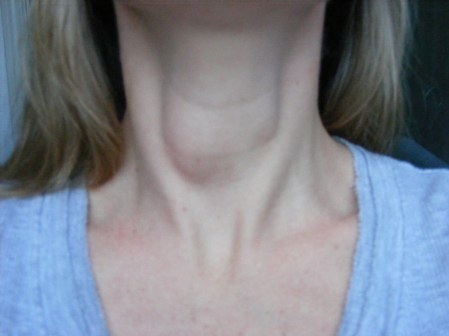
goiters

After dealing with thyroid disease for almost 9 years, I finally, for the first time, can definitively identify the symptoms that are coming from being hyperthyroid. When they found the goiters on my thyroid and diagnosed me with Graves Disease, I didn’t know my very overactive thyroid was doing anything to my body. Unlike these stories you hear (like Dr. Amy Myers‘s), I was not telling an unbelieving doctor that there was something wrong with me. Quite the opposite. I had multiple doctors see my test results and look at me, perplexed: “You haven’t been shaking, anxious, losing weight? Have you been losing hair or had temperature problems?” Nope, nope, nope. I had been hyperthyroid for so long that I just thought of myself as someone who had thin hair and could eat a lot. Everything else I chalked up to my high-stress job: I was “type A”, I didn’t sleep well because I had a lot on my mind. I wasn’t anxious, I was BUSY. Give me the radioactive iodine already and let me get back to work!

A few weeks ago, I started getting very stressed out about my upcoming trip to California. So much to plan, rentals to find, plane tickets to buy, packing lists to make, food to prepare and freeze, prescriptions to fill. And for the doctor I’ll be seeing, I have to write my history, years of tests to sort, scan and email, release of records forms to ten different clinics… Of course I was feeling overwhelmed–especially with finding places to stay since every day that I didn’t make a decision, more options would disappear. My sleep had (has) gone to hell, I’m waking up with a sore jaw from grinding and my teeth feel unstable. I keep telling my husband, “There’s too much to do. I can’t breath, my heart is racing, I feel like I’m going to have a stress-heart attack.” I lie down to rest and my mind … my god, it just races and my body feels full of electricity. I give up, come downstairs and speed talk at my husband. The other night he asked me, “How do you have so much energy right now, you didn’t sleep at all?” And I said, “It’s not energy, it’s adrenaline, it’s stress. Once the trip is sorted, this will stop.” That was my explanation.

I lost a little bit of weight and thought it was because I cut back on eating so many nuts. But I’m eating more in general: one minute I’m complaining about how full and uncomfortable I am and, five minutes later, I’m back in the kitchen looking for snacks. I said to my friend, “I’m stress-eating.” That was my excuse. I said to my Mom, “My hair has started to fall out again and it never even grew back from before.” In my mind, I was blaming the hair loss on weight loss, even though I’m only down a few pounds. That makes no sense! Such a small amount of weight loss hasn’t caused hair loss, your thyroid has caused both, you myopic fool.

A week or two before I started to notice all of this, I had increased my thyroid medication from 100ug to 125ug a day. I’ve changed my dose so many times over the years, I don’t give it a second thought. I certainly don’t monitor my body’s reactions because I am an expert at ignoring the signs, even when they’re not subtle. Just like when I was a workaholic and feeling these same physical symptoms, but thought they were just from job pressure.

When the penny dropped (I was recently told that Americans don’t know that idiom — it means you put two and two together or the light bulb went off), that all of it is overactive thyroid, I was so excited, so soothed. And it was suddenly so very obvious. This is textbook. I’m not an anxious person, I never have been. My neuroses are canted more towards rumination and second-guessing. It’s a fine line, but this tight, breathless, buzzing, heart-hammering feeling in my chest is not normal and is awful. Such a sad thing to realise that, even after all this time, with my body yelling its head off, I blindly make excuses. I could be standing here, cold and jittery, with a handful of hair in one hand and my third sandwich in the other, saying, “Gosh, this trip planning is stressful.”

It reminds me of that scene in The Man With Two Brains when he’s looking at the portrait of his dead wife and asks her to give him a sign if his new girlfriend is bad news. After the ghost turns the room upside down, Steve Martin says, “Just any kind of sign. I’ll keep on the lookout for it. Meanwhile, I’ll just put you in the closet.”

I’ve been putting my body in the closet. I’m so happy to finally know without a doubt exactly what my hyperthyroid symptoms feel like and even happier to know I can fix it.