Winter of Disjointedness

I haven’t written an update in over 7 months, which boggles my mind. It was the same amount of time between my two previous blog entries, too, so I’m not doing a very good job of keeping my friends and family up to date, but I find the speed at which our lives zoom by very unnerving.

Yesterday, my husband and I were marveling that it had been over 2 years since I stopped doing weekly immunoglobulin infusions and IV fluids. For so long, it was our routine, dictating the days he worked, the days we cleaned, what I ate, when I showered… Then we stopped and lapsed into a no-structure schedule and I’ve definitely gone downhill since then, but can I blame the lack of IVIG? I don’t know. I guess partly. 

It has been incredibly beneficial to me to track the big changes over the past 12 years – it’s helpful for my mother, too, who needs to take notes to remember the big diagnoses and events, let alone the nuances of ever-changing chronic conditions. 

And that – “ever-changing” – is my biggest hurdle. It’s hard to call my illness chronic when it seems to jump from one new acute problem to another, the blindsiding surprises causing a constant low-level wary vigilance that takes an incredibly heavy toll on us both, as we try to anticipate any crisis and create contingency plans for every situation.

Looking back on the last 7 months, two big things stand out – one good, one bad.

The good is that I finally figured out, after many months of scary bowel, blood pressure and heart issues that were truly life-altering for both of us (I couldn’t be left alone in the mornings), that I had developed reactions to Miralax (polyethylene glycol, like Macrogol), which had been my safe bowel medication for years (I’ve failed all of the prescriptions I’ve tried thus far).

It took an elimination of almost every single other thing I ingest to figure it out. I was scared to eat or drink anything, not knowing if, many hours later, all hell would break loose and cause hemodynamic instability that needed medical attention. But it was the Miralax, which I would take halfway through each night’s sleep. 

Since stopping Miralax, I have had fewer than 5 serious bowel episodes that caused pelvic floor spasms. They had been happening daily and I can’t overstate the difference in my quality of life without this constant threat and fear. 

My first endocrinologist told me: “With new symptoms, always look first at the medications you take.” Over and over, I have failed to remember this advice, like a few years ago when I was in an extreme hyperthyroid state – breathless, palpitations, not sleeping, thinking I’d developed anxiety because of the “beehive in my chest” – and it took 3 months before it dawned on me that it was from increasing my thyroid medication. Those symptoms were gone immediately after I stopped taking (temporarily) those hormones.

So, take heed, friends: never assume a medication is benign just because you’ve taken it for ages with no issues.

The bad standout thing from the last 7 months is a massive increase in EDS instability problems. I have a few areas of my body that have been “going out” repeatedly for years, but usually resolve after a few days or weeks: my neck, right clavicle, right thumb and one spot in my thoracic spine. But, back in December, I developed back-hip-SI joint instability that caused repeated injuries with normal, innocuous movements, like sitting up in bed.

I got hip x-rays and a lumbar MRI, which didn’t show the herniated disc that the doctor suspected. I started physical therapy, but a sneeze one night in February, and daring to sit on the loo the next morning caused an injury that landed me in the emergency room.

Something ripped (my physical therapist thinks a ligament or tendon attached to my sacrum) and I couldn’t get off the floor and I couldn’t empty my bladder.

The EMT that came to my house was married to a woman with EDS and he understood everything that was happening to me, which was incredibly reassuring, as the back pain in that moment made it difficult to explain that no “event” or accident had caused the injury and that my blood pressure is normally this low and that I didn’t want any medications because of reactions and please be extra careful when transferring me from clamshell to gurney to bed etc.

In the ER, I wound up having to create a huge fuss, begging for/demanding a catheter because “I am going to jam this pen into my abdomen to drain my bladder.” The pain eclipsed anything I’ve felt before. Bless the EMTs again – they could have left me in the hospital hallway, but they insisted I get a room before they left. It took 2 nurses way too long to get a foley catheter in, while holding me down with my legs splayed back, making my hip/back injury much worse, but, eventually they were able to drain 1200 ml of urine, noting that it is normal to feel the need to pee with about 150-200 ml.

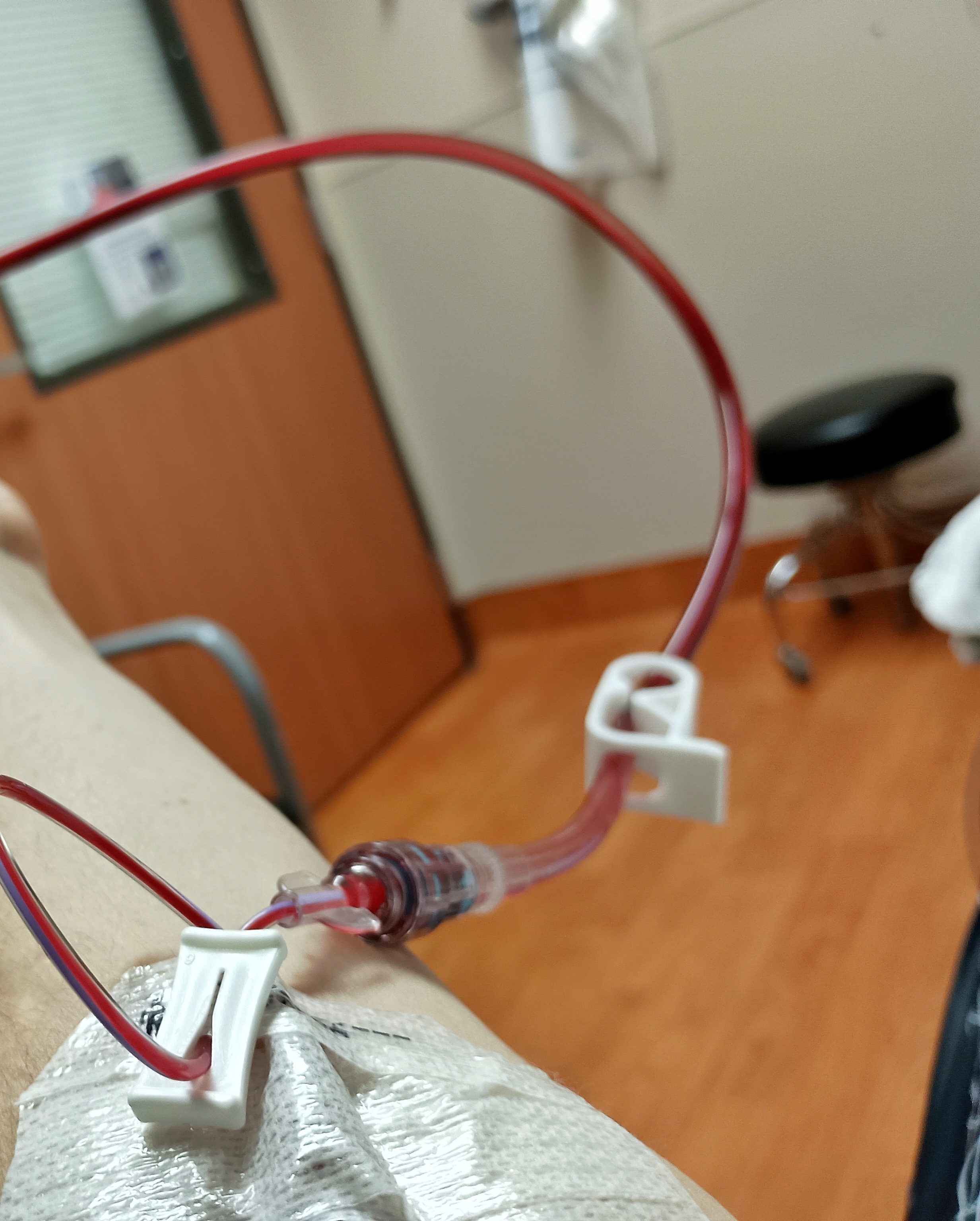
The rest of the hospital visit was a debacle. They ordered another, redundant lumbar MRI, even though I repeatedly asked for a hip/SI joint MRI. They ordered a kidney CT scan, even though I asked for an ultrasound (so much radiation in my life!). They didn’t secure the bladder catheter to my leg and the balloon got pulled out accidentally, which is one of the worst pains I’ve ever felt. They told me my bloodwork looked fine, even though my potassium was too low. They couldn’t get my IV line to stop filling with blood (the doctor actually came in, said, “that’s weird,” clamped it off and left (?!), so I unclamped it and got medical tape out of my bag to secure it myself in a way that allowed the saline to flow). And they gave me fentanyl, which didn’t touch the back pain, but caused one of the worst migraines of my life that went on for days and I thought I might have to go back to the ER to break that pain!
But, worst of all, I couldn’t be in a seated position in the week afterwards and bearing down slightly (which I have to do even to pass gas and urine) flared the pain in my flank, so I couldn’t do my daily enemas, which meant I couldn’t eat. It became very obvious that something like this – a different structural issue – would probably be the thing that pushes me into bowel surgery. 

[An aside: I understand that this downhill progression in mobility and upward trajectory in pain is probably due to my tethered spinal cord, for which I have so far refused surgery, but, no, I’m still not convinced that that operation would make things better. I will write about this some other time.]

During this time, I had an urgent appointment with Dr. McDreamy, my colorectal surgeon (who really is dreamy) to figure out next steps in case the injury remained bad enough that I couldn’t eat/poop normally (ha – as in, my “normal”) for an extended period of time. He said that he would be available whenever I was ready and we could do a colostomy bag. Music to my ears. The most reassuring discussion I’ve ever had with a doctor. He said I could try botox in my anal sphincter and a sacral nerve stimulator first, if I wanted (though, they won’t fix my prolapse issues, so they are not long-term answers). 

I haven’t made those appointments yet. As usual, I don’t want to rock this shitty, broken, leaky boat in case it makes things even worse. I’ve been concentrating on the most pressing concern, which is trying to heal this injury, but it’s discouragingly stubborn and I have no medications to help, aside from CBD balm and lidocaine patches. It’s a moving target, from left hip to SI joint to lumbar spine to thoracic paraspinal muscles and back again.

I have to be aware of every change in position: I am wearing an SI belt and lumbar brace all day, but sitting, turning, reaching, and bending can all cause re-injury. I have 4 physical therapists(!) and I’m doing daily exercises, but they are tiny, basic isometric movements that always cause worsening pain, so it’s slow-going.

I’m disabled to the point that I haven’t gone for a scooter dog walk in 8 weeks and I’ve also had massively increased exhaustion and weakness in the last month, so everything feels impossible. Getting out of the house with Penny is the only thing that keeps me sane and this has really taken a toll. But, even if my normal energy returns, my big mobility scooter with good suspension is just too jostley on a body held together with jello and rebar. 

In a post 15 months ago, I said my plan of action consisted of:

  • Getting calories in and out (I’m doing an adequate job of calories, but not nutrition. I’m eating about a third of my protein needs and not nearly enough vegetables for my vitamin requirements)
  • Keep trying bowel medications (I’m currently managing with only Mag O7)
  • Pelvic floor physical therapy (I’m now in regular and counterstrain PT)
  • Get a “small bowel follow through” study (didn’t do)
  • Get a mesenteric CT angiogram (didn’t do)
  • Talk to my surgeon about a stoma (done!)
  • Trial a fentanyl patch (done!)

My updated plan is:

  • Better nutrition
  • Get immunoglobulin infusions back
  • Trial painkillers, muscle relaxants, bowel meds and more
  • Religiously do PT exercises
  • Get a small bowel follow through
  • Try anal sphincter botox
  • Come to terms with the fact that I can’t put off bowel and spinal surgery forever. And we’re not getting any younger.

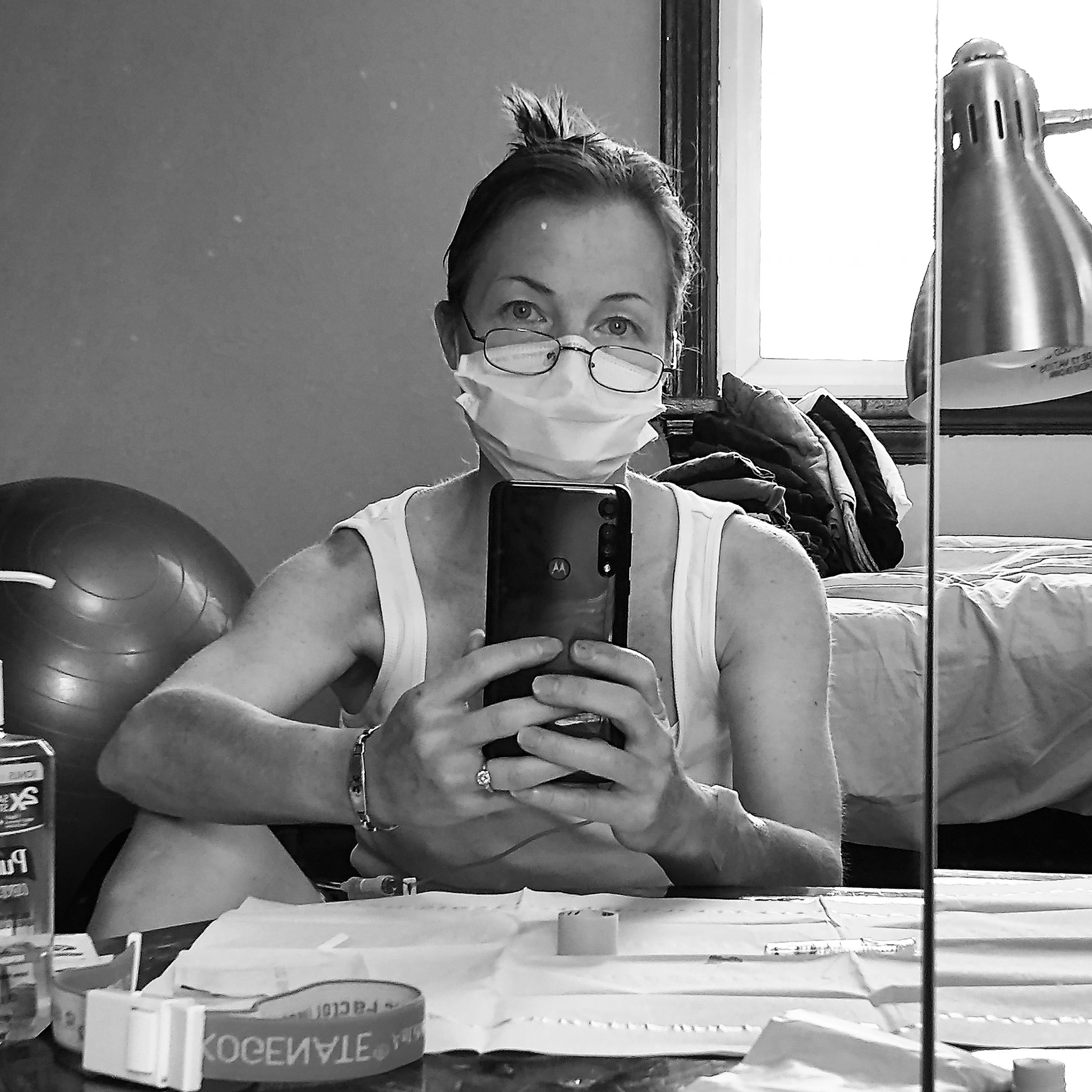
Damn Your Eyes

A note about my eye exam today:

I need to update my blog more often — for myself, more than anyone else. This morning, I had my first eye exam in 7 years and I looked back here to see if I’d said anything about the last time and saw I’d had a reaction to the yellow eye drops. I had no memory of this and it saved me from possibly having another reaction today for a not-really-needed test. So, I’m going to make a note about today’s experience to remind myself in the future not to bother going to an ophthalmologist again!

My vision was 20/15 the last time I had my eyes checked. I never needed glasses at all until July of 2020, when I realised I couldn’t see my vein very well when putting in a peripheral IV catheter to do IVIG. Since then–not even 2 years–I’ve gone up 3 magnification strengths and my right eye has significantly worse vision than the left. My distance vision is a little worse, too, which I realised when my husband (who is 12 years older than I am) could make out signs on the highway that I couldn’t.

July, 2020: The first day of the rest of my farsighted life: I had to borrow my husband’s glasses to put in my IV.

Of course, this is totally normal for people my age, but my brother started to need glasses after spending time on a submarine and had a theory that it was because he didn’t focus on anything more than about 8 feet away for so many months. I think this might hold some truth for those of us who spend so little time outside, looking at horizons and focusing on long distances.

I have a ton of eye symptoms, which bother me much more than the need for readers, but I’ve been told there is no remedy for any of it (except dry eyes). I was told in the past: “When your overall health is poor, your eye health is poor, too.” The ophthalmologist today actually said that my eye health was good, but my symptoms are probably neurological (migraines, dysautonomia etc).

Some of my eye symptoms are: floaters; blurriness; pain in orbital muscles when moving my eyes; itchy eyelashes; dry eye to the point that when I blink in the mornings, my tears feel like acid hitting my eyeballs; right eyelid spasms; light sensitivity; trouble tracking when scrolling on my phone or reading blocks of text; migraines that feel like my right eye is going to explode out of its socket (it’s silly, but I often push my eye back in with the palm of my hand because it really feels like it might pop out). I used to say that my eyes felt like I’d put grit into Vaseline and then smeared it over my eyes.

I have had radioiodine ablation on my thyroid for Graves disease (or some sort of autoimmune presentation of hyperthyroidism–endocrinologists have disagreed on whether it’s actually Graves) and was told to pay attention to eye symptoms, but the doctor today didn’t see any evidence of that being a problem. I am also positive for one of the Sjogren’s markers (carbonic anhydrase VI IgG antibodies), which ophthalmologists treat no differently than dry eye. He rattled off a bunch of things that I’ve tried in the past that have done nothing (eye drops, eye scrubs) and some I haven’t (take omega 3s, humidifier in bedroom).

He said my optic nerves, blood vessels, maculae etc were all normal. During the visual acuity test, none of the letters were sharp, but I could guess most, even though they were blurry. The doctor said my vision was considered 20/20 because I could guess 3 out of 5 of the bottom line, adding he wouldn’t be able to see any of them at all. This is the thing when you’ve had great vision your whole life–you don’t really know what is “normal” or acceptable.” I hate not being able to see the letters clearly, but being able to guess them at all, even though I was straining and it was very blurry, is still considered 20/20.

They said I am doing no damage to my eyes using the cheapo 3-pack of Costco reading glasses. It doesn’t matter what strength I use or whether I use different magnifications (I have various glasses scattered in different rooms) or whether I’m using the lenses that work for one eye, but not the other. Essentially, if you can move the phone/book closer or further away and make it work, then everything’s fine. They said I could get prescription glasses, but, if I’m getting by, there is no need. I don’t want any more energy expenditure on anything, so I’m sticking with what I’m doing. My husband was mildly alarmed by this: But if you can get prescription glasses that correct for the differences in your eyes and it makes your life better, why not? Energy is why not. It all comes down to having nothing extra to give.

For anyone with MCAS, I have had the yellow eye drops 3 times and, the last time, I had a reaction. A friend told me I could ask for a retinal scan in lieu of dilation, which I did and it was easy and only took a few minutes. Once in the past, I was told that one of my eyes had high pressure (intraocular fluid pressure) and this can be a warning for glaucoma and I should keep an eye on it (I just caught that totally unintended pun when I did a reread 🙂 ). The gold standard for checking eye pressure is the use of yellow numbing eye drops, which are used with a slit lamp and blue light. A step down from that is a handheld tonometer, which still needs numbing drops, but they don’t have the yellow dye. Lastly, there is a device called an Icare, which doesn’t need drops at all. The latter would have been my preference since I don’t know what caused the previous reaction (the dye, the numbing medication or the preservatives), but they didn’t have one at the location where I had my appointment today, so I decided to skip the pressure check, thinking/hoping I probably don’t have a problem.

Lastly, I want to note that this was BY FAR the most risky covid exposure I’ve had (or, really, just human germ exposure, in general). The rooms are tiny with no windows or ventilation and the doctor and his assistant both had to get very close to my face. Also, they cancelled my appointment last week because the ophthalmologist was out sick and I wonder — out sick with what? Even a head cold would be a deal-breaker for me. All in all, I regret the appointment because the risk of contracting a virus was very much outweighed by the chances that I have eye problems that can be remedied (I now know). But I didn’t know what was normal or should be treated and I certainly would want to know if intracranial hyper/hypotension was causing any eye damage (as seen on a CINE MRI, I have blocked cerebral spinal fluid flow in my brain because of low-lying cerebellar tonsils, which can cause intracranial pressure issues). I didn’t know if wearing shitty readers could damage my eyesight further (they can’t) and I didn’t know if having worse vision in one eye was a concern (it’s not) and I didn’t know if I could brush off all of my eye symptoms as neurological (I can). Now I know and you do, too. 🙂 Title Credit

Halloween Update Litany

I’m going to try to write something. An update of sorts. Not necessarily because today is exactly nine years since this illness stepped into my body and started controlling the trajectory of my life, but more because it is a quiet Saturday and I can’t call any clinics and I don’t have any medical appointments. It’s Halloween, but we’re completely ignoring it this year. It’s a beautiful day, but I woke up after five hours sleep with bad brain symptoms, so I’m not up for going outside or calling a family member or washing my bed clothes, which are in dire need. And I’m just so tapped out on research right now. Endless, endless research into treatments and specialists and ways to bankrupt ourselves on nifty devices that might miraculously give a reprieve from symptoms or plateau my decline in functioning.

I often don’t write — even if I have the time and energy — because I feel like I want to express something meaningful and express it beautifully, or at least express it well. Express it in a way that others might identify with it or even be moved by it. Or, if not meaningful or moving, I’d like to be able to write something informative. But that takes more mental energy and creativity. I always find a reason not to tap into the emotions that are necessary to write deeply and thoughtfully. I stay sane with distraction, coasting along a wave of TV shows and dog cuddles, trying not to look into the depths below. I’m finding distraction harder this year.

After five years of a slow, but fairly steady increase in functioning, I’ve gone downhill. Not because my dog died or because wildfire smoke was choking us for weeks or because I can’t see my family and my one friend who kept me sane by visiting regularly. And not because of the emotional toll of the pandemic and the rage and heartbreak caused by the political strife in the world. That’s all just icing on the distress cake. The actual bulk of my cake is made of pain, exhaustion, reactions, and failing organs and bones, with thin, bitter layers of isolation and future worries between the tiers of sponge. It’s a really unpalatable cake.

When I first met my friend Jak over at Mast Cells & Collagen Behaving Badly, she had been through ME, then she was dealing with mast cell disease and her body had started to have problems from EDS (Ehlers-Danlos Syndrome, a connective tissue disorder). Most people I’ve met with this illness trifecta started having mast cell reactions after ME hit them. I was the other way around. I’d been dealing with angioedema since I was teenager and I first went into anaphylaxis in 2001. ME hit a decade later. When I met Jak, I didn’t have an EDS diagnosis and, when I first got it, I ignored it and decided it wasn’t true. I remembered, though, that Jak had said, “I could have told you that. With some of your symptoms, it seems obvious.” Her pain and subluxations didn’t start in earnest until she was in her 40s and dealing with peri-menapause, so she cautioned me that EDS could raise its head in the future. No, no, I’m not hypermobile, I said and I ignored it. Well, there’s no ignoring it now.

Last year, I went back to the top EDS doctor here in Seattle and told him I hadn’t believed his diagnosis and could we start from scratch, work me up again, see if he truly thought I had EDS? He smiled (good doctor), he agreed (did another physical exam), he reiterated that I had EDS and showed me what my body is not meant to do. He also diagnosed thoracic outlet syndrome (TOS). For all my research, there are so many odd things about my body that I barely notice. It’s like whack-a-mole — I’m just trying to push down whatever the most concerning thing is on any given day. What do I care if I can’t hang my clothes up or hold my phone to my face without losing circulation through my arms and having my hands go numb? It’s really not important in the grand scheme of this illness. You adapt. So when the doctor asked me if I felt anything as he manipulated my arm, I said, “Nothing. Except there’s no blood flowing and I have pins and needles.” He smiled gently again. “That’s not nothing. That’s what I’m looking for.” It took a very long time for blood to come back into my forearm and hand after whatever he did and I had electric zaps for hours. That was a year ago and I still haven’t read about TOS or whether those symptoms are normal or what to do about them. I don’t really care right now because I’m too busy trying to whack bigger, louder moles.

My leg pain has gotten much worse. I can’t stand in the kitchen to cook as long as I could before and, anytime I do, I have to wear compression stockings and a back brace, but still need to go to the couch and lie down with my feet up after a short while, groaning with the effort. My neck and back have gotten worse. Something in my thoracic spine keeps going out and my lower back and tailbone have a constant steady ache. My neck always feels unstable, so I move it very gingerly, but it also always feels like rebar, so I try not to immobilize it. I pull a different shoulder or neck muscle seemingly every day, usually from thrashing around in bed (unfortunately, not in a fun way, not when I’m conscious). I’m currently ignoring a jaw ache and maybe a cracked tooth from clamping in my sleep and the fact that my eyes never stop burning and are sore when I move them. My left patella keeps shifting out of place and it’s agony when it happens, so I’ve been doing a deep-dive into knee braces and kinesiology taping. I broke my wrist and finger this summer when Penny lunged at an off-leash dog and snapped my hand behind my mobility scooter seat. I’m still wearing a cast or a brace a full three months later and my right hand, which picked up the slack when I couldn’t use my left, has developed instability in the wrist and a subluxing thumb. When my endocrinologist heard about my fractures, she said we needed an appointment asap because she is very concerned that my osteoporosis has progressed. She’ll probably suggest I take more drugs. 🙄

And really none of this is that important because it all pales in comparison to my bowel hell. Bowhell.

Warning: lots of talk about poop and toilets ahead. Enemas barely work anymore. To have a bowel movement, I have to use a liter of water and massage my abdomen for sometimes hours each day. And “massage” sounds delicate. It’s not. I often worry I’m going to rupture something with my squeezing. With my broken wrist and finger, I couldn’t manage to press my abdomen properly for weeks and my bowels suffered. I couldn’t evacuate effectively, which meant I couldn’t eat enough and I didn’t sleep properly. Everything has a cascade effect.

Compounding my bathroom issues is how difficult it is to sit on a toilet. I lose circulation in my legs very quickly (even with a Squatty Potty) and it is incredibly painful on my neck and back. My doctor asked me when my neck was the most painful and I realised it is sitting on the toilet because I have no support for my spine and nothing to lean back on. I’ve resorted to using a hard neck brace (only sometimes — sometimes it makes it worse) and putting a chair in front of me to lean my forehead against, but, even so, after I’m done, I have to lie flat on the floor and, if I have the energy, use heat, traction and ice to help the spinal pain. I was never conscious of just how much I need to support my neck until two years ago when my mother was visiting and I’d made enough improvements energy-wise to go to the opera. Wow, three hours sitting in a short-backed chair was excruciating. I was almost in tears. I was dizzy, my heart rate was high, my legs were losing circulation (I’m short, so I was using my backpack as a foot stool) and I could not hold my head up.

So, sitting is an ordeal. And shitting is an ordeal.

I have a long history of vasovagal collapse from abdominal pain. In my twenties, it happened with the onset of my period because of severe dysmenorrhea. Shockingly, when I got sick, my cramps virtually disappeared. But they’re baaacck! And my period often likes to come three times in one month, so this cramping and inflammation, coupled with random pelvic floor spasms, coupled with colon pain has been a lot. Last June, I sat up in bed one morning and some deep part of my lower abdomen spasmed and I immediately went into a vasovagal episode. My heart rate went so low, that I was having trouble breathing. My blood pressure dropped, too, but the main problem was the bradycardia. I was shaking all over and trying not to black out, but after about 20 minutes, I had to call the paramedics. Before they even got here, the pain abruptly ended and, instantly, my heart rate came up and I could breathe again. (I told them not to come inside because of covid and I gave myself IV fluids at home. I’ve dealt with this before, emergency rooms really can’t help.)

From that day forward, every day for six weeks, I was in an acute bowel pain crisis. I couldn’t seem to eat anything that didn’t contribute to the pain across my transverse colon, I lost weight, I wept each evening, I slept poorly, my attention was never not on this organ that was constantly yelling at me that something was wrong. I wound up getting a CT scan (a big deal during covid and when I’ve had so much radiation in my life) and blood tests because I thought: what if this is life-threatening? I was spooked by a fellow EDSer’s emergency surgery for a ruptured bowel and resulting colostomy bag, but I was even more concerned about the possibility of an elemental liquid diet or a feeding tube. I’ve gone to great lengths to keep a varied diet, not only because food is my one joy besides dogs, but also because I know so many people who never got foods back after strict and prolonged eliminations. And feeding tubes — I never want tubes of any sort stuck in my body, too many complications. It’s the reason I’m still doing weekly peripheral IVs after five years, rather than getting a port or PICC (I don’t know anyone else who has come close to tapping veins for this length of time).

The CT scan showed nothing except my big lunch and tampon (a mortifying radiology report: unremarkable, TAMPON, unremarkable, unremarkable, COPIOUS AMOUNT OF INGESTED MATERIAL IN STOMACH, unremarkable etc…) and the acute bowel pain eventually faded back to my regular constant ache with periodic stabbing knives and electric zaps. But it sure got my attention.

I started Motegrity, a selective serotonin type 4 (5-HT4) receptor agonist, which cost $265 for one box (bought online from Canada because my insurance balked) and then caused possibly the worst medication reaction I’ve ever had. I started Linzess, which cost $350 for one bottle and either causes nothing to happen or a full day of sharts. I’m still taking Iberogast, Miralax, BPC-157, SBI Protect, Thorne SF722, oregano oil, berberine, magnesium, digestive enzymes, betaine HCl, and probiotics… all for my bowels. I’m about to try Mestinon, LDN and Cromolyn again (okay, I take it back, the latter was actually the worst medication reaction I’ve ever had — and I’m going to try it again, which has to show my level of desperation); these are all medications that can help motility. Plus, I have a Xifaxan prescription at the ready (which I’ve already taken twice) when I’ve exhausted all of these options.

It’s a next level problem. What I mean is, there were four years in the beginning of this chronic illness when I was “just” dealing with ME and MCAS — when I could still poop! When it was “just” muscle pain, but my joints were fine and my bones felt sturdy. Unbelievably, there were years when I didn’t have brain symptoms. I had the low-level kind of brain fog that made you forget things or not be able to find words, but, in the beginning, I didn’t have the buzzing brain and eye pressure, slurring and screaming tinnitus that makes bed the only possibility, even if my body is feeling strong. These new additions take illness management to the next level.

I’m on my third gastrointestinal doctor. The first said: Miralax, papaya, probiotics. Huh? Did you even hear the part about dead colon? On a return visit, she said: Daily enemas for life. Are you fucking joking? I asked her when she would recommend a colonoscopy (back before I realised it would need anesthesia in my case). When you have bloody diarrhea, she said. Right. Okay.

The second GI doctor said: Colonoscopy and endoscopy. On a return visit, she said: COLONOSCOPY AND ENDOSCOPY. She would not talk about any other tests or interventions. I don’t want to go through that. I don’t think those procedures will show anything and, with my medication reactions, there are legitimate risks to full anesthesia, not to mention the clean out having risks because of my hypotension and hypoglycemia. I thought (and still think) that it was prudent to exhaust less invasive options first.

These two doctors were young women at the University of Washington, one touted as The Motility Expert and the other as being EDS-knowledgeable. I mention this because I would assume I would be most comfortable or have the best experience with them instead of the third GI doctor, who is an old man that made a slightly misogynist comment right out of the gates and doesn’t make much eye contact. But he has been the only one to think outside the box and marginally help me. He ran tests that nobody has ever run since I’ve been sick (I’d never had a stool sample done or celiac test!) and spent 40 minutes discussing my mast cell history before even broaching the subject of my bowels. He dismissed a colonoscopy and it felt like he’d lifted a 100-pound weight from my shoulders because I was crippled with guilt after rescheduling the procedures over and over for a year and a half.

So, because of the progression of bowhell symptoms and structural issues the last few years, I have been pursuing MRIs and neurosurgical consultations. A cine CSF (cerebral spinal fluid) flow study showed a lack of CSF in my hind brain, caused by low-lying cerebellar tonsils (LLCT). My neurosurgeon (who is experienced in dealing with EDS/MCAS/ME patients) also suspected craniocervical instability (CCI), but couldn’t recommend surgery from my MRI measurements and symptoms without first performing more tests (invasive cervical traction (ICT), where they lift up your skull with a pulley system to see if there is an improvement in symptoms, and intracranial pressure monitoring (ICP ), which is a bolt in the skull that holds a probe that measures pressure in your head while concurrently preforming a lumbar puncture). I decided not to do either of those because, as you might have guessed, I don’t like rocking the boat (with, say, a new soap, let alone invasive tests that involve holes in my skull) (oh, and travel across the country) (and covid). But I have wondered if the blocked CSF flow is contributing to or entirely causing my brain symptoms. That’s a big deal. I used to feel smart and effective.

But the biggest deal of all came from the neurosurgeon looking at my pelvic MRI defecography from five years ago (which I didn’t even send to him because I was only consulting him about my neck; he must have gotten it from my specialist, who was the referring physician).

“You have a large bowel,” he said.

“I’m not surprised.”

“And what have you been told about your enormous bladder?”

“My what?” He has a thick Italian accent straight out of central casting and I didn’t know there was anything abnormal about my bladder.

“Your enormous bladder. Your ENORMOUS BLADDER!”

He had to repeat it four times before I could understand what he was saying. It was pretty comical. Nobody had ever mentioned my bladder. He recommended a renal ultrasound to rule out hydronephrosis, urodynamic testing for neurogenic bladder, and a lumbar MRI to look for tethered cord. I’m sure you’ll be shocked to know, I ignored it all… until I watched online presentations by Petra Klinge, probably the top tethered cord specialist in the country, and a Q&A with Dr. Klinge and Jeffrey Greenfield where they mentioned that, although bladder symptoms are the hallmark of pediatric tethered cord, in adults it’s often bowel problems, usually constipation. Ah.

I sent my lumbar MRI (both prone and supine) to my neurosurgeon and he diagnosed “tethered cord, classic variant,” which is notoriously hard to see. In other words, as my complex disease specialist emphasized to me repeatedly, it is rare for this neurosurgeon to diagnose tethered cord before CCI from a lumbar MRI. This is the case even though they have both actively been trying to identify it early since so many of their patients have to return for a second “detethering” surgery after undergoing craniocervical fusion.

“Elizabeth, why aren’t you on a plane to New York for SFT [sectioning of the filum terminale]?” my specialist asked me.

Friends, I DON’T WANT SURGERY. EVER. No surgery, but ESPECIALLY NOT SPINAL SURGERY.

I will leave you there. We have much to discuss. This is now my focus. I need to do everything I can to manage these symptoms and to halt their progression. Meds, exercises, physical therapy, prolotherapy, I don’t know what. Right now, my plan is to plan. I’m not willing to see any healthcare practitioners in person, so it’s tricky, but it’ll be a winter of research and putting some ducks in a row.

I also have to start preparing for a what might be an inevitable surgical eventuality. I need a pain management protocol with bigger guns than paracetamol, I need to strengthen my core and my bones, I need to find muscle relaxants to which I don’t react, I need to get my blood pressure up and control my MCAS as much as possible. I need to save money. No more ignoring.

Happy Samhain, everyone. And my 9th “sickiversary” — not a happy day, but one that should be acknowledged, nonetheless.

UPDATED Emergency and Surgery Protocol for MCAS and ME

The links at the bottom of this page are for my protocols that were updated March 29th, 2020. My protocols are for me and my doctors. I am not a health professional and I recommend you do not use any of my advice or guidelines without consulting your doctor. *See full disclaimer below.* My protocol is an accumulation of months of research into precautions that should be considered by people with mast cell disorders (MCAD) and myalgic encephalomyelitis (ME/cfs), as well as some guidelines for patients with Ehlers-Danlos syndrome (EDS) and craniocervical instability (CCI). It includes information and materials from ME websites, such as me-pedia.org, mast cell resources, such as tmsforacure.org, my doctors and specialist, as well as other patients.

*******************

I started writing an emergency protocol back in 2015 when my mast cell reactions were scaring me with their unpredictability. I wanted something comprehensive, in writing, for anesthesia teams in the case of a planned surgery, but also something that my husband could hand to paramedics or emergency room doctors, if I couldn’t speak for myself. It was a massive undertaking because I tracked down every link and reference I could find about medication and surgery precautions for patients with mast cell diseases and ME. I wanted to gather all the information that was pertinent to me — my particular case — and edit it down to something manageable. I put together something passable and then moved it to the back burner for the last 4 years.

Last week I saw a new GI doctor who was emphatic that I get a colonoscopy and endoscopy at the same time and with anesthesia. I have been completely enema-dependent for years and, honestly, it’s exhausting. My previous GI doctor told me it was due to anatomical abnormalities (an MRI found pelvic floor dysfunction with cystocele, rectocele, sigmoidocele) and that I’d likely need enemas for the rest of my life, but it feels like the issues are getting worse and the new doctor didn’t want to throw medications at the problem without knowing exactly what she’s dealing with.

I cannot imagine voluntarily going under anesthesia. All of my worst reactions in the past 7 years have been to medications and my fear of trying new ones — especially intravenous medications — is so pronounced that I vowed only to agree to anesthesia if I was in a life-threatening situation (or couldn’t speak for myself). How could I be lying on a gurney with a peripheral IV, knowing they are about to inject multiple anesthetic drugs and not jump up and run out of the room? I wouldn’t be able to advocate for myself… I could die for a colonoscopy! So, I left the appointment with a sense of doom that only deepened when I started to feel a new ache in my lower abdomen. It got progressively worse over 3 days, the ache turned to pain and, what I thought of as run-of-the-mill bowel inflammation started to seem like something else. Gallstones? Bladder infection? I got out my emergency protocol notes and spent about 20 hours over the next few days rewriting everything, feeling like I might be working against the clock if this was something like appendicitis. Then I woke up last Sunday to such severe lower abdominal pain that I couldn’t move, could barely breathe or speak. I was shaking all over, in a cold sweat, nauseous and felt like I was on the brink of passing out. My husband wanted to call an ambulance, but I said no, hoping it was some sort of spasm that would pass. And it did… but not entirely. The ache and twinging remained for a few more days. It’s gone now and I think it was my dastardly bowels, after all, but it was bad and it scared me. It’s like the gods heard me say, “no way am I getting a colonoscopy” and decided to stab and twist their Elizabeth voodoo doll to make sure I got the point that there’s a problem I can’t continue to ignore.

The upshot of all this is, I finished the emergency protocol and I wanted to share it here, in case it could be useful to anyone else. There are a few important points about it, though:

  1. When I started, it was for personal use and I didn’t keep track of references. I will go back and gather all the links and add them to this article, but I have no idea how long it will take me and I wanted to share this sooner, rather than later. If you see your own information here without credit, please understand I will add a link to your article/blog/website! Please feel free to leave a comment.
  2. This protocol concentrates heavily on mast cell precautions because MCAS has caused my life-threatening reactions such as anaphylaxis and profound hypotension. It does not mention ME or CFS, although I researched and included ME resources, such as Dr. Lapp’s recommendations (Appendix E of the Primer for Clinical Practicioners) and Dr. Cheney’s anesthesia letter.
  3. I have an EDS diagnosis (Ehlers-Danlos Syndrome — a connective tissue disorder), which can cause serious surgical complications. There are a lot of guidelines out there for EDS patients and I have only researched some of them. It wasn’t until recently that I started to take this diagnosis more seriously and I still haven’t had the gumption to jump deeply down the research rabbit hole, but, once I do, I will be updating my surgery protocol with any additional EDS precautions that are pertinent to my situation.
  4. It bears repeating: This is not medical advice of any kind. This is my personal protocol, for my personal situation. You may be more or less reactive than I am, you may have normal or high blood pressure or you may be far more disabled and need many more accommodations… But, I hope it can be of use as a jumping-off point. Please consult with your doctor.
  5. The links below are printable pdf files, which are formatted properly, but if you need any of them in a different format so that you can copy and paste certain parts into your own protocol, don’t hesitate to leave a comment or email me at akaemilo@gmail.com, and I will send you a Word doc or Google doc version.


Click here for the long version of the protocol, geared towards the patient: Elizabeth Milo Full-Length Emergency and Surgery Protocol

Click here for 1.5-page short version of the protocol, geared towards doctors: Elizabeth Milo Abbreviated Emergency and Surgery Protocol

Click here for anaphylaxis protocol: Elizabeth Milo MEDICAL EMERGENCY RESPONSE PLAN for Mast Cell Activation and Anaphylaxis

Click here for my personal medication chart, based on an original from The Mastocytosis Society: Elizabeth Milo Safe Medication Guidelines


Here is The Mastocytosis Society Emergency Room Protocol.

IMG_20150105_132432-1

*HEALTH DISCLAIMER*

This blog is my own personal journey. The information and other content provided in this blog, or in any linked materials should not be construed as medical advice, nor are they intended to replace a one-on-one relationship with a qualified health care professional. NO information on this site should be used to diagnose, treat, prevent or cure any disease or condition.

If you or any other person has a medical concern, you should consult with your health care provider or seek other professional medical treatment. Never disregard professional medical advice or delay in seeking it because of something you have read on this blog or in any linked materials. If you think you may have a medical emergency, call your doctor or emergency services immediately.

The future might be the past…

I’m going through a rough(er) patch. My body is scaring me because I can’t find any cause for recent episodes. One of the good things these past few years, is that I can usually pinpoint a reason for reactions and downturns. Even after the last horrific night I suffered with apparently no reason (it was last November, during my Dad’s very short visit and I couldn’t blame it on overdoing it because I didn’t), I started spotting late the next day and–light bulb!–it was my period coming a week early (I can have terrible reactions on the day before or the first day of menstruation).

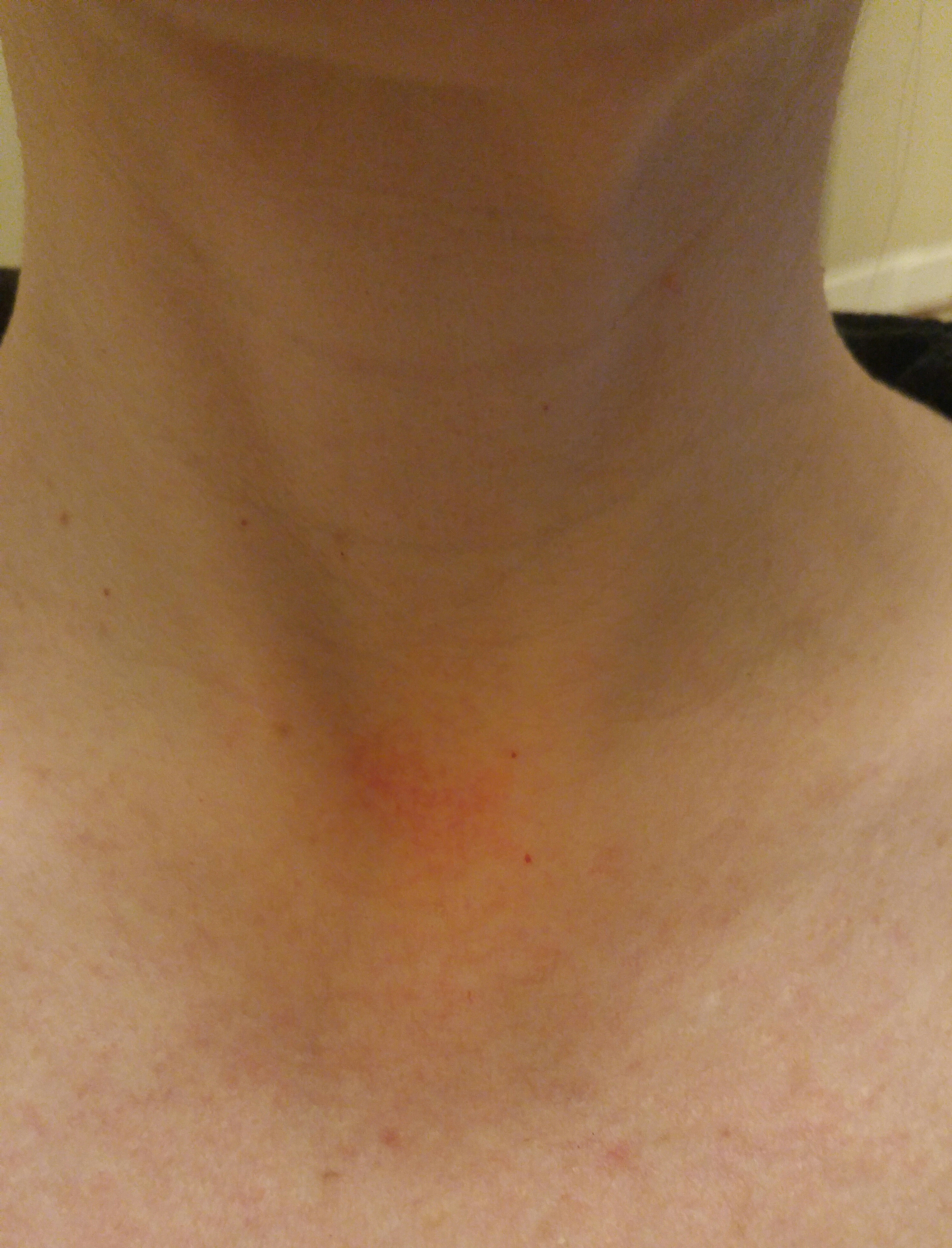
When my husband called 911 on the first day of my last period (both my MD and ND said that my body had gone into shock), it was the first time I’d had such a bad collapse with vitals bottoming out since 2010 — since before I was sick! Then, 5 days later, I got a tingly tongue and lip during IVIG and then a hive on the base of my throat. I realise it was a tiny reaction compared to what so many mast cell patients go through (a week later, a friend of mine went into full-blown anaphylaxis during her IVIG infusion and then somehow got the guts to try again the next day with the same batch –that put my experience into perspective), but the thing is, except for one small hive when I tried Xanax in 2013, I hadn’t had any hives since being in full-blown anaphylaxis 17 years ago! And that place–a hive in the suprasternal notch– was always the position for a systemic red alert, for something I ingested, as opposed to benign contact dermatitis.

0215192043-01

Then Saturday evening, my tongue swelled up for the first time in 7 months for no reason that I can figure out. I had tongue swelling a few times last year, but I could always explain it (dental work, sauna, vancomycin). Even more concerning, it’s still swollen now, 45 hours later and that’s very unusual. I took Benadryl the last 2 nights, squirting it onto the affected area of my tongue, as I’ve been told to do (this is also unusual for me–I am extremely judicious with Benadryl, only taking it when absolutely necessary) and the swelling still hasn’t resolved. I can’t remember another time it lasted this long — maybe, again, 17 years ago during anaphylaxis.

Then yesterday afternoon, I was hit with vertigo after spending too much time on my feet, preparing food. Vertigo is rare for me and is a big red flag. It’s very different from dizziness and I don’t think it has anything to do with blood pressure. I went to bed for a while, hoping it would resolve, but, when I got up, I was still slamming into walls, as if I were walking the hallway on a lurching boat. The last 2 times I experienced vertigo were 5 months ago during–shocker–my period and a year ago on the morning we were leaving for California, after killing myself the day before to finish packing. I thought it might be something to do with my neck, which always has issues, so I used heat, then my cervical traction device, then an ice pack. I think it helped; the vertigo had mostly abated by the time I went to bed.

But…

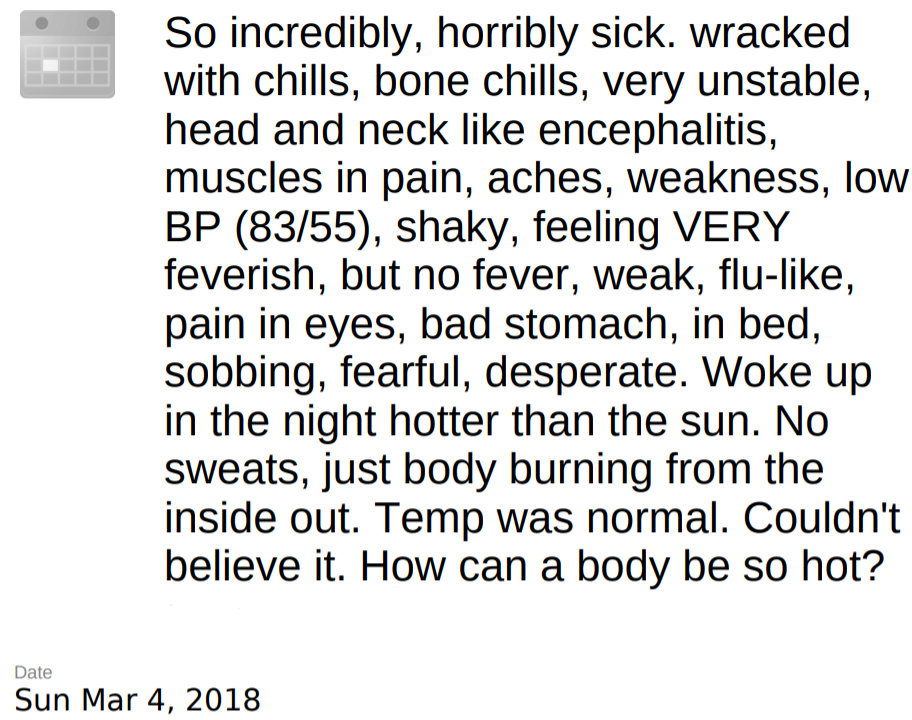
A few hours after I went to sleep, I woke up with horrible shakes and chills and drenching sweats. My BP was low (but low-normal for me: 80/50), HR was a little high, temperature was 96 degrees, and O2 was 95%. It was 7 terrible hours that felt viral, like when I first got sick, but was probably mast cells, what with the swollen tongue and all. I finally got up to do that thing that other chronically ill people might understand: put on clothes in case I had to go to the hospital. On a normal day, I might sit around in my dressing gown with unbrushed hair all day, but when there could be a chance I’m going to the hospital, I try to make sure I’m not naked. I also make sure I’m not wearing anything I care about — I’ve lost clothes in the hospital before.

Strangely, I had almost an identical episode on this exact day last year. Here’s a screenshot from my calendar:

Screenshot 2019-03-04 at 12

After the most stable autumn and winter I’ve had since being sick, this downturn–this piling on of relatively rare, red-flag symptoms–scares me. My sleep has gone to hell in the last few weeks, which compounds everything by stealing energy and increasing pain. Plus, I’m exacerbating things by holding tight to my “best winter yet” narrative and by fighting so hard to maintain the level of functioning I’ve had this past year, rather than pulling way back and resting aggressively.

My ND says the naturopathic philosophy is that you will go back through previous stages of health and experience earlier symptoms as you travel the healing journey back to where you once were. I’ve latched onto this theory to anchor myself and dispel some fear. The resurgence of all these old symptoms means there has been a shift in my system — but maybe it’s a positive shift, even though it doesn’t feel that way. I’ve gained weight since starting IVIG, over 8% of my norm, which is not insignificant, especially on someone as small as I am. I’m at my heaviest since being sick and, although I’m not overweight, I’ve lost muscle tone the last 7 years and I don’t have the physical ability to burn fat and build muscle, so I hope this trajectory doesn’t continue. My doctor thought this, also, pointed towards a shift in my body: maybe I’ve started absorbing nutrients better. Acne is coming back a little, too. Maybe my hair will grow back! Or the next thing will be that I’ll catch a cold for the first time in 8 years… (And because I really don’t want this to happen, no matter what it might indicate about a calming immune system: knock on wood, toba, toba, spit over shoulder: patuey.)

But, as I lie here, shaky, with my swollen tongue, chronicling these last few weeks (minus the osteoporosis diagnosis and extremely elevated post-antibiotics SIBO test results, both of which I’ll have to write about at a different time), none of it feels like a positive shift and I worry about what I should eat so as not to add to mast cell reactivity and whether I should stay in bed and lie still, even though longed-for Seattle sun is streaming through the windows and I’d love to make some breakfast and sit at my table watching Riley lounge in the grass, soaking up the rays, and the hummingbirds diving around our feeders.