Heart Center.

I have an appointment with my GP tomorrow. It’s at 9:30am, which is about 2 hours earlier than I usually schedule appointments so that I am a functioning human being. I don’t even know if it’s worth it to see her. I basically made the appointment because I haven’t seen her in 6.5 months. I am a different person now. Last time I saw her, I still didn’t quite understand how the medical system works. I still sort of thought that doctors would search and help and communicate and dig until they figured out what was wrong with a patient. I still didn’t realise how specialists operate. Even after the first infectious disease doctor said, “You don’t have an active infection” and then, in no uncertain terms, gave me a permanent goodbye. Even after the second infectious disease doctor said, “You have chronic fatigue syndrome and, from here on out, you should work on treating the symptoms.” In other words, See ya! Even when the chronic fatigue expert spent ten minutes with me after I waited 8 months for an appointment and sent me on my way with directions to exercise read a book about pain, and try Cymbalta. It wasn’t until my second visit to the rheumatologist, that it finally clicked. He had treated me so well at my first appointment. I will never forget he said, “There is something wrong with you. It is not your job to figure it out, it’s ours.” It felt validating and I almost wept. Someone would finally take the burden of this search off my shoulders and figure out why I felt like I’m dying… But that’s not the way it works. When I went to see him again a year later, the first thing he said was, “Why are you here? Chronic fatigue syndrome is an infectious disease.” Ah. Click. Finally I see. Dr. House is only on a tv show, stupid! Specialists spend 15 minutes max listening to your story, run the standard tests, and you’re done. If the tests are negative, you will never hear from them again. And, even if the tests are positive ~ like the time they found two toxic goiters on my thyroid and had to kill the whole lot with radioiodine and I had to figure out from a pamphlet and a bunch of inquiries that were shuffled from one person to another how to get my synthetic hormones and whether I should have follow-up visits with someone ~ sometimes you won’t hear from them then, either.

I had a yearly check-up with my GP 9 days before I was hit by ME. I distinctly remember saying to her that day, “My biggest problem is my neck” ~ meaning the degenerative disc problems in my cervical spine that have plagued me since my early 30s. We talked a lot about my job. I was having difficulty sitting at a desk all day after years of being on my feet. She thought, because of the stress involved, that it might not be the job for me. I remember her saying exactly that: “Are you sure this is the right job for you?” I shrugged and thought, Maybe not. But I still love it. In some ways, I think that sentiment has coloured the treatment I received once I came down with ME. I think a lot of us (my doctor, my boss, my family, and I) thought my problem was caused by job-related stress and lack of sleep.

That is another way I am a different person now than when I saw her 6+ months ago. Now, my awareness of my body and physical sensations are extremely fine-tuned. It is laughable to me (and tragically sad) that, in my confusion during that first year, I was almost persuaded that my sickness could have been caused by 1) bowel problems, 2) vasovagal reactions, 3) stress and anxiety, 4) my pain killers, 5) my birth control pills. When you are scared and in foreign territory, you want to latch on to ANY explanation that is said in a rational way from an expert authority. I suddenly understand how false confessions are coerced out of murder suspects. Maybe you’re right, Dr. E, maybe it’s just IBS. Phew! Even though I had had my share of health problems in my life, I was completely naive about how this medical journey would unfold itself. It is tragically sad and not so laughable that I didn’t trust myself 100%. I was SO SICK. My bowels? Stress? No, not this. Sleeping normally, then swimming in sweat. Running a little cold, then incapacitated by bone-wracking chills. Steady, then dizzy. Confident, then fearful. Strong, then shaky, then weak. Memory like a steel trap, then uncertainty about all details. Aches in my neck, then deep body-wide pain. Occasional headache, then 24-hours-a-day migraine for months. Able to bound up and down stairs, then legs not working. Energy, then none. Working, then housebound. Well… then sick. Don’t doubt yourselves, ever.

So, why am I even going back to my GP? I want to talk about my application for disability. She has known me for years and she should know that, even though I mostly saw her when I had chest infections, I have always been an upbeat, energetic person and ME caused an abrupt and permanent change. I must stay unemotional. The day last year that a few tears dropped in her office sealed my fate as someone that needed therapy and an antidepressant. My chart note says “Stress reaction, emotional.” I did what she said and started seeing a therapist, but 15 months of weekly visits later and nothing has changed. Nothing except I’ve spent 50 minutes each week crying about how I don’t know how to accept this new life and I don’t know how to stay hopeful and calm when my symptoms flare. Which is always.

I’ve cried more in the last year than I have in the 39 years before. I get overwhelmed sometimes with the surety that my husband will reach a breaking point and leave me. Or that I will somehow have to find the strength to leave him so he can have a life and I can be freed from the unrelenting guilt that I carry. The other night, my husband said, “I’m not going anywhere. I love you deeply.” I sobbed: “But you didn’t fall in love with this.” I spat out the word “this”. I said it with a grimace of distaste, as if I were talking about a maggot-infested, rabid rat that was sitting on my chest. And I actually flinched at the knowledge that the revulsion was about myself. I try to stop my brain from doing this. I try to remind myself that I still have value, even sick. But it’s hard now that I have very little interaction with the outside world. I can tell myself a thousand times that I am not the disease and my self is not sick ~ my core is still the same ~ but I don’t really believe it. I sure feel sick at the core. Or, at least, that there are many, many layers of sick surrounding that central self, which is still the me I know and love. But, if those layers rule the body, who really cares what’s in the center? If it can’t express itself or figure out a way to thrive, what’s the point? How do I enrich the world when I rarely laugh, can’t talk for more than an hour each day, have nothing interesting to say…? And how oh how do I find joy in my own life when everything I enjoy takes energy that I simply don’t have? I have to find joyful activities that can be done lying down with my eyes closed, day after day?

Anyway, my husband pointed to my heart and said, “I fell in love with what’s in there and that hasn’t changed.”

I thought, Yeah, it has. But, I admit, I felt another renewed resolve to fight. If not for myself, then for my husband and the person with whom he fell in love.

sarah and dave 5

ME/CFS Alert videos ~ I think you should watch them!

Friends and Family, I watched the following ME/CFS Alert videos today and I highly recommend them for anyone who is interested in learning or understanding more about this disease. They are only about 10 minutes long.

The first video is an interview with Dr. Staci Stevens, exercise physiologist at the Workwell Foundation (formerly the Pacific Fatigue Lab). She explains post-exertional malaise ~ in my opinion, the number one most debilitating and cruel symptom of this disease ~ from a clinician’s point of view. Here is an article by Cort Johnson about Dr. Stevens’s protocol, which uses empirical testing to establish the (very low) anaerobic thresholds of ME patients. Cort says, “So emerged the ‘Stevens Protocol’ – the  only test that actually documents post-exertional  fatigue, and documents it so well that failing the test is virtually a slam-dunk for a disability evaluation.”

This interview with Dr. Kenny de Merlier, an ME/CFS expert from Belgium, is very interesting (it is listed as Episode 42, but when the video actually starts playing, it says Episode 41, fyi). Dr. de Merlier believes that in every case of ME, an infectious disease triggers an autoimmune response. I, for one, have great faith in his knowledge and the work he does. Again, I encourage everyone to watch this interview (and Episode 43, which is also with Dr. de Merlier) to get a better understanding of this baffling illness from a clinician’s viewpoint.

Here is an interview with Dr. Dan Peterson, one of the world’s foremost experts in ME/CFS. Dr. Peterson has been seeing patients for 25 years and now heads Simmeron Research in Incline Village, Nevada. The depressing reality here is he says, in his 25-year career, he has never seen a full and total recovery, he doubts he will ever see a cure, and getting governmental monetary funding or political support for Ampligen research/treatment has been “an exercise in futility” (also, he says many of his patients have developed lymphoma, which in itself is scary).

While you’re at it, you might as well watch this video interview with a patient of Dr. Peterson. She has been sick for 25 years and is now on Ampligen.

Thanks for taking the time to educate yourselves.

General Update

I feel like it has been a while since I gave a proper update. This may be a bit disjointed as I hit the important points from the past few months.

  • 19 months sick. 1 year unemployed. 9 months on elimination diet. 8 months housebound.
  • The week before Easter, I had the best 4 days since becoming housebound. Starting April 1st, I went downhill and got no respite from the crash for over a month. Each day, I hoped for a new beginning. Each day felt as bad or worse than the day before. I was spending days in bed and, very quickly, my mood tanked. It is very hard to see the light at the end of the tunnel when you get no relief day after day. I am usually quite good at articulating what I’m feeling ~ what is worse, what would help ~ but, there was a point in late April, where I was lying alone in my room and all I could think was. “Help me.” I didn’t know who to call or what I would say. I didn’t know if I could speak ~ I had been crying for days and was at a point of hopelessness that made me mute. I managed to text E. who gave me a little pep talk and made me feel less alone. That’s all anyone can do. Things started to ease up the second week of May. I’m not back to my normal crappy baseline yet (no walking around the garden, no stretches), but my body feels a bit better and my brain feels like I’m a different person: As usual, as soon as I get some space from the symptoms, I bounce right back to someone who can talk and laugh and see a future.
  • Which brings me to what caused that crash: I think I got so much worse because I stopped wearing the cpap. I really didn’t believe it was doing anything except annoying me. The mask was waking me at night, the necessity of washing all the cpap parts was exhausting, the tape over my mouth wasn’t doing my skin any favours… But, it finally dawned on me that I got worse about a week after I stopped using it. And then I started to feel better exactly one week after I started using it again. So, I’m a believer. I may be aware of the cpap mask waking me, but I am not aware of the apnea awakenings and those are the ones that are really affecting my health.
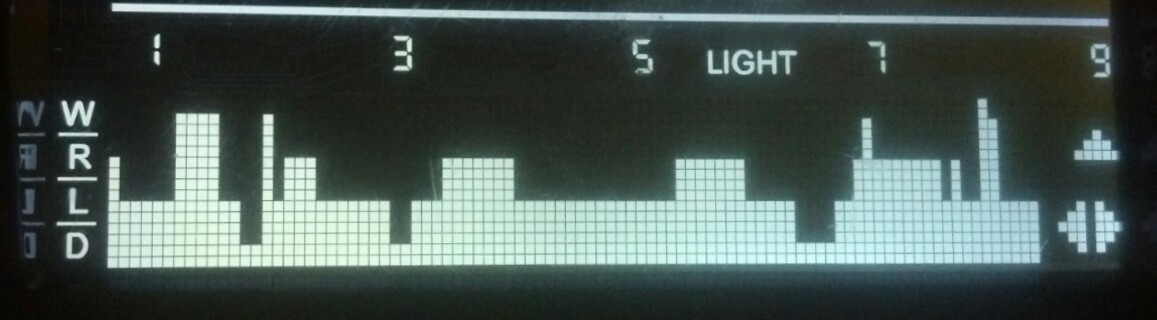
  • Which brings me to my sleep: I am still having a rough time. I intend on writing a post detailing all the information and tips I have gleaned from various sources on how to improve sleep without prescription drugs, so stay tuned for that. For now, suffice it to say I have tried EVERYTHING. As I have mentioned before, I am addicted to reading the New York Times on my phone in bed before I go to sleep ~ but I wear amber-lensed, blue light-blocking glasses after the sun goes down so I am supposedly protected from the way the screen affects my brain. Well, my birthday night, instead of reading the NY Times, I spent far too long looking at Facebook and answering all the wonderful happy birthday posts. I forgot to wear my amber glasses and wound up staying awake until 6am, tossing and turning.
Zeo graph: These lines should be SHORT when I'm sleeping. The "W" at the top means "Wake".

Zeo graph: These lines should be SHORT when I’m sleeping. The “W” at the top means “Wake”.

This is very unusual for me ~ I always fall asleep right away, it’s the waking up throughout the night that is my problem. So, for the last two nights, I made a strict rule of no phone or computer screen of any kind after 8pm and no tv after 9:30pm. My sleep was instantly better. Look at last night:

Proper sleep waves.

Proper sleep waves.

So, like the cpap, I believe I really underestimated what the phone or ipad light does to my brain. The room is black, but when I close my eyes I see lights, colours, moving lines, exploding stars. Basically, if I open my eyes it is darker than if I close my eyes. Someone on Phoenix Rising surmised that I was experiencing hypnagogia, stuck between wake and sleep. Either that or staring at my phone really, REALLY messes with my brain.

  • Which brings me to the supplements I am currently taking for sleep (and all the others, too, plus prescriptions). Here is my daily regimen:

2x Probiotic
2x tsp fiber
100mg Colace
Chinese Herbs (Lightning Pearls, currently 3/day)

2,000mg Acetyl L carnitine (1,000mg 2/day)
1,200mg Alpha Lipoic Acid (400mg 3/day)
4,000mg Borage Oil (960mg GLA) (2,000mg 2/day)
10,000iu Vitamin A
4,000iu Vitamin D3
2,000mg Fish oil (1,000mg EPA, 50mg DHA)
Vitamin B-complex (Thorne #12)
100mg CoQ10
400mg Magnesium glycinate
200mcg Selenium
400mg Riboflavin/B2
5,000mcg Biotin
15mg Zinc sometimes
500mg Vitamin C sometimes

Valerian sometimes
1mg Melatonin
100mg Phosphatidylserine
Tart cherry juice concentrate

5ml Zyrtec
Thyroid hormones
(T3 and T4)
Pantanase nasal spray
Clindamycin topical lotion
Miralax as needed
Albuterol inhaler as needed

  • The magnesium (for muscles), melatonin (for sleep onset), valerian (for relaxation), tart cherry juice (for pain and melatonin) and phosphatidylserine (to decrease nighttime cortisol) are specifically for sleep (I tried the Seriphos ~which is phosphorylated serine~ for a few weeks, but it seemed to keep me awake. The Good Doctor switched me to the new one). The other new additions to my protocol are biotin (the dermatologist told me to take this for the vertical ridges in my fingernails and hair loss) and the Chinese herbs. I stopped these for a week while I was feeling really terrible and thought I might be getting a cold, but it never materalised, so I started them again, increasing the dose much more slowly than I had originally.
  • My diet is still the same (no gluten, grains, dairy, legumes, tomatoes, potatoes, or eggs), but I think I am going to add rice any day now… I’ve just been waiting until I have a more predictable day-to-day baseline so I don’t blame crippling muscle pain (which happened on the 17th for one day only from head to toe for no apparent reason) or the disappearance of sleep or an extreme headache on a rice cake.

I want to write about my recent doctor visits and some of the amazing presents I got for my birthday, but not today. Just know that I am flying high with all the love and generosity that was showered on me. I keep saying it, but one more time: I am one lucky lady. I have the most compassionate and caring family and friends imaginable. I thought I always knew that, but I am truly humbled today. NOTHING matters but loved ones! In the end, they’re all we have.

What impact does ME/CFS Awareness Day have?

Here is a very interesting post by Patrick over at Quixotic: My M.E. Blog that I thought was worth reblogging here so my readers could mull over his questions:

What impact does ME/CFS Awareness Day have?

Did we make an impact?  It’s hard to know whether the message is spreading outside of our community or if we’re just passing the message around inside our own echo chamber.  I have to believe that we’re making small but steady strides, but it’s hard to make a big impact on public awareness when there’s so much noise competing for people’s attention.  And if we do get people’s attention, what exactly is our message?
 
I’ll get to that in a second, but first let me back up.
 
Sometimes I feel like there’s more that I could be doing to help our community.  Other times I wonder: isn’t it enough to just be looking out for myself and my family?  After tending to my own health issues, I’m not sure how much more of me is left to give to community issues.  I suspect that’s a feeling that many of us face.  So if we’re all struggling to get by, how do we build an impactful movement? 
 
And yet we all see these large, grassroots efforts being undertaken by other patient communities.  (Think MS, with its huge charity bike rides, funding drives, etc.)  Aren’t MS patients in a similar situation, with little leftover energy to give to the community?  
 
I suspect that the major awareness and fundraising efforts put forth by other patients communities are driven, in no small part, by the work of doctors, nurses, family, friends and loved ones who support the patients — not just the patients themselves.  So it begs the question: why not us?  Why haven’t we organized the same support network that would be essential for larger awareness and fundraising drives?  
 
Part of the reason is that our illness is so poorly understood that many of us can’t even get our own families to take it seriously (not counting me).   There’s this kind of frustrating circularity to our problem here.  
 
ME/CFS is very poorly understood in the medical community—>Why is it poorly understood in the medical community? —>  Because researchers can’t agree on the root cause or biomarkers? —>  Why can’t researchers agree? —>  Because there’s no research funding to chase promising leads —> Why is there no research funding? —> Because there are no major funding drives/charities/organizations —>  Why are there no major funding drives/charities/organizations? —> Because ME/CFS is not viewed as a “serious” illness by most —> Why is it not viewed as a “serious” illness by most? —>  Because ME/CFS is very poorly understood in the medical community —> [Back to the beginning.]  
 
So the challenge is to break this cycle.  These awareness campaigns are designed to break the cycle at the second to last step above: the “serious illness” step.  In theory then, having solved that issue, the remaining problems would gradually solve themselves in the reverse order, working backwords to the beginning of the list.  
 
But the thing to keep in mind is that the awareness campaign is only the first half of that step.  Why?  Because it’s not enough to just make people more aware of something.  People are never motivated to act on something merely by being aware that it exists.  An awareness campaign basically just primes people’s minds to be more receptive to the full message that follows.  It makes people curious enough to want to learn more.  
 
Then the question is, what are we doing to follow up on the awareness campaign?  What are we doing to educate people once they’ve become receptive to the message? 
 
So the next challenge is to develop our actual message.  Because you have to admit, we don’t really have a unified message.  We all have different levels of functionality, different theories of etiology, and we all seem to be pursing different treatments.  We confuse ourselves with our own cross-talk, so how are we supposed to present a unified, intelligible message to the average, healthy Joe?
 
That’s the next step.  That’s the challenge that I believe we need to be working on now.

Tomorrow is International M.E. Awareness Day.

Tomorrow is International M.E. Awareness Day. There are many events happening around the world, both online and in person. You can google your area to see if there is anything going on, but what I ask is something simple:

Please make an effort this month to talk about this disease. Look for opportunities to raise awareness. Don’t worry about being a “downer” or bringing up an awkward, depressing subject. Let people know that there is an illness that stops life in its tracks and has no approved drug treatments and very little funding for research. Explain that this has nothing to do with laziness, depression, tiredness or burn-out. Explain that there are test abnormalities, but doctors aren’t taught about the (possible/probable) etiologies of this disease so most do not recognise it and certainly don’t know what to test for or how to treat it. Make it known that patients languish in their homes ~ or, more likely, a family member’s home ~ are passed from dismissive specialist to thieving charlatan and back again, use up all their resources, and usually reach a point where they are trying to just survive because it is too exhausting to research treatments and search for medical help. Warn people that ME is often accompanied by crippling neurological issues, autonomic dysfunction, new allergies and multiple chemical sensitivity (MCS), postural orthostatic tachycardia syndrome (POTS), chronic migraines, irritable bowel syndrome (IBS), fibromyalgia (FM), mast cell problems (MCAD), sleep dysfunction and, of course, the depression and anxiety that would be hard to avoid with a diagnosis like this. These are all debilitating conditions in their own right, so drawing awareness to them is just as valuable.

As with many awareness campaigns, ribbons are worn to show support – blue for ME/CFS, purple for FM, and green for MCS. What I like about this is, it might bring up the conversation. Most people recognise the pink ribbon representing breast cancer awareness or the yellow Livestrong wristband which supports cancer survivors, but perhaps you will encounter someone who asks, “What does the blue ribbon stand for?” And then you can launch into your educational lecture. 🙂

meribbon

A few things going on around the world:

Niagara Falls will be illuminated in blue tomorrow, May 12th, from 9:45-10:00pm EST to raise awareness to M.E. From 10:15-10:30pm EST the falls will be purple for fibromyalgia (FM) and from 11:00-11:15pm EST the falls will be green to draw attention to multiple chemical sensitivity (MCS). You can watch it on their live webcam. Or try: http://www.earthcam.com/canada/niagarafalls/

In London, there is the “All Fall Down for M.E.” protest outside the Houses of Parliament at the Old Palace Yard.

londonME

In Victoria, Australia at Melbourne University, there is an ME/CFS Educational Fun Run.

forME

Bob Miller is skydiving to promote ME research in Lodi, California.

The Irish ME/CFS Association is hosting four talks by Dr. Ros Vallings from New Zealand next week.

There are  five screenings of Voices from the Shadows across three continents in May.

Read this article by Mark at Phoenix Rising to get all the details about these events and many more.

Finally, consider writing to your local paper to raise awareness. Read this post by the ME/CFS Self-help Guru for inspiration.

Thank you to everyone in my life that has talked about this baffling illness, raising awareness one person at a time. Thanks to my father for talking to his staff about this disease and to my mother for talking to her dog park friends about it and to Z. and E. for explaining my situation to other people I know and to my husband for constantly making excuses for my absence, trying to educate others on what is going on and raging at medical professionals’ and society’s ignorance, allowing me to be angry by proxy since I don’t have the energy for it.

MEawareness