Winter of Disjointedness

I haven’t written an update in over 7 months, which boggles my mind. It was the same amount of time between my two previous blog entries, too, so I’m not doing a very good job of keeping my friends and family up to date, but I find the speed at which our lives zoom by very unnerving.

Yesterday, my husband and I were marveling that it had been over 2 years since I stopped doing weekly immunoglobulin infusions and IV fluids. For so long, it was our routine, dictating the days he worked, the days we cleaned, what I ate, when I showered… Then we stopped and lapsed into a no-structure schedule and I’ve definitely gone downhill since then, but can I blame the lack of IVIG? I don’t know. I guess partly. 

It has been incredibly beneficial to me to track the big changes over the past 12 years – it’s helpful for my mother, too, who needs to take notes to remember the big diagnoses and events, let alone the nuances of ever-changing chronic conditions. 

And that – “ever-changing” – is my biggest hurdle. It’s hard to call my illness chronic when it seems to jump from one new acute problem to another, the blindsiding surprises causing a constant low-level wary vigilance that takes an incredibly heavy toll on us both, as we try to anticipate any crisis and create contingency plans for every situation.

Looking back on the last 7 months, two big things stand out – one good, one bad.

The good is that I finally figured out, after many months of scary bowel, blood pressure and heart issues that were truly life-altering for both of us (I couldn’t be left alone in the mornings), that I had developed reactions to Miralax (polyethylene glycol, like Macrogol), which had been my safe bowel medication for years (I’ve failed all of the prescriptions I’ve tried thus far).

It took an elimination of almost every single other thing I ingest to figure it out. I was scared to eat or drink anything, not knowing if, many hours later, all hell would break loose and cause hemodynamic instability that needed medical attention. But it was the Miralax, which I would take halfway through each night’s sleep. 

Since stopping Miralax, I have had fewer than 5 serious bowel episodes that caused pelvic floor spasms. They had been happening daily and I can’t overstate the difference in my quality of life without this constant threat and fear. 

My first endocrinologist told me: “With new symptoms, always look first at the medications you take.” Over and over, I have failed to remember this advice, like a few years ago when I was in an extreme hyperthyroid state – breathless, palpitations, not sleeping, thinking I’d developed anxiety because of the “beehive in my chest” – and it took 3 months before it dawned on me that it was from increasing my thyroid medication. Those symptoms were gone immediately after I stopped taking (temporarily) those hormones.

So, take heed, friends: never assume a medication is benign just because you’ve taken it for ages with no issues.

The bad standout thing from the last 7 months is a massive increase in EDS instability problems. I have a few areas of my body that have been “going out” repeatedly for years, but usually resolve after a few days or weeks: my neck, right clavicle, right thumb and one spot in my thoracic spine. But, back in December, I developed back-hip-SI joint instability that caused repeated injuries with normal, innocuous movements, like sitting up in bed.

I got hip x-rays and a lumbar MRI, which didn’t show the herniated disc that the doctor suspected. I started physical therapy, but a sneeze one night in February, and daring to sit on the loo the next morning caused an injury that landed me in the emergency room.

Something ripped (my physical therapist thinks a ligament or tendon attached to my sacrum) and I couldn’t get off the floor and I couldn’t empty my bladder.

The EMT that came to my house was married to a woman with EDS and he understood everything that was happening to me, which was incredibly reassuring, as the back pain in that moment made it difficult to explain that no “event” or accident had caused the injury and that my blood pressure is normally this low and that I didn’t want any medications because of reactions and please be extra careful when transferring me from clamshell to gurney to bed etc.

In the ER, I wound up having to create a huge fuss, begging for/demanding a catheter because “I am going to jam this pen into my abdomen to drain my bladder.” The pain eclipsed anything I’ve felt before. Bless the EMTs again – they could have left me in the hospital hallway, but they insisted I get a room before they left. It took 2 nurses way too long to get a foley catheter in, while holding me down with my legs splayed back, making my hip/back injury much worse, but, eventually they were able to drain 1200 ml of urine, noting that it is normal to feel the need to pee with about 150-200 ml.

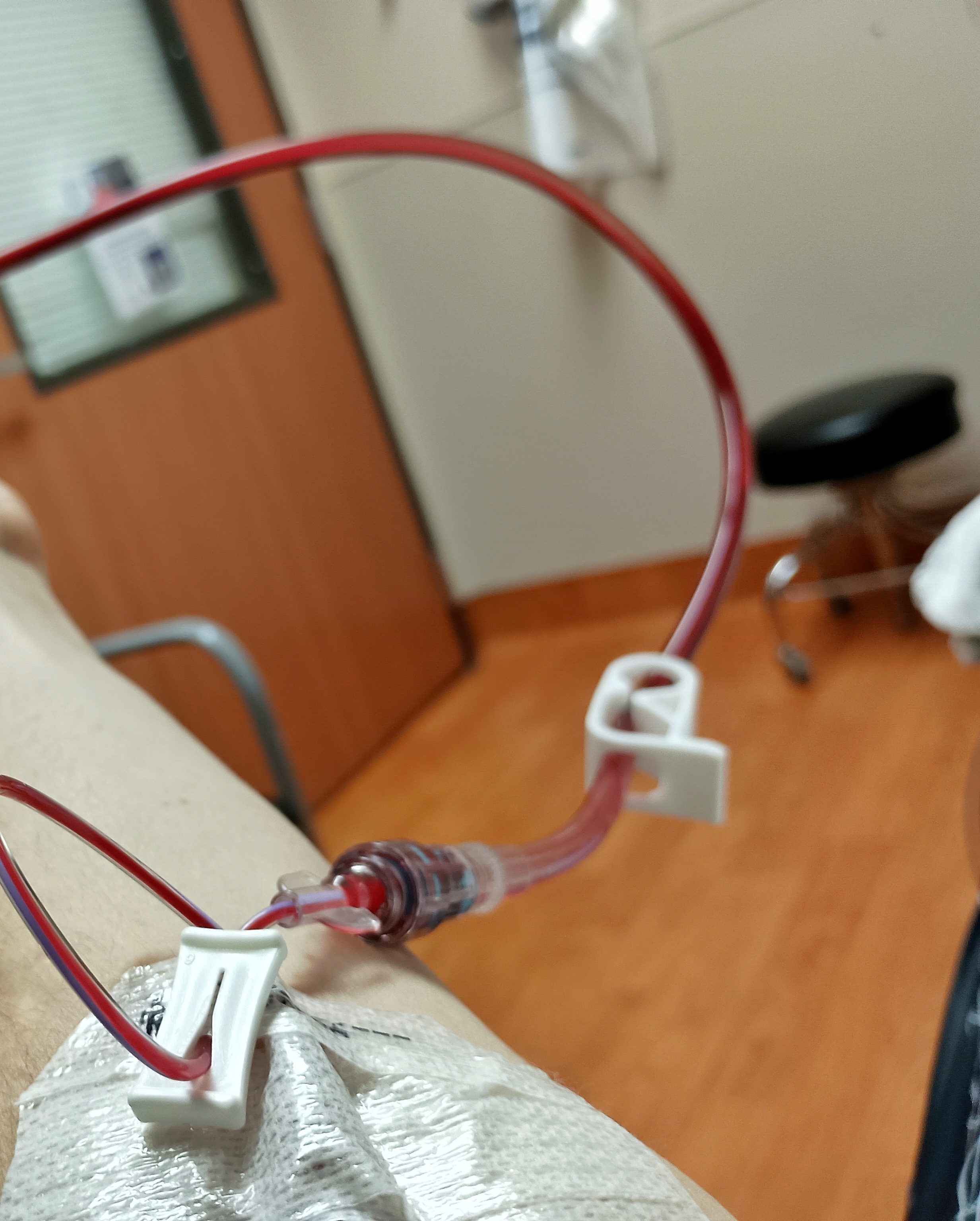
The rest of the hospital visit was a debacle. They ordered another, redundant lumbar MRI, even though I repeatedly asked for a hip/SI joint MRI. They ordered a kidney CT scan, even though I asked for an ultrasound (so much radiation in my life!). They didn’t secure the bladder catheter to my leg and the balloon got pulled out accidentally, which is one of the worst pains I’ve ever felt. They told me my bloodwork looked fine, even though my potassium was too low. They couldn’t get my IV line to stop filling with blood (the doctor actually came in, said, “that’s weird,” clamped it off and left (?!), so I unclamped it and got medical tape out of my bag to secure it myself in a way that allowed the saline to flow). And they gave me fentanyl, which didn’t touch the back pain, but caused one of the worst migraines of my life that went on for days and I thought I might have to go back to the ER to break that pain!
But, worst of all, I couldn’t be in a seated position in the week afterwards and bearing down slightly (which I have to do even to pass gas and urine) flared the pain in my flank, so I couldn’t do my daily enemas, which meant I couldn’t eat. It became very obvious that something like this – a different structural issue – would probably be the thing that pushes me into bowel surgery. 

[An aside: I understand that this downhill progression in mobility and upward trajectory in pain is probably due to my tethered spinal cord, for which I have so far refused surgery, but, no, I’m still not convinced that that operation would make things better. I will write about this some other time.]

During this time, I had an urgent appointment with Dr. McDreamy, my colorectal surgeon (who really is dreamy) to figure out next steps in case the injury remained bad enough that I couldn’t eat/poop normally (ha – as in, my “normal”) for an extended period of time. He said that he would be available whenever I was ready and we could do a colostomy bag. Music to my ears. The most reassuring discussion I’ve ever had with a doctor. He said I could try botox in my anal sphincter and a sacral nerve stimulator first, if I wanted (though, they won’t fix my prolapse issues, so they are not long-term answers). 

I haven’t made those appointments yet. As usual, I don’t want to rock this shitty, broken, leaky boat in case it makes things even worse. I’ve been concentrating on the most pressing concern, which is trying to heal this injury, but it’s discouragingly stubborn and I have no medications to help, aside from CBD balm and lidocaine patches. It’s a moving target, from left hip to SI joint to lumbar spine to thoracic paraspinal muscles and back again.

I have to be aware of every change in position: I am wearing an SI belt and lumbar brace all day, but sitting, turning, reaching, and bending can all cause re-injury. I have 4 physical therapists(!) and I’m doing daily exercises, but they are tiny, basic isometric movements that always cause worsening pain, so it’s slow-going.

I’m disabled to the point that I haven’t gone for a scooter dog walk in 8 weeks and I’ve also had massively increased exhaustion and weakness in the last month, so everything feels impossible. Getting out of the house with Penny is the only thing that keeps me sane and this has really taken a toll. But, even if my normal energy returns, my big mobility scooter with good suspension is just too jostley on a body held together with jello and rebar. 

In a post 15 months ago, I said my plan of action consisted of:

  • Getting calories in and out (I’m doing an adequate job of calories, but not nutrition. I’m eating about a third of my protein needs and not nearly enough vegetables for my vitamin requirements)
  • Keep trying bowel medications (I’m currently managing with only Mag O7)
  • Pelvic floor physical therapy (I’m now in regular and counterstrain PT)
  • Get a “small bowel follow through” study (didn’t do)
  • Get a mesenteric CT angiogram (didn’t do)
  • Talk to my surgeon about a stoma (done!)
  • Trial a fentanyl patch (done!)

My updated plan is:

  • Better nutrition
  • Get immunoglobulin infusions back
  • Trial painkillers, muscle relaxants, bowel meds and more
  • Religiously do PT exercises
  • Get a small bowel follow through
  • Try anal sphincter botox
  • Come to terms with the fact that I can’t put off bowel and spinal surgery forever. And we’re not getting any younger.
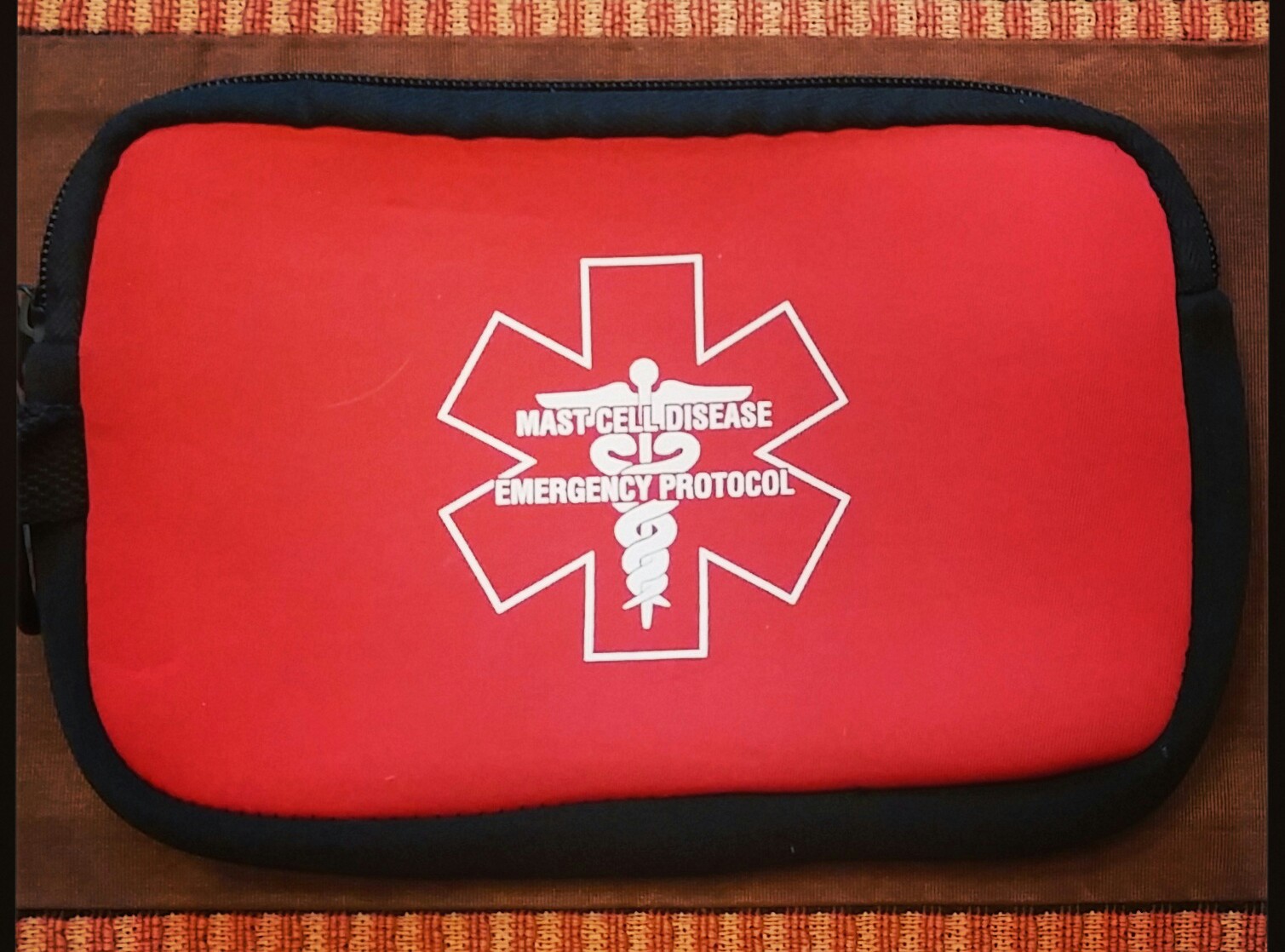
UPDATED Emergency and Surgery Protocol for MCAS and ME

The links at the bottom of this page are for my protocols that were updated March 29th, 2020. My protocols are for me and my doctors. I am not a health professional and I recommend you do not use any of my advice or guidelines without consulting your doctor. *See full disclaimer below.* My protocol is an accumulation of months of research into precautions that should be considered by people with mast cell disorders (MCAD) and myalgic encephalomyelitis (ME/cfs), as well as some guidelines for patients with Ehlers-Danlos syndrome (EDS) and craniocervical instability (CCI). It includes information and materials from ME websites, such as me-pedia.org, mast cell resources, such as tmsforacure.org, my doctors and specialist, as well as other patients.

*******************

I started writing an emergency protocol back in 2015 when my mast cell reactions were scaring me with their unpredictability. I wanted something comprehensive, in writing, for anesthesia teams in the case of a planned surgery, but also something that my husband could hand to paramedics or emergency room doctors, if I couldn’t speak for myself. It was a massive undertaking because I tracked down every link and reference I could find about medication and surgery precautions for patients with mast cell diseases and ME. I wanted to gather all the information that was pertinent to me — my particular case — and edit it down to something manageable. I put together something passable and then moved it to the back burner for the last 4 years.

Last week I saw a new GI doctor who was emphatic that I get a colonoscopy and endoscopy at the same time and with anesthesia. I have been completely enema-dependent for years and, honestly, it’s exhausting. My previous GI doctor told me it was due to anatomical abnormalities (an MRI found pelvic floor dysfunction with cystocele, rectocele, sigmoidocele) and that I’d likely need enemas for the rest of my life, but it feels like the issues are getting worse and the new doctor didn’t want to throw medications at the problem without knowing exactly what she’s dealing with.

I cannot imagine voluntarily going under anesthesia. All of my worst reactions in the past 7 years have been to medications and my fear of trying new ones — especially intravenous medications — is so pronounced that I vowed only to agree to anesthesia if I was in a life-threatening situation (or couldn’t speak for myself). How could I be lying on a gurney with a peripheral IV, knowing they are about to inject multiple anesthetic drugs and not jump up and run out of the room? I wouldn’t be able to advocate for myself… I could die for a colonoscopy! So, I left the appointment with a sense of doom that only deepened when I started to feel a new ache in my lower abdomen. It got progressively worse over 3 days, the ache turned to pain and, what I thought of as run-of-the-mill bowel inflammation started to seem like something else. Gallstones? Bladder infection? I got out my emergency protocol notes and spent about 20 hours over the next few days rewriting everything, feeling like I might be working against the clock if this was something like appendicitis. Then I woke up last Sunday to such severe lower abdominal pain that I couldn’t move, could barely breathe or speak. I was shaking all over, in a cold sweat, nauseous and felt like I was on the brink of passing out. My husband wanted to call an ambulance, but I said no, hoping it was some sort of spasm that would pass. And it did… but not entirely. The ache and twinging remained for a few more days. It’s gone now and I think it was my dastardly bowels, after all, but it was bad and it scared me. It’s like the gods heard me say, “no way am I getting a colonoscopy” and decided to stab and twist their Elizabeth voodoo doll to make sure I got the point that there’s a problem I can’t continue to ignore.

The upshot of all this is, I finished the emergency protocol and I wanted to share it here, in case it could be useful to anyone else. There are a few important points about it, though:

  1. When I started, it was for personal use and I didn’t keep track of references. I will go back and gather all the links and add them to this article, but I have no idea how long it will take me and I wanted to share this sooner, rather than later. If you see your own information here without credit, please understand I will add a link to your article/blog/website! Please feel free to leave a comment.
  2. This protocol concentrates heavily on mast cell precautions because MCAS has caused my life-threatening reactions such as anaphylaxis and profound hypotension. It does not mention ME or CFS, although I researched and included ME resources, such as Dr. Lapp’s recommendations (Appendix E of the Primer for Clinical Practicioners) and Dr. Cheney’s anesthesia letter.
  3. I have an EDS diagnosis (Ehlers-Danlos Syndrome — a connective tissue disorder), which can cause serious surgical complications. There are a lot of guidelines out there for EDS patients and I have only researched some of them. It wasn’t until recently that I started to take this diagnosis more seriously and I still haven’t had the gumption to jump deeply down the research rabbit hole, but, once I do, I will be updating my surgery protocol with any additional EDS precautions that are pertinent to my situation.
  4. It bears repeating: This is not medical advice of any kind. This is my personal protocol, for my personal situation. You may be more or less reactive than I am, you may have normal or high blood pressure or you may be far more disabled and need many more accommodations… But, I hope it can be of use as a jumping-off point. Please consult with your doctor.
  5. The links below are printable pdf files, which are formatted properly, but if you need any of them in a different format so that you can copy and paste certain parts into your own protocol, don’t hesitate to leave a comment or email me at akaemilo@gmail.com, and I will send you a Word doc or Google doc version.


Click here for the long version of the protocol, geared towards the patient: Elizabeth Milo Full-Length Emergency and Surgery Protocol

Click here for 1.5-page short version of the protocol, geared towards doctors: Elizabeth Milo Abbreviated Emergency and Surgery Protocol

Click here for anaphylaxis protocol: Elizabeth Milo MEDICAL EMERGENCY RESPONSE PLAN for Mast Cell Activation and Anaphylaxis

Click here for my personal medication chart, based on an original from The Mastocytosis Society: Elizabeth Milo Safe Medication Guidelines


Here is The Mastocytosis Society Emergency Room Protocol.

IMG_20150105_132432-1

*HEALTH DISCLAIMER*

This blog is my own personal journey. The information and other content provided in this blog, or in any linked materials should not be construed as medical advice, nor are they intended to replace a one-on-one relationship with a qualified health care professional. NO information on this site should be used to diagnose, treat, prevent or cure any disease or condition.

If you or any other person has a medical concern, you should consult with your health care provider or seek other professional medical treatment. Never disregard professional medical advice or delay in seeking it because of something you have read on this blog or in any linked materials. If you think you may have a medical emergency, call your doctor or emergency services immediately.

SIBO Antibiotic Failure in Half a Milliliter.

Referring to my last post:

I am devastated. But allow me to give you some backstory, so you understand my emotional reaction to a failed drug trial. It took me a year to try the SIBO protocol, but, during that year, I wasn’t just sitting around, waiting to get the nerve up — there was so much time, energy and money invested in procuring the safest and smartest medications for me.

Initially, Dr. K wanted me to take the two gut antibiotics without having the SIBO test, but I asked if I could do the test first ($180) because I had been negative for SIBO a few years ago. The preparatory diet was brutal for me this time (when I did it in 2014, I don’t remember it being a big deal). I had to eat only meat, eggs and rice for two full days because of my chronic constipation and it made me very sick and weak, nauseous, hungry and shaky. During the test, I had a massive blood sugar crash, but you’re not meant to eat or drink while collecting breath samples, so I waited too long and got more and more hypoglycemic, finally giving in to apple juice, but the whole experience took a toll. So, there was that.

Then there was the energy involved getting the Rifaximin: Asking my doctor to send in a pre-authorization, getting refused, sending in an appeal, getting refused, a third party appeal and refusal — all of this taking so much time in between each step. Calling around to pharmacies to see if there was anywhere that sold it for less than $1,500. Not wanting to buy the generic for $200 because it has colourings that I avoid. Asking my doctor to send a sample of the tablets, so I could try them before buying them. Waiting on that sample to arrive. Waiting for a good day to try it — a day I felt strong enough with no other conflicting variables like a migraine or a day I was doing my infusion. Calling a pharmacist to see if I could cut the tablet (they said no because it’s enteric coated to stay in tact until it reaches your gut), but cutting it anyway because I have to start with a sliver and the worst that can happen is it’s not effective and who cares? — this is just a test. Taking bigger and bigger slivers over the course of a week. Deciding it’s okay and safe to order from the online pharmacy in Singapore and, because so much time has gone by and it takes another 2-4 weeks for delivery from the time of order, having it sent to our California address.

In the meantime, once I knew I wouldn’t react to the Rifaximin, I started calling around about the Vancomycin (because I’m meant to take them concurrently). I called so many compounding pharmacies, so much time invested, taking notes on brands, ingredients, prices, my options for liquids or capsules. Then, when I had found the cheapest ($200) and most competent-sounding pharmacy, I consulted with the pharmacist over and over about the details: first, about ingredients (no flavourings, no preservatives, compounded only in sterile water). Then about the timeline, explaining that I couldn’t start at full dose, that it would take me a few weeks to titrate up and is there a way to prolong the 2-week shelf life? He said he could freeze it, extending the “discard by” date from 14 to 90 days. Then we brainstormed some more and decided to freeze it in 4 bottles, so I only needed to defrost one at a time, keeping the others preserved. Then he said he should make it at the last minute, to keep it fresh as long as possible. My husband drove across town on the day we were leaving for California to pick it up. I kept it in a cooler with ice packs during our road trip and managed it like a bird on a nest: tending to it, moving it out of the sun, re-freezing the ice packs each night. And then, once we were here, I just waited for the Rifaximin delivery so I could start them both together.

So much goes into this sort of thing, aside from the $580. Not to mention my hopes. For all my fear of repercussions, once I decide to do something, I put nothing but a positive and excited spin on things. Taking antibiotics for the first time could be a game changer — like antivirals have been for so many. I’ve never addressed my gut and I certainly don’t have a strict diet, so there’s hope for positive change there. What if my brain symptoms are better and my sleep is better and I don’t have to do enemas anymore? I am an expert at swallowing something and forgetting about it, so I’m not nervous or over-analyzing my body. Down the hatch and that’s it. Don’t pay attention. But last night the Vanco got my attention.

My prescribed dosage is 30 ml a day. THIRTY. Last night, I took 0.5 ml. HALF A MILLILITER. Soon after, something started happening in my throat on the left-hand side. Then my tongue started swelling on the left. Then a headache on the left. And, finally, heart palpitations. My tongue got bigger and bigger. I was dumbfounded. If I were going to react to anything, I thought it would be the Sunset Yellow generic Singaporean Rifaximin, not the sterile water vanco that Kyle the pharmacist put so much care into!

Dumbfounded and devastated. For me, tongue swelling is as scary as it gets because it is the precursor to full-blown anaphylaxis — especially tongue swelling with head and heart involvement. The mast cell meltdowns that I experience in the night, with sweats and chills and poisoned feelings, are much worse physically, but not as serious as tongue swelling. Not as scary. All of my anaphylaxis ER visits involved tongue swelling. It’s something that can get worse quickly. So, how do I get the nerve up to try the Vanco again? Are all those frozen bottles of medication a loss? That’s what made me start crying. Not the time or money or hopes dashed, but the thought that I can’t try it again. It’s not like my hydrocortisone success story; I can’t push through. Next time, it could be much worse, like your second bee sting. My control is taken away. Even if I wanted to try again tomorrow… I can’t risk anything even akin to anaphylaxis. It’s the trauma I will always carry. If I spontaneously recovered from ME today, I would still carry the fear of anaphylaxis with me for the rest of my life, like a brown recluse spider, hiding in plain sight, threatening sickness and death when you least expect it. Damn.

———————————————

Update: A Google search shows me that people take Rifaximin without the second antibiotic. I inferred from my doctor that they had to be taken together, but maybe not. Maybe all is not lost for treatment.

———————————————

Another update: One long bath, one meditation and a good conversation with my husband later… Feel much better about the whole thing. He’s so good at saying, “don’t think about the money, let it go” and “it’s just a drop in the bucket of the last 6 years” and “move on to the next thing” and “you’re doing okay, you’re not bedbound, you’ve made improvements without this treatment.” And then I look at the vast desert sky and envision the stars and universe beyond and think about how small I am. And how lucky I am. My tongue swelling resolved with Benadryl last night and today I’m eating ice cream next to my dogs in the sun, listening to a cacophony of birds nearby and coyotes howling in the distance. 

Medication Wars: Treating SIBO and Low Cortisol

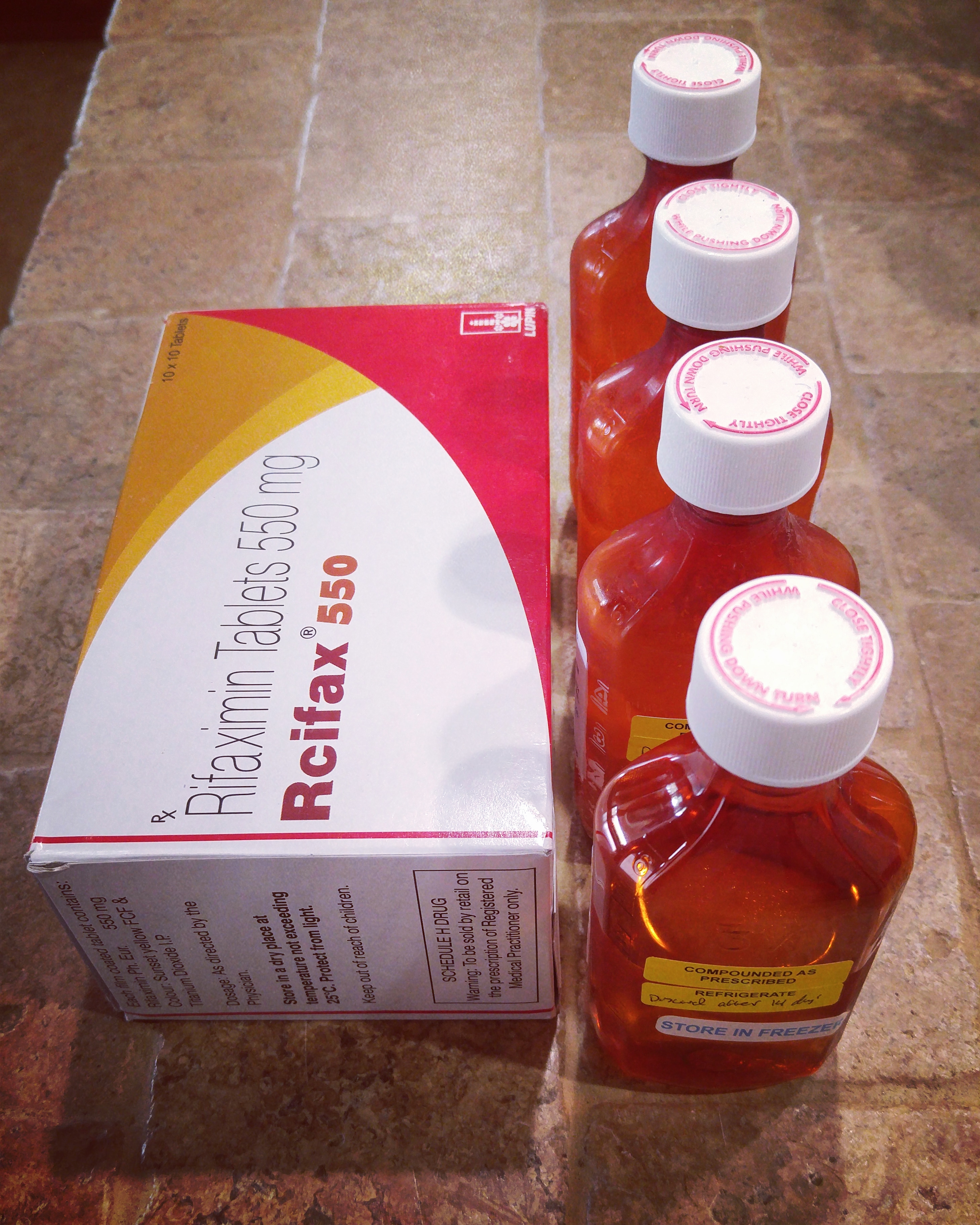
13 months after my California doctor wrote the prescriptions for two gut antibiotics to treat SIBO, today is the day I have to face the music. I’ve put it off for this long out of fear: Fear of a mast cell reaction (Rifaximin ingredients: Sunset Yellow FCF, ffs); fear of no reaction, but feeling terrible from die-off (we just arrived in the Cali desert for a month, so it’s really fear of destroying my idyllic get-away); fear of altering my microbiome for the worse, rather than the better (causing more of a candida flare, causing C. diff etc); fear of spending the money, but not not being able to take the medicine (each one was $200!). Also, although the SIBO test was “off the charts” (in my doctor’s words), I don’t have the symptoms, so fear of messing with the gut I know and creating new issues. I haven’t taken an antibiotic in almost a decade–well before I got sick–so, there’s fear there, too.

IMG_20180501_100901_710.jpg

But I see my doctor later this month and I’m determined to do the treatment before I see him. I now have both medications in front of me, money is spent, no excuses. One of them is compounded in sterile water and needs to be thrown out in a few weeks, so I’m starting now, with one drop, as soon as I stop typing… which, of course, makes me want to keep typing, keep putting it off, what else can I tell you…?
_
_
_
Okay, I’ll quickly tell you a good drug story, which will bolster my confidence. The first medication I was ever prescribed after getting sick was hydrocortisone. The pharmacist said, “If it gives you a headache, let me know.” It gave me a whopping headache and, back then, I didn’t understand my reactions and how I have to start at micro-doses–I didn’t even know you could cut a tablet or open a capsule–so, I just stopped taking it after two days. The ND said she presented my case to her colleagues and everyone said, “Yes, hydrocortisone!” but it was my first experience with an ND and perhaps I didn’t fully trust her, but, more so, I didn’t want any worsening symptoms, so I just stopped going to her. That has been my MO thus far: try not to rock the boat, except very gently, over a very long period of time (and, by the way, for the most part, I have improved over the years (knock on wood, toba, toba), which has reinforced my careful tendencies).

Last year, my California MD Rxed hydrocortisone again. I tried an 1/8 of a tablet in August and felt short of breath, so didn’t take it again until 3 months later. Then I was spurred on by a receptionist at a doctor’s office who started crying (!) on the phone to me while talking about her daughter who needs hydrocortisone all day long, so I tried it again. It went okay for a few months. Then one day it made me feel gittery, spacey and short of breath again. Then, a few weeks after that, it hit me like a freight train. I wrote in my calender: “Shaky, drugged, agitated, buzzy muscles, feel like I’m on speed, then possible blood sugar crash (or maybe just still shakes from hydrocortisone). Then, after hours, a dull obvious-reaction headache and stuffed ears.”

This is what used to happen to me with antihistamines: I’d handle them for days and then, without warning, the same dose would send me into a scary cascade of anticholinergic symptoms (I still mourn the loss of Unisom, which helped a lot with sleep for a while).

But, I persevered with the hydrocortisone (yay, me!) and, last month, something clicked, I could feel it help my body. I can feel the uptick in energy and the decrease in brain symptoms. I give hydrocortisone full credit for getting me through the weeks of packing for this trip and those back-to-back high-step count days. Each morning, I marveled: I’m not bedbound, I think I can do it again. I have no side effects now and I might even try more than a 1/4 tablet. 😉

Grab that cash with both hands and make a stash.

This is a hard one to talk about. It’ll be more of a rant. And I’d like to preface it with all of the obvious about how grateful I am that we were in the economic position we were in when this illness started, how grateful I am that I had a few years of good earnings and decent savings, how grateful I am that my family is healthy and has never been bankrupted by health woes. I am, I truly am, and I think about–probably too much–what must happen to others with a severe chronic illness (that has no knowledgeable doctors and no decent treatment) who are in worse financial shape than we are, without our resources, who are in countries steeped in poverty, refugees fleeing wars… on and on… I do know how lucky I am. But, I’m scared. Mostly because I don’t know what treatment to spend money on and what to reject.

image

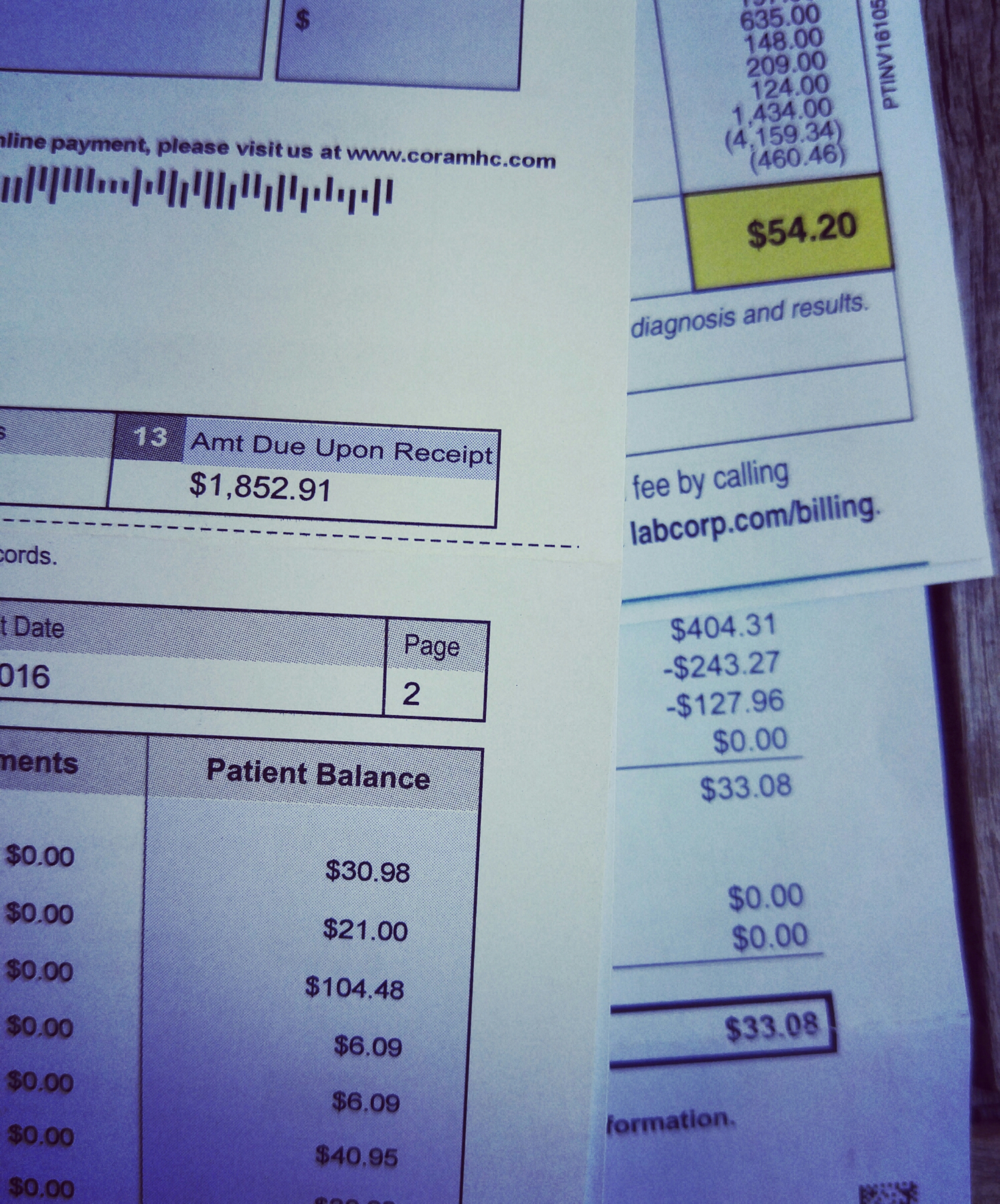
Recently, after 6 months of immunoglobulin infusions, I got a slew of bills that I didn’t anticipate. It turns out that for my itsy bitsy dose of 5 grams each week, I pay $164 after insurance. Out-of-pocket. That’s $655 per month. If I had known this before starting, would I have done it? I don’t know. But now that this is the only treatment that has helped me, how can I stop? And I’m in this tricky spot. I have private health insurance because I was too scared Medicare wouldn’t cover these treatments (also because Medicare won’t cover acupuncture, nutritionists or physical/myofascial/craniosacral/massage therapy — some of the only things that have made a difference in my pain levels). After being told IVIG was not an option by so many doctors, knowing that I didn’t have a history of bacterial infections and a vaccine challenge is usually required for approval, and having Coram (the infusion service) tell me that Medicare hardly ever covers treatment, I was just too scared to give up the private health insurance that had already approved my treatment for the whole year. Of course, I have since heard from others that Medicare covers their IVIG or SCIG at 100%, but … how could I risk changing coverage now when my IgG levels have come up and that alone might disqualify me from continued treatment? I’ll have to revisit this next January when I’m eligible for Medicare enrollment again, but, if I’m still improving with my infusions, I don’t know how I’d take that leap of faith.

An aside for those in other countries or for those that don’t know this fucked up aspect of our healthcare system here in the U.S.: Medicare (government health coverage) isn’t free. You pay each month just as you do with private health insurance. It’s usually cheaper, but not always. It can range from $105-$771 a month, depending on your situation (the higher end is reserved for people who have not worked enough in their lifetimes to qualify. So, if you are struck down with a chronic illness as a young adult and you haven’t worked the requisite 30 quarters in a tax-paying job, you’re not married and you undoubtedly have little savings, then you get to pay the highest premium for our national health coverage– oh, but only if you’re lucky enough to be granted full disability, which very few ME/CFS/Lyme sufferers are). And don’t think that Medicare actually covers your healthcare in full, though. You will still have a deductible each year and co-insurance (the patient pays 20%, typically), you’re prescription medications aren’t paid for unless you get extra coverage and hospital stays can still leave you in horrendous debt. You can stay in a hospital for a few months for the low, low price of $1,260 (although skilled nursing facilities will be more because that price doesn’t cover people to care for you), but let’s take a pretty terrible example: 150 days in the hospital. In 2015, that would have cost you $47,565 out-of-pocket. If you had to stay any longer, all additional costs are your problem. The government washes its hands of you. But wait, there’s more! If you choose not to enroll in Medicare when you become eligible, your monthly payment when you do enroll will be higher–forever–usually 10% higher for each year you could have signed up but didn’t. In my case, if I’m covered by Medicare next year, I will be paying an extra $300/year because I didn’t enroll when I first became eligible. If I wait until 2018, I’ll pay a penalty of at least $440 that year, plus more each year as the premiums continue to rise over my lifetime. Lovely.

SO… Last month I finished up weeks of financial slog for our 2015 taxes and was happy to see our (and by our, I mean my because my husband’s medical expenses are only about a quarter of our total and that is solely health insurance premiums because he never needs a doctor, knock on wood, toba toba) out-of-pocket medical costs had come down slightly.

2012: $14,480
2013: $19,032
2014: $19,564
2015: $17,912

That doesn’t allay the fear, however. After utilities (sewer, water, garbage, recycling, gas, electricity) and mortgage payments, we’re left with about $20K a year to live on and medical expenses have been almost $20K a year since I got sick. That means most everything else–food, clothes, toiletries, dogs, phone, internet, gas for cars– comes out of our savings. I’m trying to be healthier, place fewer burdens on my system and subdue my chemical sensitivities by eating organic food, pastured meat and buying less toxic products. All of these things are more expensive. For the last year and a half, I’ve been paying $200/month for compounded medications instead of the cheap, generic, filler-filled ones. It hardly costs anything to get sick, but the system is rigged to bankrupt those that are.

I feel very fortunate that we had saved money before this happened, but it will run out eventually and I don’t want to make all the wrong decisions now because I’m frozen in fear of the future. Our day-to-day living is all-encompassing, so time slips by in survival mode and the big decisions never get discussed. I’m happy that we didn’t sell the house when I first got sick because we’re finally not under water and it might actually be worth what we owe again. But when do we sell? And do I switch back to generic meds? Do I stop supplements (around $100/month)? Do I stop seeing my doctor who doesn’t take health insurance? Do I not try human growth hormone or hyperbaric oxygen or nutritional IVs? Do I stop my immunoglobulin infusions?? Last year, I thought a time would come when we just moved somewhere very small and affordable, maybe a foreign country, and I stopped all medical visits and we tried to exist on pittance and make our money last as long as possible… But now that I’ve found a treatment that helps my functioning, I have renewed hope. Maybe I’ll be able to earn a living again if I keep making progress. How can I give up on that? Or should I accept the fact that this is as good as it’s going to get, income-wise? My husband will get older, he’ll be able to work his manual-labour job less and less and I won’t ever recover to the point of being able to hold a job… I think that’s the reality. I know a lot of people with this illness and many have made improvements, but I’m not sure if I know any that have gone back to full-time work.

So, we beat on, boats against the current, cut costs where we can, shop the deals online, grow some veggies, sell some stuff, and pray that in ten years time, the tides have changed for the better.

Title Credit