A few New York Times Articles for you while I try to crawl back up from a hellish low (body swollen; heart pounding away for no reason; stiff, achy, sore muscles; headache; dizzy; flu-y; despairing…):
JULY 8, 2013
By JANE E. BRODY
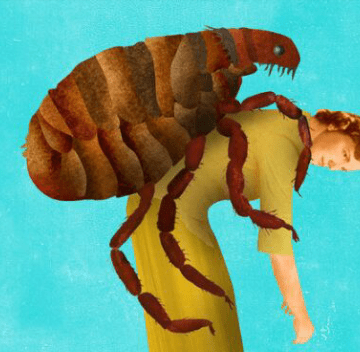
Chronic Lyme disease is a highly controversial catch-all term for a host of long-lasting symptoms that may or may not stem from prior infection with the bacterium that causes acute Lyme disease. Often misdiagnosed and mistreated, chronic Lyme disease leaves thousands of people physically and mentally debilitated and without a medically established recourse.
Mary Rasenberger, 51, a New York lawyer, experienced “a series of ailments going back 10 years.” She was finally given a diagnosis of chronic Lyme disease last summer after having been told that she had multiple sclerosis.
Her long-term symptoms were “aching joints, headaches and indescribable fatigue” that made her miserable and unable to exercise. In the last few years, two additional symptoms developed: neuropathy in her limbs and face, and vision problems. In an interview, she said she “woke up every day feeling sick”; if she became overheated, she felt as if she had the flu.
Yet a test for Lyme disease came back negative. Desperate, she finally consulted a Lyme “specialist,” one of a number of doctors who treat patients with symptoms like Ms. Rasenberger’s with long-term antibiotics, despite the fact that such a regimen has shown no significant or lasting benefit in controlled clinical trials. These trials involved randomly assigning patients to the antibiotic Rocephin (often administered intravenously) or a placebo, with neither patients nor those evaluating their symptoms aware of who got what.
Still, after several months on antibiotics Ms. Rasenberger, like many similar patients, said she felt “completely healthy for the first time in years.” Each time she tries to stop the medication, her debilitating symptoms return.
Reports like Ms. Rasenberger’s are hardly unusual, and experts now realize that some people who get Lyme disease go on to develop a chronic illness even if their initial infection was promptly diagnosed and correctly treated. Approximately 10 percent to 15 percent of people who are treated for medically documented Lyme disease develop persistent or recurrent symptoms of fatigue, musculoskeletal pain and cognitive complaints.
The condition is known as post-treatment Lyme disease syndrome, or PTLDS. “It is a real disorder, although nobody really knows what’s happening,” Dr. John N. Aucott, an infectious disease specialist in Lutherville, Md., said in an interview.
“A lot of patients have been told they’re not really sick, just tired or depressed,” he added. “But this is not normal fatigue, and it’s not caused by depression” — although depression certainly can result from the patient’s seriously diminished quality of life.
Antibiotic therapy for PTLDS is based on disputed reports that these patients may harbor hidden reservoirs of the spirochete causing Lyme disease, Borrelia burgdorferi, long after their initial treatment. But researchers who have studied the therapy have found it of little or no benefit, and many say the regimen is fraught with hazards that could be even worse than the illness.
Risks include the development of an antibiotic-resistant infection, intractable diarrhea, kidney or liver damage and, as happened to a 30-year-old woman treated with an antibiotic through a catheter, death from a systemic infection called sepsis.
People with PTLDS are not hypochondriacs seeking attention or sluggards wanting to avoid work or chores, Dr. Aucott said, though they may benefit from psychotherapy that helps them cope better with their symptoms.
“These are high-functioning people — couch potatoes don’t get Lyme disease,” he said. “They are not crazy, and the doctors who treat them are not evil. These are desperate people trying to get better, and well-intentioned doctors who are trying to help them.”
But until the causes of PTLDS are discerned, it will be difficult for researchers to find effective therapies. Among the possible causes of the syndrome are prolonged post-infection fatigue and an autoimmune reaction to the infecting organism, according to a recent book by Dr. Adriana Marques of the National Institute of Allergy and Infectious Diseases.
As for why some people with PTLDS seem to benefit from intensive antibiotic therapy, at least temporarily, Dr. Aucott suggested a few theories. The antibiotics may have an anti-inflammatory effect that relieves pain and swelling. Alternatively, patients may have a low-level, persistent infection that is temporarily suppressed by antibiotics — but not killed by them. Or it may be that some PTLDS patients experience a placebo effect, improving because they believe the treatment will help and because someone is finally taking their symptoms seriously.
Complicating the picture is the fact that some people with PTLDS symptoms apparently never had Lyme disease in the first place, Dr. Marques said in an interview. There are other infectious organisms — Epstein-Barr virus, for example — that can produce similar symptoms and may be the real culprits.
But experts cannot rule out Lyme spirochete as a cause, either. Many, if not most, people who are infected with it never know they have been bitten by the tiny deer tick that spreads the bacterium from animals to people. They may never develop or notice the red rash that can result. Even when a rash occurs, only one in five is the characteristic bull’s-eye associated with Lyme disease. Most are solid red and round or oval.
Such people may never receive treatment for the infection in its early stages and end up weeks, months, even years later with the kinds of symptoms that have plagued Ms. Rasenberger. Symptoms may develop gradually, as they did in my dog, which had minimal effects from a Lyme-carrying tick until nine months later, when he collapsed, unable to eat or drink on his own.
Both Dr. Aucott and Dr. Marques said more research is desperately needed if people are to get the help they need. “This is a huge disease that’s only going to get bigger, yet it receives only a tiny fraction of the N.I.H. budget,” Dr. Aucott said, referring to the National Institutes of Health.
Given the uncertainties about chronic Lyme disease, prevention is more important than ever. Avoid walking through brush and high grass. When hiking in the woods, camping, gardening or mowing the lawn, wear long, light-colored clothing and tuck pant legs into tightfitting socks. Spray exposed skin with a 20-percent DEET insect repellent and clothing with permethrin. Remove clothes before coming back indoors, and wash and dry them separately.
Shower as soon as possible after being outdoors, using a washcloth or loofah, and check your body carefully, especially in skin folds, for attached ticks. They should be carefully removed with a tweezer without crushing them by pulling gently and steadily near the mouth. Then apply an antiseptic to the site.

July 6, 2013
By MARIE MYUNG-OK LEE
The microbiome of the digestive system is particularly important. At least a thousand strains of bacteria coexist in a healthy human bowel, and beneficial bacteria are involved in vitamin production, digestion and keeping “bad” bacteria in check. Thus, changes to the gut microbiome can precipitate disease. For instance, taking a powerful antibiotic wipes out both good and bad gut flora, which can lead to opportunistic bacteria taking over and causing infection.
Many people who suffer from clostridium difficile, a dangerous strain of bacteria that is becoming epidemic in hospitals and nursing homes, got it this way. The idea behind fecal transfers is that restoring colonies of healthy bacteria can either dilute or crowd out these harmful strains. And it seems to work: in January, The New England Journal of Medicine reported that the first randomized clinical trial of F.M.T.’s for clostridium difficile had been halted because the treatment worked so well that it was unethical to withhold it from the control group.
The causes of ulcerative colitis are more mysterious than those of clostridium difficile (doctors in Gene’s case did not hazard a guess), but there is some speculation that the condition can also be traced to pathogenic bacteria. A small study of children with ulcerative colitis, published this spring in The Journal of Pediatric Gastroenterology and Nutrition, found that 78 percent had a reduction in symptoms within a week of being treated with fecal transfers.
The idea of using stool as medicine is not new. In the 16th century, during the Ming dynasty, fermented fecal concoctions, euphemistically named “yellow soup,” were used for digestive problems. In the 17th century, Christian Franz Paullini, a German physician, compiled a stool recipe book for treating dysentery and other digestive ailments. In the United States, fecal transplants have long been used on sick horses, and in 1958, Dr. Ben Eiseman pioneered the concept in humans, writing about the use of a fecal enema as a last-ditch effort for a patient with clostridium difficile.
Today, around 3,000 F.M.T.’s have been performed worldwide. No significant adverse reactions have been definitively attributed to the procedure (though there have been two F.M.T.’s that may have led to the transmission of the norovirus stomach bug, both of which cleared on their own within days).
CONVINCED that the potential benefits outweighed the risks, Gene decided, early this year, to try F.M.T. However, this turned out to be harder than he’d expected. There are only about 16 centers in the country that even offer the treatment. Gene finally secured an appointment with Dr. Lawrence Brandt, one of the most experienced F.M.T. practitioners, only to find out, just before his visit, that Dr. Brandt was suspending his F.M.T. practice for ulcerative colitis on the advice of the hospital’s lawyers, in order to comply with a new Food and Drug Administration decision. In April, the F.D.A. decided to classify human stool that is used therapeutically as a drug, and thus approved for use only within an F.D.A.-approved clinical study.
Gene tried tracking down other doctors, but found to his frustration that almost all of them had stopped doing F.M.T.’s as a result of the agency’s somewhat ambiguous restrictions. He found one remaining gastroenterologist, R. David Shepard, who had an excellent record of treating ulcerative colitis with fecal transfers and was still doing them. But Dr. Shepard was in Florida, and Gene was now too sick to travel.
Dr. Shepard, however, had a solution: he would help Gene with the mechanics of performing a do-it-yourself F.M.T., something he’d done successfully with a handful of other patients. Gene just had to find a donor.
The donor question was a tricky one. The donor has to be healthy (and will be screened, via stool and blood, for transmissible diseases like H.I.V., as well as for pathogens and parasites); has to avoid any foods the patient might be allergic to; and has to be nearby, as freshness is an issue: the bacteria mix may begin to change once the stool leaves the body.
THIS is where I enter the story. My friends know me as being somewhat evangelical about eating fresh fruits and vegetables. I also eat a lot of naturally fermented vegetables, which contain beneficial bacteria as well as the kind of fiber that nourishes good bacteria in the gut, and I follow a gluten-free diet (Gene had found that his colitis did better off gluten). Finally, I’m regular, which is also important. In the end, it was kind of inevitable that he ask me.
After the initial weirdness of the request wore off, I told him I’d be happy to do it.
The screening took one visit to the lab. The procedure is, of course, messy and odoriferous, but it’s also simplicity itself. Gene’s marching orders were to procure a dedicated blender and sieve, enema tubing and syringe, and lots and lots of newspaper. F.M.T. basically consists of blending stool with saline, straining it, and reintroducing it into the colon via enema.
I delivered my first donation, in Tupperware, and Gene took it into the privacy of his bathroom. I stayed, just in case I was needed, and after about half an hour, he came out and told me, with a look of wonder, that he was feeling better already. Already? We checked with Dr. Shepard, who told us that, indeed, one can feel the effects that quickly.
However, a few hours later, the cramps returned. The good bacteria appeared to be doing something, but hadn’t gained a foothold in Gene’s gut. We would need to keep doing the transfers — first twice a day, then just once a day.
By early May, Gene felt well enough to get on a plane to Dr. Shepard’s center in Florida, where he received a colonoscopic F.M.T. The doctor confirmed that instead of the multiple ulcers Gene once had, there’s only a single small one remaining.
He can’t declare his ulcerative colitis “cured,” because it could still return. However, for now, the diarrhea, bleeding and mental misery are in the past.
Of course, his experience is only one story, hardly a double-blind clinical trial. And there could be risks we don’t know about: could moving the genetic material of one person to another also transfer unwanted characteristics, like a propensity toward diabetes or cancer? More studies are needed. But at the same time, the F.D.A. needs to fast-track research into this field, though it is neither glamorous nor capable of promising a blockbuster drug payoff for some corporation.
Thankfully, just two weeks ago, the agency announced that it was easing some of the restrictions it imposed in April on the use of F.M.T. for clostridium difficile. But this does not apply to ulcerative colitis. Gene had been lucky to have received one of Dr. Shepard’s last F.M.T.’s.
Gene was also lucky (or desperate enough) to find a donor. Some patients have resorted to Craigslist. There is the possibility of creating synthetic stool, but given that there are thousands of unknown species of bacteria in human stool, there’s no way to know if it would be effective. In an ideal future, a universal screening panel will be put in place so that healthy people can donate their microbiota, the way you can with blood.
The upside for patients would be huge. In a maelstrom of skyrocketing health care costs, think of what we could save, in terms of quality of life and money, with this procedure. Clostridium difficile infections alone kill about 30,000 a year and cost billions of dollars. The prescription drugs for Gene’s ulcerative colitis, let alone the doctor visits and one hospitalization, ran into the tens of thousands of dollars. The F.M.T. was basically the cost of the blender and the enema materials.
Gene gained back much of the weight he’d lost and recently returned to work. He was feeling so good that, last month, he gave a party. He’d kept his illness very private and thus most people hadn’t seen him at his sickest — to them he probably just looked like himself. But I remembered how skeletal and hollow-eyed he looked and the incredible journey he took just to fight his way back to normal. Now, thanks to some doctors who are promoting the curative powers of what we once used to think of as “waste,” Gene has a new medicine, one that’s replenishable and has no co-pay.
As for me, in a normal world, I would prefer not to discuss my stool in a public forum. But seeing my friend restored to health has made me change my attitude. Every morning (like I said, I am very regular), I find myself with a new appreciation for this bacterial world that we share.
July 5, 2013
By DAVID DeSTENO
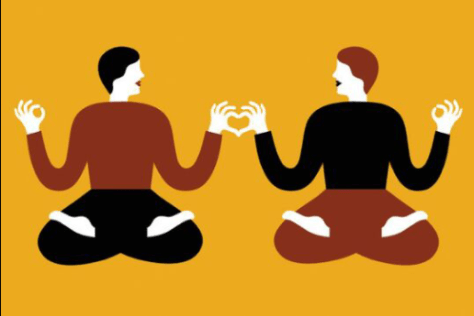
MEDITATION is fast becoming a fashionable tool for improving your mind. With mounting scientific evidence that the practice can enhance creativity, memory and scores on standardized intelligence tests, interest in its practical benefits is growing. A number of “mindfulness” training programs, like that developed by the engineer Chade-Meng Tan at Google, and conferences like Wisdom 2.0 for business and tech leaders, promise attendees insight into how meditation can be used to augment individual performance, leadership and productivity.
This is all well and good, but if you stop to think about it, there’s a bit of a disconnect between the (perfectly commendable) pursuit of these benefits and the purpose for which meditation was originally intended. Gaining competitive advantage on exams and increasing creativity in business weren’t of the utmost concern to Buddha and other early meditation teachers. As Buddha himself said, “I teach one thing and one only: that is, suffering and the end of suffering.” For Buddha, as for many modern spiritual leaders, the goal of meditation was as simple as that. The heightened control of the mind that meditation offers was supposed to help its practitioners see the world in a new and more compassionate way, allowing them to break free from the categorizations (us/them, self/other) that commonly divide people from one another.
But does meditation work as promised? Is its originally intended effect — the reduction of suffering — empirically demonstrable?
To put the question to the test, my lab, led in this work by the psychologist Paul Condon, joined with the neuroscientist Gaëlle Desbordes and the Buddhist lama Willa Miller to conduct an experiment whose publication is forthcoming in the journal Psychological Science. We recruited 39 people from the Boston area who were willing to take part in an eight-week course on meditation (and who had never taken any such course before). We then randomly assigned 20 of them to take part in weekly meditation classes, which also required them to practice at home using guided recordings. The remaining 19 were told that they had been placed on a waiting list for a future course.
After the eight-week period of instruction, we invited the participants to the lab for an experiment that purported to examine their memory, attention and related cognitive abilities. But as you might anticipate, what actually interested us was whether those who had been meditating would exhibit greater compassion in the face of suffering. To find out, we staged a situation designed to test the participants’ behavior before they were aware that the experiment had begun.
WHEN a participant entered the waiting area for our lab, he (or she) found three chairs, two of which were already occupied. Naturally, he sat in the remaining chair. As he waited, a fourth person, using crutches and wearing a boot for a broken foot, entered the room and audibly sighed in pain as she leaned uncomfortably against a wall. The other two people in the room — who, like the woman on crutches, secretly worked for us — ignored the woman, thus confronting the participant with a moral quandary. Would he act compassionately, giving up his chair for her, or selfishly ignore her plight?
The results were striking. Although only 16 percent of the nonmeditators gave up their seats — an admittedly disheartening fact — the proportion rose to 50 percent among those who had meditated. This increase is impressive not solely because it occurred after only eight weeks of meditation, but also because it did so within the context of a situation known to inhibit considerate behavior: witnessing others ignoring a person in distress — what psychologists call the bystander effect — reduces the odds that any single individual will help. Nonetheless, the meditation increased the compassionate response threefold.
Although we don’t yet know why meditation has this effect, one of two explanations seems likely. The first rests on meditation’s documented ability to enhance attention, which might in turn increase the odds of noticing someone in pain (as opposed to being lost in one’s own thoughts). My favored explanation, though, derives from a different aspect of meditation: its ability to foster a view that all beings are interconnected. The psychologist Piercarlo Valdesolo and I have found that any marker of affiliation between two people, even something as subtle as tapping their hands together in synchrony, causes them to feel more compassion for each other when distressed. The increased compassion of meditators, then, might stem directly from meditation’s ability to dissolve the artificial social distinctions — ethnicity, religion, ideology and the like — that divide us.
Supporting this view, recent findings by the neuroscientists Helen Weng, Richard Davidson and colleagues confirm that even relatively brief training in meditative techniques can alter neural functioning in brain areas associated with empathic understanding of others’ distress — areas whose responsiveness is also modulated by a person’s degree of felt associations with others.
So take heart. The next time you meditate, know that you’re not just benefiting yourself, you’re also benefiting your neighbors, community members and as-yet-unknown strangers by increasing the odds that you’ll feel their pain when the time comes, and act to lessen it as well.












 Rag and Bone Shop of the Heart