Dr. Joseph Brewer and Mycotoxins

I have had the Real Time Labs mycotoxin panel done and had high levels of Ochratoxins, Tricothecenes and was at the very top of the reference range in Aflatoxins. This blog post from Chris over at CFS Patient Advocate summed up an interesting study and outlined a possible new treatment direction for me to explore.

CFS Patient Advocate

Sunday, March 30, 2014

Dr. Joseph Brewer and Mycotoxins, an update

Dr. Joseph Brewer of Kansas City was one of the physicians who did not attend the recent IACFS/ME conference. Dr. Brewer is an infectious disease doctor who has been working with AIDS, Lyme and ME/CFS patients for a very long time. Over the years he has become interested in various treatments for ME/CFS – and has been open to thinking about associated subjects such as Mitochondrial impairment (or down regulation) or Mycotoxin involvement – to describe two of his recent interests.

About two years ago now, Dr. Brewer stumbled upon Mycotoxins and their potential involvement in ME/CFS. Dr. Brewer and his associates, Dr. Thrasher and Dr. Hooper, published their first paper on Mycotoxins and ME/CFS in April 2013. It can be view here. In this study, Dr. Brewer reveals finding 93% (104 of 112) of his patients positive for one of three mycotoxins (there are hundreds of mycotoxins) through a test at Real Time Labs in Carrollton TX. Zero of 50 controls tested positive.

The Real Time Labs test is a urine sample for Ochratoxin A, Aflatoxin and Trichothecenes (MT). (Real time labs will soon have a blood test for gliotoxin, a mycotoxin associated with Aspergillus.) The initial test costs about $700 and appears to be partially reimbursable. On Dr. Brewer’s initial study Ochratoxin A showed up the most, although a good number of patients had more than one and some had “the trifecta” – of all three. Dr. Brewer feels that mycotoxins are not good for patients to have in their bodies –  and that they represent a major factor in their ME/CFS illness.

Dr. Brewer reports that these mycotoxins impair mitochondria function and interfere with cell membranes. Loss of mitochondrial function can cause detoxification problems with other toxins. Poor detoxification might have something to do with clinical response.

Dr. Brewer’s previous experience with mold or mycotoxins was non-existent. He is an infectious disease doctor who looks for bugs and tries to kill them. In no way can Dr. Brewer be described as a “mold doctor”.

In December 2013, Dr. Brewer, Thrasher and Hooper published a second paper on Mycotoxins and their connection to chronic illness – “Chronic Illness Associated with Mold and Mycotoxins – Is Naso-Sinus Fungal Biofilm the culprit?” In this study they laid out their case based on examination of existing literature, citing case studies.

Faced with this high percentage of his patients with potential mycotoxin involvement, Dr. Brewer was both surprised and perplexed. He began treating some of his patients with heavy duty anti-fungal infusions. In time, again through researching the literature, Dr. Brewer concluded that the most likely reservoir for the mycotoxins was the sinuses. This involved a bit of guesswork. It is Dr. Brewer’s thesis that these mycotoxins get into the body and colonize in the sinus. Once colonized and protected by a biofilm, the body cannot get at them and they just stay there forever. It is his belief that they have to be rooted out. He finds in his patients that the exposure can be from the distant past, up to 20 years ago. From Dr. Brewer’s point of view, focusing on the sinuses in no way excludes other reservoirs harboring the mycotoxins – the gut, stomach and lung.

Dr. Brewer began treating his patients with nasal Ampho B – and he started getting results. Dr. Brewer works with a nasal drug delivery company called ASL pharmacy. They have a nasal delivery system called Nasa-touch which atomizes the medicinals. In time Dr. Brewer added another nasal drug to bust up biofilms that he believes are harboring the mycotoxins. This is nasal EDTA in combination with surfactant, an ingredient in Johnson’s Baby Shampoo.

Two side effects of this treatment are noted. One is that the Ampho B can cause nasal irritation and even mild nosebleeds in a few cases. The second is that the treatment often causes a strong herx reaction as the mycotoxins are exposed and the drug kills them. In both situations, Dr. Brewer moderates or cuts back the treatment and all cases have been manageable.

Dr. Brewer has been surprised, astonished really, by the results of treatment. In his first 100 patients treated, 70% showed improvement, including six whose symptoms completely resolved, including all symptoms of their larger illness.

With treatment, the successful patient’s urine Ochratoxin A will go down to zero in a matter of some months. The Trichothecenes (MT) takes longer but it too will diminish with treatment.

Three quarters of the patients treated had preexisitng sympotms of sinus problems. One quarter did not. Both segments showed equal improvement.

Dr Brewer has continued testing and treating more patients. He has now tested 350 patients, 325 of whom are positive for one or more mycotoxins. More Trichothecenes (MT) have been showing up recently in his patient population. He is now treating up to 200 patients and I believe another paper will be coming out soon. Dr. Brewer reports that those patients who have fully resolved and ended treatment tend to relapse and have to go back on treatment.

Dr. Brewer’s absence at the recent IACFS/ME meeting has already been noted. How could this happen? How could the emergence of a target for treatment not be acknowledged at this conference? This is all the more unusual in that Dr. Brewer published his first paper a year ago and then gave an exciting presentation at the Lyme conference in October 2013. In this situation, there seems to be a target, a treatment that is relatively benign – and Dr. Brewer is getting results. Doesn’t this warrant more attention? Wouldn’t it be interesting to find out what is happening here?

Of course, in spite of this, there was quite a lot of discussion of the subject of Mycoyoxins in the hallways of the IACFS/ME conference.

Regarding mycotoxins and ME/CFS we have to ask some questions. The most obvious one concerns the validity of the testing at Real Time labs. At the moment this seems the only lab that does mycotoxin testing. Dr. Ritchie Shoemaker has not been overly excited with this test, or with the idea of nasal colonized mycotoxins. If it isn’t mycotoxins that are being knocked out, what is the activity of Dr. Brewer’s treatment? A 70% response rate of over 100 patients is impressive. Dr. Brewer himself says that he has never seen such success with a single treatment.

Meanwhile other physicians are beginning to test their patients. A West Coast physicians group has tested over 100 ME/CFS patients for mycotoxins at Real Time labs – and are getting the same high positive results. Preliminary reports on Dr. Cheney’s testing of his patients also indicates a high positive response, especially for Trichothecenes. Even Dr. Ian Lipkin indicated that mycotoxins were dangerous, and warranted looking at in ME/CFS. Other physicians, Dr. Chia, and Dr. Enlander, are aware of Dr. Brewer’s work and have been encouraged to test their patients. 

I won’t suffer for this day.

I wake up and get straight out of bed without spending two hours “gathering my strength”. I lift my shower chair into position, lower the shower head and wash, condition and rinse my hair. This is something I manage to do about once a week on a day with no other obligations, but today I got a last minute appointment with my nutritionist. I don’t rest after my shower as I normally do- I towel off, pull on my compression stockings, put on jeans, boots and a sweater. I wash my face, brush my teeth and sit on the toilet to dry my hair, resting my elbows on my knees and hanging my head low. My husband usually helps me with this, but he is at work. I clip on my pedometer, strap on my heart rate monitor, drink a glass of salt water and make tea in a to-go cup. I move deliberately, like a sloth, conserving energy in every moment. I lock the back door, make sure I have my blood sugar tester and glucose tablets, scoop up my binder of test results and go out the front door, pulling it and locking it behind me, while juggling the folder, my bag and tea. I make a point not to say goodbye to my dogs, which I normally do. I am tallying every exertion — stiff door, weighty purse — since I don’t have my husband’s help and don’t want to needlessly lean, reach or speak.

I walk slowly to my car, get carefully in and raise the seat at a snail’s pace with the manual pump handle that always cranks up my pulse. And I drive to the clinic — the first time I have driven in about 6 months. I breathe rhythmically, hold the steering wheel lightly, casually turn the corners as if this is no big deal.

I remember myself as I used to be, hopping in and out of my car all the time, driving with confidence and speed all over the city. Multitasking, running errands, getting things done without a thought. Being housebound does strange things to your brain. The first thing I thought when I got into my car was, Will I be living in here one day? Could we trade it for something bigger? I turn off the radio so no extra energy goes to processing auditory signals than is absolutely necessary. The world going by is foreign and in stark relief. I notice everything; things that meant nothing now mean something. That fence is beautiful. Those people can afford a boat. I used to run with Bowie down that path. That person is strong enough to lift their kid. Their smiles are radiant.

I drive past the cemetery and first wonder if that’s where I’ll be buried and then see the cherry blossoms and want to pull over to drink them in a little longer. I drive past the hospital and make a mental note about how long it took to get there and feel confident that I could drive myself, if needed. I look at the people in the cars beside me and can’t believe that they are probably not thinking about how miraculous it is to have freedom and independence. Everything seems to represent our precarious position in this glorious life: nothing is important, but, also, nothing can be taken for granted.

I get to the clinic early so I can wait for the closest disabled parking spot to vacate. The last spot, six cars down, is open but I can’t fathom walking that far. I think about my rushed morning, my shower, the drive… I think about my appointment, the drive home, having to get undressed… six car lengths is a million miles. I wait for the first one to open up.

There are five stairs up to the clinic and I have to go through two sets of doors. Neither of them automatically open with a disabled button. They’re heavy doors. I hold the first one open for a man with a cane, he zooms by me quicker than I could ever move. Inside, I put all my things down on a chair before checking in at the reception desk — standing while holding that weight is not an option. My nutritionist’s office is in the furthest northwest corner of the building; we stroll slowly, she asks me if she can carry anything and I answer, “it would be more energy for me to raise my arm and hand you my purse or binder than to just keep them down at my side.”

We talk for over an hour. At one stage, I get very dizzy and my vision blurs out, I think I’ll have to abort our meeting, lie on her floor, call my husband … but adrenalin kicks in and I push through it. The shuffle back to the exit doesn’t feel as long — I’m not winded from stairs this time. As I walk by the front desk, the receptionist asks if I need to make another appointment and I wish she hadn’t noticed me so I don’t have to speak again. I stop and say, “I’ll call from home so I can look at my…” I can’t find the word for calendar. As I stand there, scouring my mind, an elderly woman with a 3-wheeled walking frame motors by me and flings open the door, thrusting out a hip to keep it open while she exits. I get distracted thinking about how I would give anything to trade this illness for another. Hobble me, but give me the ability to throw open a door. I want to barter my body: I’ll give you an arm if you’ll give me energy. I’ll give an arm, both legs and my hearing, in return I just want my body to be able to recharge. Take half my remaining years away, just give me ATP while I’m still here.

I give up trying to find the word for calendar, shrug, smile and leave. Back in my car, I leave the disabled spot and pull around the bend and park. I recline my seat all the way back and do a mini-meditation, tell myself that the world is not spinning, my throat is not sore, my ears aren’t ringing, my head doesn’t hurt, and I can do this. I breathe and talk to my cells, encouraging them to rebuild, refuel, recover. When I get home, I’ll have to find the energy to cook myself food before I get into bed. We have some frozen broth and frozen turkey, it’ll be easy. I’ll need to write down everything that my nutritionist said so I don’t forget; I want to share it with my low-histamine Facebook group. I envision exactly what I’ll do, watch myself standing in the kitchen with a low heart rate, eyes focused and clear head. You are strong, you won’t suffer for this day. The universe will carry you through and there won’t be retribution. You deserve a victory.

I sit up, push in the tough clutch and drive home.

image
“If a dog will not come to you after having looked you in the face, you should go home and examine your conscience. ” — Woodrow Wilson.

Bad Days

Some people in my M.E. Facebook group have been posting photos of their “bad” days to try to raise awareness of the plight of severely affected patients.

This is one of my bad days, which is most days recently (taken after hours of shaking chills and horrible nightmares during a sunny afternoon, with a blood pressure of 76/47 even after pints of salt water and electrolytes).

image

IV Saline Experiment

IMG_20131122_215013

My doctor finally acquiesced to my pleas to try IV saline and see if it helped my symptoms at all. I really wanted to try it last month when I was going through such hell after the tilt table test (I still cannot believe how profound the payback was from what felt like a comparatively benign day of tests), but she wasn’t convinced it was a worthy experiment. It wasn’t until I sent her POTSgrrl’s post (thank you!), that she thought we could give it a try.

I scheduled the appointment for the day my period was due because that is typically when I am most incapacitated by ME symptoms. It was 6 hours from the time we left the house until we returned. I never expected such a long day. We did 2 full bags of saline over a little less than 3 hours (and it took 3 tries to get the IV line in. Twice, the nurse said, “Shoot, I blew the vein.” I didn’t know what “blew the vein” meant and I was lying down and couldn’t see my arm, so I had a panic about what complications would happen, how much blood was everywhere and whether we should continue. Once something is underway ~ a treatment, a plane trip, anything ~ I don’t fret at all, but, during the time when I can change my mind, I always start to second-guess my decision. Maybe I shouldn’t have asked for saline. Everything always goes wrong. Maybe two “blown” veins is the universe telling me this is a bad idea. Maybe I should stop it now and go home. But the nurse went and got a different person to put in the IV and she was quick and confident and, once it was done, my mind was at ease).

The worst part about the treatment was how cold I was. The room was freezing and I spent 4 hours in there covered in blankets, my heated vest (it has a battery pack), my coat, my scarf and gloves, my husband’s coat, a water bottle that my husband filled with hot water from the tap… It was ridiculous.

Below is the email I sent my doctor this morning. I wanted to post it here so I have a record of how this treatment helped. Or didn’t.

Hi Dr. XXX,

My BP was 96/63 originally, somewhat the same after 1 bag of saline and, after 1.5 bags, it had actually gone down to 88/XX. After we were finished, it was back to the 9X/6X range again.

The good repercussions:

  • My heart rate has been so low. WOW! Morning HR on Saturday and Sunday was 53/54 bpm and, sitting watching tv, my HR was mid- to high-50s. That’s about 15 bpm lower than usual. Activities that would normally put my HR above 110 bpms (such as walking up 6 stairs and getting in bed) were only causing me to go into the 80s. The effect lasted all weekend.
  • My BP was higher than normal Friday night (109/67), but went back down the next day.
  • My period came Saturday morning and was definitely easier than it has been in the past few months. Cramps were minimal and I didn’t feel dizzy, however my muscles were still very sore and achy.
  • My energy was not bad over the weekend. I took 1400 steps Saturday and Sunday, which is a lot for me.
  • I was able to wash my cpap on Saturday and go out on my scooter for 45 mins on Sunday, both of which would normally be too much on the first two days of my period.

The bad repercussions:

  • The most prominent difference is, although my HR has been low, my heart feels like it is “tripping” every so often (maybe 4 or 5 times an hour). This is brand new. It feels like a pitter-patter palpitation, like it skips a beat or speeds up for a second… When this happened, my HR was still low.
  • It was a 6-hour total excursion, which, for me, is unheard of. This had to have repercussions.
  • I felt terrible Friday night. Heavy, inflamed, wiped out.
  • My eyes swelled up A LOT after the saline, as did my fingers, my sinuses and what felt like my lungs (my breathing felt laboured).
  • The spot in my throat under my jaw that itches when I am having an allergic reaction has been very itchy since Saturday morning (saline? period? something I ate?).
  • I slept poorly Friday and Saturday nights and woke up too early both days.
  • I woke up this morning (Monday) feeling HORRIFIC. Much worse than any day in the past week. Completely wiped out, in pain, barely able to get out of bed. Feels like the flu (throat, muscles, head), but of course it’s not. I don’t know if it’s payback from the appointment and the weekend or what, but, if there were benefits from the saline, it looks like they are gone now. HR is back to being in the 70s when I’m sitting.

Thank you so much for being willing to try this experiment! I really, REALLY appreciate having someone in my corner.

I’m going back to bed for the day now because I feel worse than I have in weeks. But I’ll leave you with some scenes from my scooter-walk with my husband and pups ~ now the thing that gives me the most joy in my life.

IMG_20131117_165651-1 (1)

IMG_20131117_164726-1 (1)

IMG_20131117_161323-1 (1)

My So-Called Life

The following is a glimpse into some of the ways my life has changed since ME became my constant companion.

20131124-114040.jpg
Vitamins, supplements and electrolytes, oh my! The only supplement that passed my lips pre-ME was an Emergen-C every once in a while. Now this. I just started taking B vitamins again after a 3-month pill hiatus. Every once in a while, I just need to get “clean”.

image
My drug stash. I hoard them, but don’t take them. Call it preparedness or call it paranoia, I don’t mind. After winding up in the emergency room a dozen times, I like the security of having meds on hand. What if there’s an earthquake and we need immediate painkillers? Nuff said.

image
This is an example of how I test drugs. That dot in my palm is 1/8 of a Xanax…which had no effect but a hive on my throat…which means I probably won’t try it again.

image

Cramps, spasms, aches, sprains. I never knew you could have muscle pain like this. After bartending three 12-hour shifts in a row or after being on my feet for 15 hours during a restaurant opening, I never came close to the un-ignorable myalgia that exists in this disease.

image

Yes, all these clothes are clean and, yes, they have been in this pile for a month. Folding involves a lot of arm action and I’m not willing to give up, say, loving on my dogs because I used up my arm movement quota to get neat clothes.

image

Thank god we (he) built the walk-in shower when we first moved into this house. It makes it easy to wash 110-pound dogs and it gives a flat surface for a chair for me to sit on. Yes, this is a crappy metal folding chair ~ I ordered the fancy shower stool and it was large, cumbersome and unstable. I toppled off it within two minutes and I’m only wee; I can’t imagine a bigger person having to use one of those things.

image

I took this picture in August. These are my “sun slippers” ~ because, even when it is so hot out that I have to lie in the shade with minimal clothes on, the ice blocks at the end of my legs need to be covered and in the sun.

image

Shocking, isn’t it? Welcome to peaceful sleep. Zeo headband, amber-lensed glasses for blocking the blue light in my phone, cpap nasal mask and tape over my mouth. Haha! No wonder I’m exhausted. 😉

image

Bedroom in the siting room. My husband moved to the basement room last year because he kept waking me up at night, but, this summer our bedroom got too hot for my sensitive system, so we swapped and I went to the basement. But, every teensy squeak of the floor boards above would wake me (and I don’t go back to sleep), so my husband moved to the living room where I couldn’t hear him. Poor guy.

image

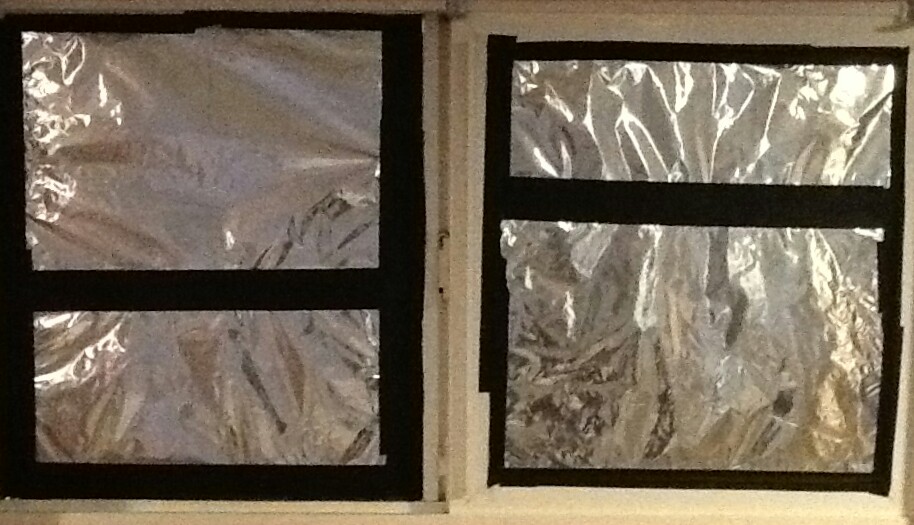
BUT, the basement bedroom has no window shades and even the light from the moon wakes me, so, as a temporary measure, we (he) covered the windows with tin foil. My own sensory-deprivation chamber. Luckily, we don’t have many guests. 🙂

imageimage
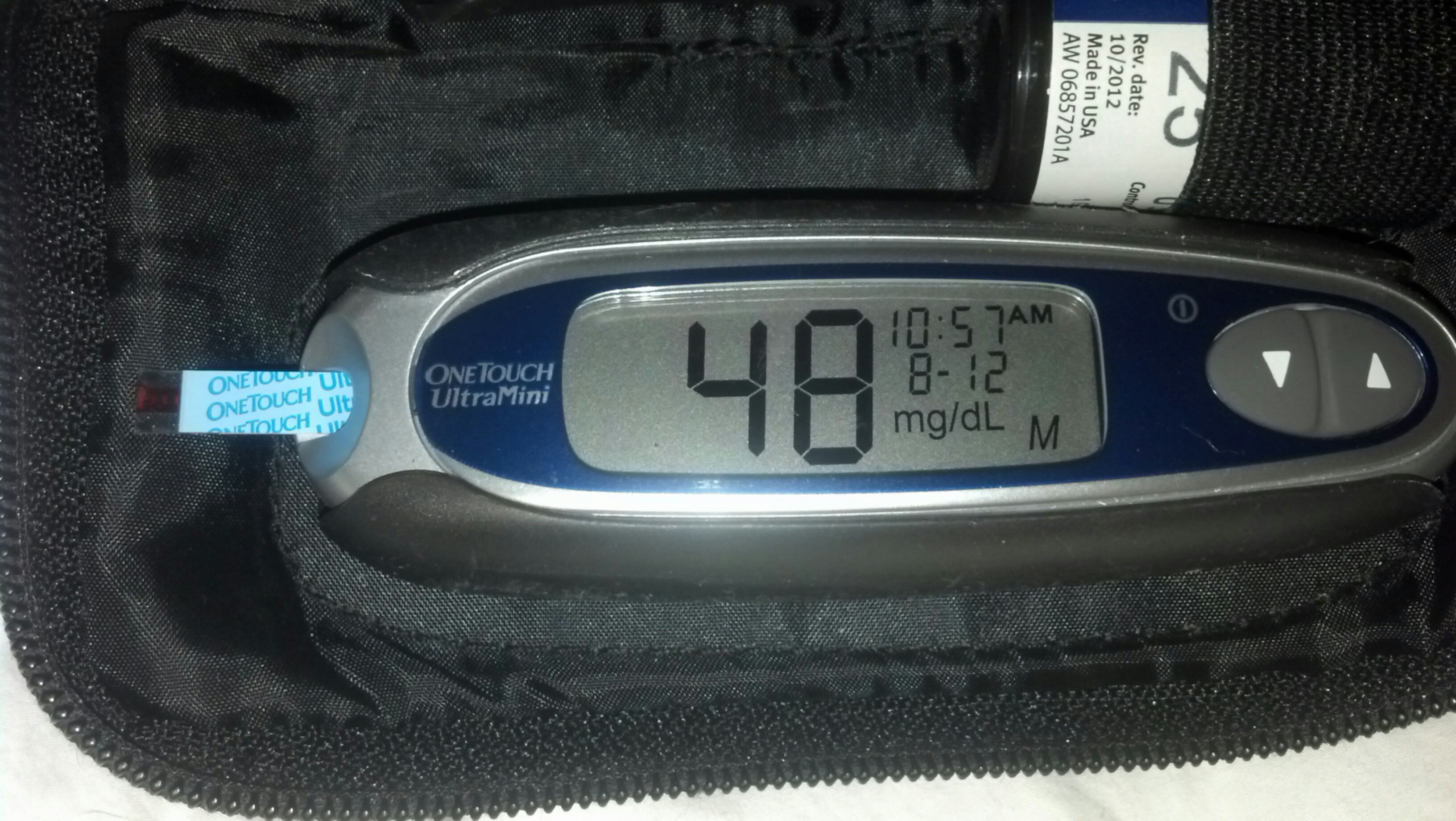
My crazy numbers: High heart rate because I dared to carry some stuff upstairs and low blood sugar because I dared to eat breakfast (I have reactive hypoglycemia).

photo (1)
What my hair used to look like a few years ago and what it looks like now ~ lank, brown, going grey, unwashed, and always in a ponytail. I miss feeling pretty!

photo (2)
My crazy skin. This makes me look so gnarly! My only constant skin issue is acne (which has been worse than ever since I came off the birth control pill 11 months ago), but, every once in a while, my autoimmune urticaria, sensitivities and rashes rear their ugly heads.

Image-1 (1)
Blood pooling. *No filters were used in the making of these pictures (although they were taken at different times of day and in different seasons). Thanks to Jackie at LethargicSmiles for the blood pooling photo inspiration.

Jobst Relief, Thigh CT,  Small, Beige
Some of the products I’ve purchased in the last year to try to help my IBS, my ANS, my allergies and my insomnia. I really miss the days when I didn’t read the ingredients of mouthwash!

Thanks for taking the tour! And thanks to Patrick at Quixotic for giving me this idea.

Over to you: What has changed in your life since you became sick?

Title Credit