Move over, Good Doctor, there’s a new team in town.

After a year and a half of regular visits, I have broken up with the Good Doctor. She was a lifeline when I first started seeing her ~ somebody who was willing to stick with me and give me diet and supplement help when every other doctor had only offered painkillers and antidepressants and sent me on my way. However, I have lost faith in her and, worse, now that I know more, I think she probably contributed to my fast decline. I started an incredible number of supplements at full dose, all at once when I had never even taken regular vitamins before and, within two weeks, I was housebound. I eliminated grains, dairy, legumes etc. at the same time. Never did it occur to me that I should start one thing at a time at a low dose and work up. Never did it occur to me that I could have a genetic mutation that prevented me from breaking down certain drugs and substances. Never did it occur to me that you could have “detox” symptoms when you radically change your diet. I had blind faith.

Most recently, I have had some abnormal test results and the Good Doctor has given me little to no guidance on what they mean and what treatments are available, She hasn’t even answered my emails in the last 5 weeks asking her to clarify what supplements she wants me to try (she was very hazy during the appointment). So, we’re done and I have a new set of practitioners to try out (you didn’t think I was going to relax the search, did you?).

There is a clinic very close to my house where I am now seeing a rheumatologist, a medical nutritionist and a therapist. I like them all so far… kind of. There’s never a perfect fit.

Dr. O, the rheumatologist is the most energetic person I have ever met. I thought I used to bounce off the walls and multitask, but he puts me to shame. It was quite impressive, but extraordinarily exhausting. When I got home, I sobbed from the overwhelmingness of the appointment. I was in the clinic for four hours. He listened to my entire history (and, subsequently, wrote an incredibly thorough and accurate 4-page summary, which he sent to me); he thumbed through my entire binder of test results; he did a brief physical exam (during which I was hit with extreme vertigo after he did a Vulcan-type maneuver on my neck and proclaimed that it was because of sensitivity of the Brachial Plexus Nerve Bundle); he did quick x-rays of my spine (nothing significant, which I find baffling); a Dexa bone scan (osteopenia is worse, but I’m not sure if it is technically osteoporosis yet); ultrasounds of my shoulders (bursitis and fluid in both shoulders which he wanted to inject with cortisone right there and then ~ I declined because, as I told him, it’s like treating a stubbed toe while I’m fighting for my life); and, finally, a blood draw and instructions for a urine collection for mast cell tests (n-methylhistamine, PG D2, PG F2 Alpha).

I’ve put all my test results on this page. All of the MCAD urine tests were normal, which I expected, but was still frustrating. I am happy to have baseline numbers, though, in case I ever experience anaphylaxis again (knock on wood, toba toba) or a severe reaction. I will ask him to put in a standing order for another urine collection so I can retest, if needed. His directions to me were to try Zyrtec/Zantac (the latter gave me terrible nausea and stomach pain, but I’m going to try it again in case it was an anomaly), take fish oil and try Prednisone. He said he “wouldn’t blink an eye” if I were on low-dose Prednisone (Prednisolone) for the next year. I’ve had that Rx in hand now for -shocker- 10 weeks and haven’t taken it yet. But I’m going to. This is the fourth doctor to recommend trying Prednisone and, although I refuse to be on steroids long-term (because they put adrenals to sleep, cause sleeplessness, increase glaucoma risk when I am already a glaucoma suspect, increase osteoporosis risk when I’m already almost there, shut down the immune system/increase infection risk, can cause weight gain/edema and blood sugar issues, AND must be carefully tapered off over months), I think I will trial them as a diagnostic tool and, also, to know what my body’s reaction will be in case I really need them at some stage in the future.

The blood tests (ANA, CRP, ACE, PTH, ANCA, magnesium, calcium, celiac) were all normal except for high Saccharomyces cerevisiae IgG antibodies, which are found in 60-70% of Crohn disease patients. I’m not sure what this means for me. A quick google of symptoms shows that I have all of them except diarrhea, which is the main indicator of inflammatory bowel disease, so I’m hoping it’s nothing serious. I really don’t want to have a colonoscopy.

I went back a few weeks later to see the medical nutrition therapist. Dr. O had quite proudly proclaimed that she was the only Bastyr-trained medical nutritionist in the country (which I find hard to believe, but maybe I just didn’t understand her exact qualifications). Reading her bio was emotional for me ~ she attended the same Master’s program at Bastyr University that I got into but didn’t attend. I worked my ass off to do all the science pre-reqs, paying for night classes with my tips, got in and accepted the place, but deferred a year to save money and, during that year, wound up climbing the restaurant corporation ladder. I never went to Bastyr and I can’t help doing the Choose Your Own Adventure replay in my head ~ what would have happened if I went down that path? Where would my life be if I had gotten my Master’s and wound up doing something like my nutritionist is doing? Helping people, not being chronically stressed-out and sleep deprived, working normal hours, doing something I’m passionate about: food for health…. Would I be sick? I don’t think I would be. I kind of know I wouldn’t be. Anyway, she tested for SIBO and it was negative, which, of course, I was kind of disappointed about, but I’m happy I don’t have to go on the threatened liquid diet.

Lastly, I started seeing a psychotherapist, whom I like so far. He actually calls himself a “rehab counselor”, which is more accurate because he is helping me with doctor, disability lawyer and health insurance broker referrals and trying to make sure I have a supportive team that I like. He has dealt with chronic illness patients a lot, and ME/CFS patients in particular, so he gets it and I feel comfortable being my blunt, cursing, cynical self.

I have a lot of new doctor visits on my calendar, so there will be more posts like this. I know many of you think I should stop wasting my energy, but, until I stop getting leads that I think I need to follow or can’t leave the house at all anymore, I will continue my search for answers.

I was about to write, “…until I lose my healthcare or run out of money…”,  but, it turns out, the Affordable Care Act actually has worked in my case. I can’t be refused because I have these prior issues and Washington’s Apple plan is literally $0 if you have no income (but, I’m going to keep fighting to have an income, obviously). So, that it is some weight off my shoulders. Thank you, Obama. 🙂


Emboldened and Emblazoned

Emboldened by my moderately successful drive to the nutritionist, I decided I could drive myself to the sleep doctor’s office on Monday, which is only a little bit farther away. I was there for the hundredth time to fit my oral appliance for sleep apnea. It has now been a year-long debacle and I’m pretty sure I’m going to have to find a completely different brand and a completely different dentist and start over. That also means it will cost me $850+ instead of the $0 that the current device was going to be because the clinic wrote off the cost to me after the first three mess-ups.

I brought a thank you card and some fancy chocolate to the orthodontist because, the last time she saw me, I was literally being carried out of the office by my husband, unable to speak and having a total body meltdown, after being there 2.5 hours. It was mortifying, and she’s always been considerate of my illness and empathetic, so I wanted to thank her for following through. She burst into tears. And I mean burst. She didn’t just tear up, she started crying so hard, she couldn’t speak. That made me wish I’d given her a far nicer gift. She said (when she regained composure) that it meant so much and she knew how hard it had been on me and I’d stayed nice throughout the process… It’s true, I did stay nice because I love my sleep doctor and, really, it’s a bad product, not a bad clinic, but they wrote off the cost because I made it clear to the clinic manager that that was the appropriate thing to do. I also made it clear, in writing, that the problem was not with me and had nothing to do with my illness or my anatomy. And I’ve started the conversation about getting help with the preauthorisation for some different type of device from a different clinic. I don’t think it’ll work, but I’m politely yet firmly letting them know that this was their problem and I shouldn’t have to pay full price for another mold to be made. But let the orthodontist think I am all peaches and cream. 🙂

Anyway, on Monday I was going back for a final fitting and it was 1.5 hours again of putting the thing in my mouth, grinding down the pressure points, spraying awful green chemical crap in the mouth piece, putting it in, clenching my jaw, pointing out where it’s hitting my teeth… on and on, over and over… That process takes so much out of me and hurts my neck and my jaw and rips up my lips. Plus, I had a horrible hypoglycemic episode and had to eat red dye #2 glucose tablets. Ugh.

When we were done, I couldn’t drive home – the world was spinning and my ears were screaming and my vision was blurry. I called my husband for rescue. He and his friend that he works with came to collect me and the car, god love them. I lay down on the concrete slab outside the clinic to rest while I waited. A 40-year old kicked back on the concrete in front of a sleep clinic in a sort of urban strip mall didn’t seem quite as acceptable as a similar sight when I was 20, lying on the concrete steps of a university building, writing poetry, feeling beatnik. But, oh well. I’ve laid down on restaurant floors and airplane aisles; I have no more qualms.

The sunny silver lining was: it was summer that day. One day of crazy heat. I took off my big duffle coat and then my sweatshirt and then my scarf and then my long-sleeved shirt and, by the time my husband arrived, I was in a tank top, baking myself, in deep meditation.

0331141554 (1)

The other great things from this week:
A long visit with Z. and sweet baby Aja (who is not such a baby anymore!).

wpid-img_20140403_233742.jpg

Baby Aja hanging with the Little Guy. 🙂

And I made it to the cemetery on my mobility scooter for a 40-minute “walk”, with beautiful spring coming to life everywhere I looked.

wpid-0402141516.jpg

wpid-img_20140402_171247-2.jpg

wpid-img_20140402_162853.jpg

Dr. Joseph Brewer and Mycotoxins

I have had the Real Time Labs mycotoxin panel done and had high levels of Ochratoxins, Tricothecenes and was at the very top of the reference range in Aflatoxins. This blog post from Chris over at CFS Patient Advocate summed up an interesting study and outlined a possible new treatment direction for me to explore.

CFS Patient Advocate

Sunday, March 30, 2014

Dr. Joseph Brewer and Mycotoxins, an update

Dr. Joseph Brewer of Kansas City was one of the physicians who did not attend the recent IACFS/ME conference. Dr. Brewer is an infectious disease doctor who has been working with AIDS, Lyme and ME/CFS patients for a very long time. Over the years he has become interested in various treatments for ME/CFS – and has been open to thinking about associated subjects such as Mitochondrial impairment (or down regulation) or Mycotoxin involvement – to describe two of his recent interests.

About two years ago now, Dr. Brewer stumbled upon Mycotoxins and their potential involvement in ME/CFS. Dr. Brewer and his associates, Dr. Thrasher and Dr. Hooper, published their first paper on Mycotoxins and ME/CFS in April 2013. It can be view here. In this study, Dr. Brewer reveals finding 93% (104 of 112) of his patients positive for one of three mycotoxins (there are hundreds of mycotoxins) through a test at Real Time Labs in Carrollton TX. Zero of 50 controls tested positive.

The Real Time Labs test is a urine sample for Ochratoxin A, Aflatoxin and Trichothecenes (MT). (Real time labs will soon have a blood test for gliotoxin, a mycotoxin associated with Aspergillus.) The initial test costs about $700 and appears to be partially reimbursable. On Dr. Brewer’s initial study Ochratoxin A showed up the most, although a good number of patients had more than one and some had “the trifecta” – of all three. Dr. Brewer feels that mycotoxins are not good for patients to have in their bodies –  and that they represent a major factor in their ME/CFS illness.

Dr. Brewer reports that these mycotoxins impair mitochondria function and interfere with cell membranes. Loss of mitochondrial function can cause detoxification problems with other toxins. Poor detoxification might have something to do with clinical response.

Dr. Brewer’s previous experience with mold or mycotoxins was non-existent. He is an infectious disease doctor who looks for bugs and tries to kill them. In no way can Dr. Brewer be described as a “mold doctor”.

In December 2013, Dr. Brewer, Thrasher and Hooper published a second paper on Mycotoxins and their connection to chronic illness – “Chronic Illness Associated with Mold and Mycotoxins – Is Naso-Sinus Fungal Biofilm the culprit?” In this study they laid out their case based on examination of existing literature, citing case studies.

Faced with this high percentage of his patients with potential mycotoxin involvement, Dr. Brewer was both surprised and perplexed. He began treating some of his patients with heavy duty anti-fungal infusions. In time, again through researching the literature, Dr. Brewer concluded that the most likely reservoir for the mycotoxins was the sinuses. This involved a bit of guesswork. It is Dr. Brewer’s thesis that these mycotoxins get into the body and colonize in the sinus. Once colonized and protected by a biofilm, the body cannot get at them and they just stay there forever. It is his belief that they have to be rooted out. He finds in his patients that the exposure can be from the distant past, up to 20 years ago. From Dr. Brewer’s point of view, focusing on the sinuses in no way excludes other reservoirs harboring the mycotoxins – the gut, stomach and lung.

Dr. Brewer began treating his patients with nasal Ampho B – and he started getting results. Dr. Brewer works with a nasal drug delivery company called ASL pharmacy. They have a nasal delivery system called Nasa-touch which atomizes the medicinals. In time Dr. Brewer added another nasal drug to bust up biofilms that he believes are harboring the mycotoxins. This is nasal EDTA in combination with surfactant, an ingredient in Johnson’s Baby Shampoo.

Two side effects of this treatment are noted. One is that the Ampho B can cause nasal irritation and even mild nosebleeds in a few cases. The second is that the treatment often causes a strong herx reaction as the mycotoxins are exposed and the drug kills them. In both situations, Dr. Brewer moderates or cuts back the treatment and all cases have been manageable.

Dr. Brewer has been surprised, astonished really, by the results of treatment. In his first 100 patients treated, 70% showed improvement, including six whose symptoms completely resolved, including all symptoms of their larger illness.

With treatment, the successful patient’s urine Ochratoxin A will go down to zero in a matter of some months. The Trichothecenes (MT) takes longer but it too will diminish with treatment.

Three quarters of the patients treated had preexisitng sympotms of sinus problems. One quarter did not. Both segments showed equal improvement.

Dr Brewer has continued testing and treating more patients. He has now tested 350 patients, 325 of whom are positive for one or more mycotoxins. More Trichothecenes (MT) have been showing up recently in his patient population. He is now treating up to 200 patients and I believe another paper will be coming out soon. Dr. Brewer reports that those patients who have fully resolved and ended treatment tend to relapse and have to go back on treatment.

Dr. Brewer’s absence at the recent IACFS/ME meeting has already been noted. How could this happen? How could the emergence of a target for treatment not be acknowledged at this conference? This is all the more unusual in that Dr. Brewer published his first paper a year ago and then gave an exciting presentation at the Lyme conference in October 2013. In this situation, there seems to be a target, a treatment that is relatively benign – and Dr. Brewer is getting results. Doesn’t this warrant more attention? Wouldn’t it be interesting to find out what is happening here?

Of course, in spite of this, there was quite a lot of discussion of the subject of Mycoyoxins in the hallways of the IACFS/ME conference.

Regarding mycotoxins and ME/CFS we have to ask some questions. The most obvious one concerns the validity of the testing at Real Time labs. At the moment this seems the only lab that does mycotoxin testing. Dr. Ritchie Shoemaker has not been overly excited with this test, or with the idea of nasal colonized mycotoxins. If it isn’t mycotoxins that are being knocked out, what is the activity of Dr. Brewer’s treatment? A 70% response rate of over 100 patients is impressive. Dr. Brewer himself says that he has never seen such success with a single treatment.

Meanwhile other physicians are beginning to test their patients. A West Coast physicians group has tested over 100 ME/CFS patients for mycotoxins at Real Time labs – and are getting the same high positive results. Preliminary reports on Dr. Cheney’s testing of his patients also indicates a high positive response, especially for Trichothecenes. Even Dr. Ian Lipkin indicated that mycotoxins were dangerous, and warranted looking at in ME/CFS. Other physicians, Dr. Chia, and Dr. Enlander, are aware of Dr. Brewer’s work and have been encouraged to test their patients. 

I won’t suffer for this day.

I wake up and get straight out of bed without spending two hours “gathering my strength”. I lift my shower chair into position, lower the shower head and wash, condition and rinse my hair. This is something I manage to do about once a week on a day with no other obligations, but today I got a last minute appointment with my nutritionist. I don’t rest after my shower as I normally do- I towel off, pull on my compression stockings, put on jeans, boots and a sweater. I wash my face, brush my teeth and sit on the toilet to dry my hair, resting my elbows on my knees and hanging my head low. My husband usually helps me with this, but he is at work. I clip on my pedometer, strap on my heart rate monitor, drink a glass of salt water and make tea in a to-go cup. I move deliberately, like a sloth, conserving energy in every moment. I lock the back door, make sure I have my blood sugar tester and glucose tablets, scoop up my binder of test results and go out the front door, pulling it and locking it behind me, while juggling the folder, my bag and tea. I make a point not to say goodbye to my dogs, which I normally do. I am tallying every exertion — stiff door, weighty purse — since I don’t have my husband’s help and don’t want to needlessly lean, reach or speak.

I walk slowly to my car, get carefully in and raise the seat at a snail’s pace with the manual pump handle that always cranks up my pulse. And I drive to the clinic — the first time I have driven in about 6 months. I breathe rhythmically, hold the steering wheel lightly, casually turn the corners as if this is no big deal.

I remember myself as I used to be, hopping in and out of my car all the time, driving with confidence and speed all over the city. Multitasking, running errands, getting things done without a thought. Being housebound does strange things to your brain. The first thing I thought when I got into my car was, Will I be living in here one day? Could we trade it for something bigger? I turn off the radio so no extra energy goes to processing auditory signals than is absolutely necessary. The world going by is foreign and in stark relief. I notice everything; things that meant nothing now mean something. That fence is beautiful. Those people can afford a boat. I used to run with Bowie down that path. That person is strong enough to lift their kid. Their smiles are radiant.

I drive past the cemetery and first wonder if that’s where I’ll be buried and then see the cherry blossoms and want to pull over to drink them in a little longer. I drive past the hospital and make a mental note about how long it took to get there and feel confident that I could drive myself, if needed. I look at the people in the cars beside me and can’t believe that they are probably not thinking about how miraculous it is to have freedom and independence. Everything seems to represent our precarious position in this glorious life: nothing is important, but, also, nothing can be taken for granted.

I get to the clinic early so I can wait for the closest disabled parking spot to vacate. The last spot, six cars down, is open but I can’t fathom walking that far. I think about my rushed morning, my shower, the drive… I think about my appointment, the drive home, having to get undressed… six car lengths is a million miles. I wait for the first one to open up.

There are five stairs up to the clinic and I have to go through two sets of doors. Neither of them automatically open with a disabled button. They’re heavy doors. I hold the first one open for a man with a cane, he zooms by me quicker than I could ever move. Inside, I put all my things down on a chair before checking in at the reception desk — standing while holding that weight is not an option. My nutritionist’s office is in the furthest northwest corner of the building; we stroll slowly, she asks me if she can carry anything and I answer, “it would be more energy for me to raise my arm and hand you my purse or binder than to just keep them down at my side.”

We talk for over an hour. At one stage, I get very dizzy and my vision blurs out, I think I’ll have to abort our meeting, lie on her floor, call my husband … but adrenalin kicks in and I push through it. The shuffle back to the exit doesn’t feel as long — I’m not winded from stairs this time. As I walk by the front desk, the receptionist asks if I need to make another appointment and I wish she hadn’t noticed me so I don’t have to speak again. I stop and say, “I’ll call from home so I can look at my…” I can’t find the word for calendar. As I stand there, scouring my mind, an elderly woman with a 3-wheeled walking frame motors by me and flings open the door, thrusting out a hip to keep it open while she exits. I get distracted thinking about how I would give anything to trade this illness for another. Hobble me, but give me the ability to throw open a door. I want to barter my body: I’ll give you an arm if you’ll give me energy. I’ll give an arm, both legs and my hearing, in return I just want my body to be able to recharge. Take half my remaining years away, just give me ATP while I’m still here.

I give up trying to find the word for calendar, shrug, smile and leave. Back in my car, I leave the disabled spot and pull around the bend and park. I recline my seat all the way back and do a mini-meditation, tell myself that the world is not spinning, my throat is not sore, my ears aren’t ringing, my head doesn’t hurt, and I can do this. I breathe and talk to my cells, encouraging them to rebuild, refuel, recover. When I get home, I’ll have to find the energy to cook myself food before I get into bed. We have some frozen broth and frozen turkey, it’ll be easy. I’ll need to write down everything that my nutritionist said so I don’t forget; I want to share it with my low-histamine Facebook group. I envision exactly what I’ll do, watch myself standing in the kitchen with a low heart rate, eyes focused and clear head. You are strong, you won’t suffer for this day. The universe will carry you through and there won’t be retribution. You deserve a victory.

I sit up, push in the tough clutch and drive home.

image
“If a dog will not come to you after having looked you in the face, you should go home and examine your conscience. ” — Woodrow Wilson.

Diets Part IV: Low-Histamine, Mold Diet, Migraine Diet, AIP, Low-Sulfur and SIBO.

Well, the uptick in stability I mentioned in my last diet post has gone away. My daily headache is back, my heart rate is back up (not too high, but not the super-low it was), my muscles are worse, my blood pressure is all over the place, and I’m far more exhausted and dizzy than I was in January and February. So, back to normal!

When we last spoke, I was on a low-histamine, pretty much paleo diet (allowing rice), plus no eggs, citrus, nightshades or soy. I had a mycotoxin panel done and, in rare abnormal test results, found I had some very high levels in my urine. While researching mold toxicity, I found the “mold-free diet“. I was pleasantly surprised to see it was pretty much the same as the low-histamine diet and I was already following it. I was also dejected to learn there was another reason for me to continue avoiding all of these wonderful foods and bending over backwards to not consume leftovers.

Grass-fed, pastured beef sirloin and braised red cabbage from Nom Nom Paleo (click image for recipe).

Grass-fed, pastured beef sirloin and braised red cabbage from Nom Nom Paleo (click image for recipe).

Looking for help for my constant daily headaches, I came upon this article in the NY Times, called, “The Migraine Diet” (list is here). Judith Warner says, “I stopped drinking caffeine and alcohol and stopped eating chocolate, cheese, M.S.G., nuts, vinegar, citrus fruits, bananas, raspberries, avocados, onions, fresh bagels and donuts, pizza, yogurt, sour cream, ice cream, aspartame and all aged, cured, fermented, marinated, smoked, tenderized or nitrate-preserved meats.”

Hmm… Well, yet another reason not to eat dairy, gluten and aged, cured and fermented foods. But I really didn’t want to entertain the idea of life permanently without onions, raspberries, bananas and citrus fruits. Plus, I was still drinking my cup of black tea every morning and eating nuts and some sugar. My three loves. Maybe I would ignore the migraine diet recommendations and just take some Tylenol. Maybe I will revisit this down the road.

I decided, since I was almost there anyway, I wanted to give the Autoimmune Paleo diet (AIP) a chance for a month or two and see if it made any difference to anything. My vitilgo is not a big deal, my autoimmune urticaria and angioedema has not been an issue in a few years (knock on wood), but my thyroid is an ever-present problem and ME could have autoimmune roots, so I wanted to give it a try. AIP basically involves no grains, dairy, legumes, nuts, seeds, nightshades, eggs, caffeine, sugar or processed foods. It was designed to be a temporary elimination with reintroductions after the initial strict period, although some people seem to stick with it forever. I mope-ily removed nuts and seeds from my diet last month and was gearing up to kick rice, tea and coconut sugar to the curb when my research into the methylation cycle led me down a side road to a low-sulfur diet. Hold everything.

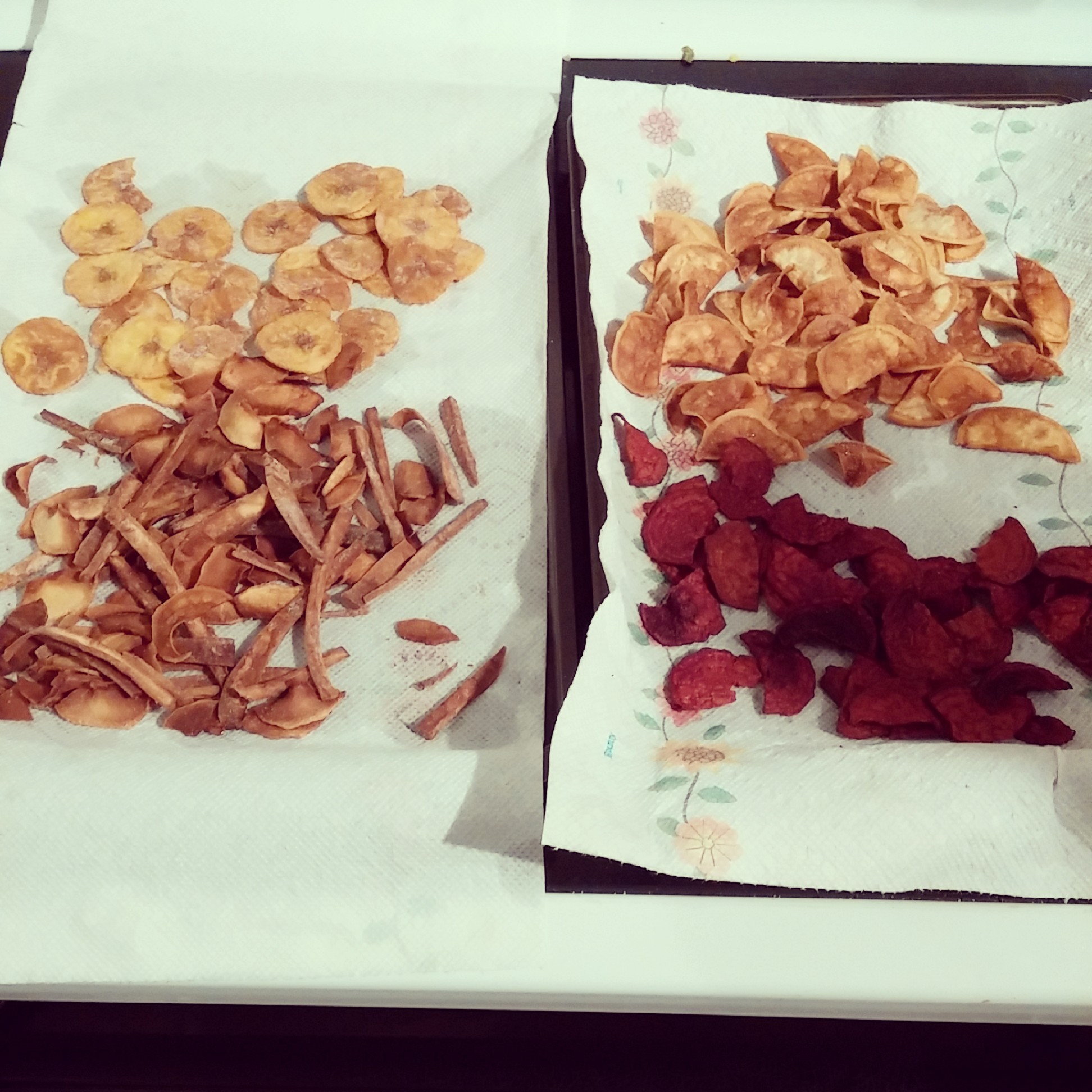
No nuts or oats? My new snacks: plantain, parsnip, sweet potato and beet chips.

No nuts or oats? My new snacks:
plantain, parsnip, sweet potato and beet chips.

My 23andMe results (I’ll go into this in more detail later) showed I have a CBS mutation. Some doctors (most notably Dr. Amy Yasko) maintain that one must deal with this “first priority mutation” before embarking on a protocol to unblock the methylation cycle. The CBS, plus two BHMT mutations, means I may have excess sulfur groups, which deplete molybdenum and BH4 and cause high taurine and high ammonia levels. I know from test results that my ammonia levels are high, so this is something I wanted to address. Working on methylation is a very long process- probably a year or two- so, if dealing with the CBS mutation is the first step, I wanted to get the show on the road. Suggestions are to eat a low-sulfur diet (my research indicated that animal protein was not as much of an issue as high-sulfur/thiol veg), so I omitted garlic, onions, most cruciferous vegetables and leafy greens and I stopped my epsom salt baths. This was hard, but I thought, It’s only for a month or so. While continuing to keep out nightshades and high-histamine foods, my allowed vegetable list was: artichokes, beetroot, carrots, celery, cucumber, lettuce, parsley, parsnips, squashes, and sweet potato.

Juice with allowed low-sulfur veg: beet, carrot, celery, cucumber, apple, ginger.

Juice with allowed low-sulfur veg:
beet, carrot, celery, cucumber, apple, ginger.

I started this at the beginning of March … aaaaannndd then I got my appointment with the medical nutrition therapist who was not only recommended by my doctor, but also by someone on one of my Facebook histamine/mast cell groups. Another side road.

The appointment was an hour and a half and she went over my symptoms and my food diary (note to self: edit your personal, private food diary before giving it to your doctor so it doesn’t say things like “want to vom”, “fight with D” and “bad poop” 😉 ). She said coconut was very high histamine which threw me for a loop since half my calories come from coconut in one form or another. I debated this fact with her for a while and eventually she said, “You’ll just have to trust me on that.” She also thought I might have a problem with salicylates, which I guess I eat in copious amounts. Joy. And she was concerned about SIBO: small intestinal bacterial overgrowth. As you can imagine, at this stage I really want to dump my diet decisions into someone else’s lap, so, while I still have health insurance that covers her service (for another few months), I am going to trust her and give her plan a fighting chance.

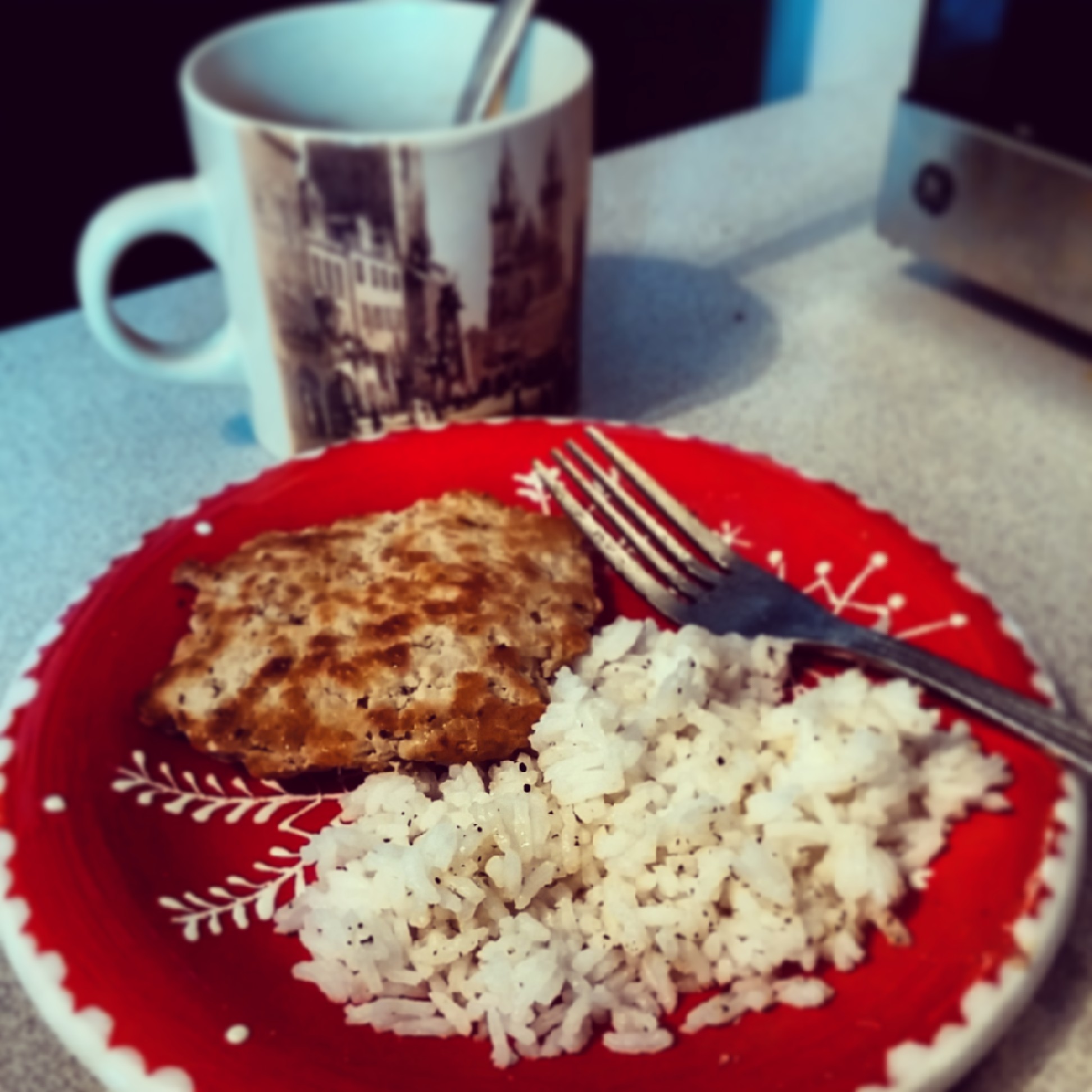
I am currently on day two of the SIBO test prep diet. I am only allowed to eat meat and rice for two days (if I’d already eliminated rice, I would only be eating meat, so thank god I procrastinated). Yesterday, I ate turkey, lamb, clear beef broth and rice with butter. Real delicious fatty decadent Kerrygold butter, for the first time in a year and a half. Butter is heaven. But no sweet treat after a meal is hell. I only eat a bit of chocolate or fruit or homemade coconut ice cream, but, judging from my extreme irritability, it is a very real addiction. I’m even salivating at the thought of a lozenge. Having an ever-present sore throat really makes lozenges a necessity!

SIBO prep meal

SIBO prep meal

I was secretly hoping that I would feel great these days on such a limited diet and it would spur me on to continue my food elimination experiments. Unfortunately, I am headachy, weak, sore and have zero appetite. Could it be the butter? Maybe, I guess, but I don’t think so. It might be because I washed my hair yesterday. It might just be ME.

In the next installment, I will tell you about my ketoacidosis scare and the strict low-histamine + low-salicylate diet that begins next week. I know you are all on the edges of your seats!

A tip from my Facebook friend, N., to excite my SIBO prep diet: Crispy waffle iron rice! (click image for recipe)

A tip from my Facebook friend, N., to excite my SIBO prep diet: Crispy waffle iron rice!
(click image for recipe)