
Well, that sucked. The last two weeks were the worst since I’ve become sick and it’s still continuing today, although it has let up enough to let me write. The autonomic testing was not as bad as I feared ~ you spend two and a half of the three hours lying flat on your back; when I came out of the room, my husband said, “Whoa, you’re smiling.” ~ but it kicked off something terrible in my body. From the next morning, and for a full 11 days after, I was basically bedridden.
I’ve never experienced vertigo like this. The room jostles sickeningly around my head every hour of the day, even lying down with my eyes closed – especially then. If I casually turn my head or move my eyes to look off to the side, my brain sloshes against the side of my skull and then self-corrects in the opposite direction, making me grimace and deep breathe, as if I am trying to cope with someone yelling in my face. A full-on assault. One day, I sat down on the toilet and the tilt-a-whirl was so violent, I burst into tears. I had to steady myself with the wall and my husband came in to see if I was okay. If I looked up at him, the room would spin faster, so I just sat there, looking down at my pajamas around my ankles, weeping.
My eyesight has been blurry for at least a year, but I’ve been half blind the last few weeks. I described it to the neurologist as Vaseline mixed with gravel spread over my eyes, with intermittent dark spots, continuous floaters, and daily small styes on the inner lids.
Tinnitus. That’s a perfect name for the garden variety tinny whine that sounds like aggressive mosquitoes that never fly away from your ears. But, recently, I have developed another tinnitus tone ~ a much lower, deeper generator hum. Thrumitus. Baritonitus. I made my husband lie on the bed with me quietly and interrogated him: “You can’t hear that?? The deep sound? What do you hear?” “I hear the plane. I hear the water heater. I hear the bathroom fan.” I made him throw every single circuit breaker in the box and we lay down again and listened. “It can’t be in my head. It’s so loud!” I went into my little meditation room, held my breath and listened again: “Oh my god, it’s in my head.”
And the pain… My spine, my back, my hands… This girl needs a painkiller option. I remember when I could tolerate Norcos and a half pill would vanish my neck pain for hours. It was glorious. I wrote my doctor a thank you card: YOU GAVE ME BACK MY LIFE! Now, every day I go to sleep with a crushing headache and wake up with the same thing. Before I open my eyes, I think, Damn, it’s still there. I fantasize about painkillers the way other people fantasize about cake or sex or traveling to exotic locations. Oh, to bask in the warmth of blocked brain signals!
3 hours on the tilt table also seemed to damage my circulation and/or nerves. I am very used to my hands and feet being too hot or too cold, engorged with blood or bloodless and white…. But, after the testing, my extremities were… driving me bat-shit crazy, for lack of a better description. Not pins and needles exactly, not tingling or numbness or throbbing exactly… Sort of all of these combined to create a jello of pain. A constant sensation that my calves and feet needed to be rubbed, massaged and warmed up. Like how I imagine hypothermia might feel. Like how I imagine phantom amputated limb pain. This was – is – brand new and disheartening.
The worst thing about these repercussions is that I left the hospital writing a blog post in my head, titled “The Only Thing To Fear is Fear Itself” about how easy the testing was and how nobody should worry. Never did it occur to me that I would be so felled.
The worst WORST thing is that it was all for naught. The test results were not abnormal. The fact that I couldn’t do the Valsalva test, my toes had no blood or sensation while lying flat and were about to burst with blood and bright purple (according to the tech) while standing up, my blood pressure was low (in the 80s, according to the tech), and I almost blacked out after 17 minutes inclined… None of that is abnormal, apparently. The fact that virtually every symptom I have could be explained by dysautonomia means nothing, apparently.
After reading this excellent post by POTSgrrl, my husband and I were agape… She wrote my history. We had a glimmer of hope. It didn’t just explain the symptoms that can be a part of many other conditions like exhaustion, headaches and IBS, it explained symptoms that were very specific to my current illness, like drenching night sweats, shakes, and vertigo, as well as things that were happening to me long before ME, like vasovagal syncope, reactive hypoglycemia, and Reynaud’s. It really got me when she said she could see her pulse flash in her eyes and feel it everywhere in her body. I have very accurately taken my heart rate by just lying quietly and listening to my heart beat or counting the throbbing in my gums or watching the pulse in my eyes.
I don’t care what title they give my condition, but doctors have treatments for POTS that I wouldn’t mind trying, plus there is a “thorough autoimmune panel” that the neurologist only pursues if you fail the autonomic testing. I’m not sure why my three autoimmune diagnoses don’t qualify me for this panel, but, after a 2.5-hour follow-up appointment to my 3-hour testing, the neurologist merely told me to wear compression stockings and take salt tablets, 6-9 grams a day. Shocker. When he asked would I come back in three or four months, I said no: “This seems like another dead end.”
Gratitude:
I’ve gone to the University of Washington Medical Center more times than I can count: anaphylaxis, ovary and kidney ultrasounds, nuclear testing and thyroid ablation, MRI, CT, and dexa bone scans, sleep specialists, allergy specialists, infectious disease specialists… I even volunteered there while taking classes for grad school. Of all the healthcare professionals with whom I’ve come in contact, there have been 2 memorable ones: the ER nurse who took care of me the first time I went into anaphylactic shock in 2001 and Kevin, the patient, nonjudgmental MRI tech last year, who looked about 17. This is a research facility and, for the most part, doctors have robotically gone through the motions, treating me like a barrier between them and the end of their day. I have been scoffed at and dismissed, I have seen open repulsion and blatant boredom. But, mostly, they have ignored me, as if I couldn’t possibly understand their explanation and reasoning, always preferring to communicate with my GP, rather than me.
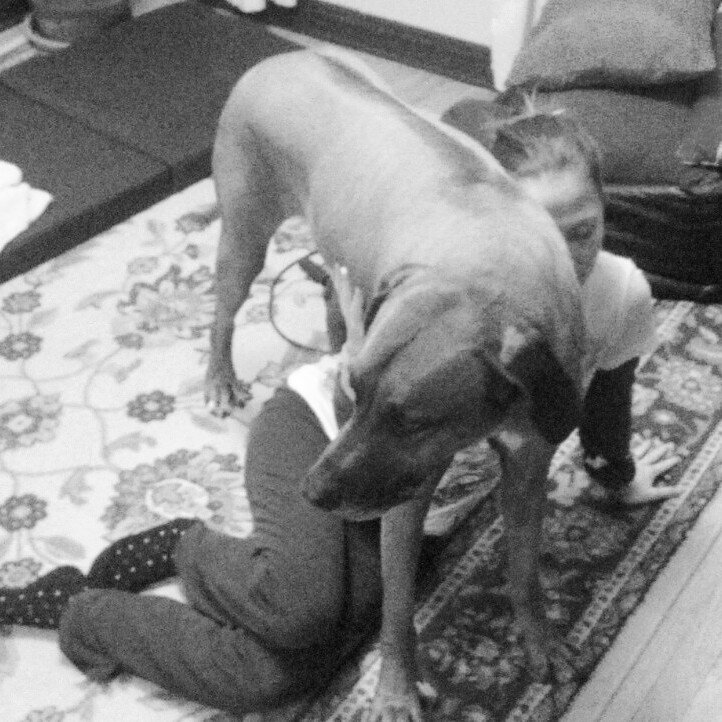
Brent, the 4th year medical student from this week became #3 on my most memorable list. He spent a full hour with me, getting my history and doing a neurological work-up. He took my dog hair-covered socks off with the care of a father (which I told him and confirmed that he had kids – and a dog), he didn’t bat an eye when I shushed my husband for interjecting too much and he nodded encouragement when I started convulsing with chills and couldn’t speak through my chattering teeth. Even though he could offer no help in the end and I left the hospital sobbing from yet another let down (no emotion in front of the doctors, though, y’all), Brent was kind, witty, genuine, empathetic, and generally made me wish I could go drink beers with him. He’s getting a thank you card.
___________________________________
From Health Rising
Your Next Diagnosis is… POTS
In the tilt table version of an ME/CFS repeat exercise test, patients whose heart rate increased during standing but who did not meet the criteria for POTS were given another, longer, tilt test. Almost half of them ended up meeting the criteria for POTS.
This, like the repeat exercise test employed in chronic fatigue syndrome, much more accurately reflects functionality because it more reflects the stressors of every day life: getting up and down again and again, standing for long periods, etc.
This finding suggests that POTS may be much more common (and much more underdiagnosed) than previously thought, and that the diagnostic criteria should be broadened. The takeaway from this is that If you have problems standing or remaining upright, and your doctor didn’t think you have POTS, you still might.
My guess is that the more the researchers dig into the standing problem the more they’ll find, and they’re just understanding the grosser aspects of it now. Who with chronic fatigue syndrome, after all, doesn’t have some problems with standing?
The Deconditioning Theory Takes a Hit
Because deconditioning can actually cause orthostatic intolerance (OI), the question of how much deconditioning contributes to orthostatic intolerance is HUGE. One train of thought has been that a considerable number of people with ME/CFS become immobile when they become sick, and then they become orthostatically intolerant by staying in bed so much. They’re so freaked out by their symptoms at that point that they never really get up again.
The problem is that staying in bed can cause orthostatic intolerance, and this makes it difficult to determine if orthostatic intolerance is from deconditioning or from a physiological problem.
Mayo Clinic researchers believe, though, that they have a way. A Mayo Clinic study finding that markers of deconditioning are ‘only marginally associated’ with heart rate response in a group of people with OI suggested that deconditioning is “unlikely to be the primary causative factor in orthostatic intolerance.”
They acknowledged that deconditioning is rampant in orthostatic intolerance, and reported that ‘reconditioning programs’ can be very helpful. But they concluded that deconditioning itself is only marginally relevant in causing orthostatic intolerance.

 Rag and Bone Shop of the Heart