Doctor Love/Hate

A few weeks ago, I had the follow up with the rheumatologist I saw in January. The one who came highly recommended by multiple doctors I’ve seen. The one who spent over an hour and half with me at our initial appointment. The one who wrote the most thorough and accurate notes on my history and even sent them to me. The one who ordered spine x-rays, a DEXA bone scan, blood work for inflammatory bowel disease and who did a quick ultrasound of my shoulders. The one who knew about the pretty much unknown mast cell activation disorders and even knew most of the tests to order. The one who wrote a book called, “You Don’t Look Sick.” … So, you’d think he’d get it.

At one point, he asked, “Why are you in bed so much?”
I wasn’t sure how to answer. This was my second appointment in a row; I’d previously spent a useless hour with my therapist, not having anything to talk about and feeling out of place. Maybe my brain was ticking over even slower than I had realised.
“Because I’m sick…”
I thought he understood my illness because of the thorough chart notes, but I’d have to reread them. Maybe he didn’t understand the key part about ME and post-exertional malaise (second worst description of anything, ever, after chronic fatigue syndrome). Maybe he didn’t quite get that my battery dies very quickly and, if I push through, I’m in a world of hell and the battery never quite fully goes back to where it once was.
He said (and this is a direct quote), “If your hope for the future depends on getting disability, you’re not going to get out of bed.”
And then my brain blew up.

Screenshot_2014-05-21-07-41-55-1

I know many, many people have dealt with this sort of thing before — this blatant skepticism about their illness — but I hadn’t. Nobody had ever questioned me to my face. I didn’t really hear anything else he said after that because I did a white-out with fury. This manifested itself with me bursting into tears, unfortunately. I told him I wanted to make it clear that I wasn’t in bed to try to get disability. He said something along the lines of: “It may not be that you’re a malingerer [I remember that word clearly], but that you subconsciously are staying in bed because you need the money.”
Wow.
I was raging. After waiting two years to apply for disability in the desperate hope that I could go back to work… after going from a happy, high-functioning person to practically an invalid… it was too much to think this might cross somebody’s mind. Why would I want to give up my whole life to get 1/10 of the money I used to make? I cried the whole way home. I kept thinking about it and crying the whole evening. Granted, I was premenstrual, but my anger can’t come out in yelling and stomping anymore, so it just bubbled out in tears. Would he have said that if my husband were with me? Would he have said that if I were bedbound with cancer?

Screenshot_2014-05-21-08-42-46-1

There was slight vindication when he told me I had to try increasing my steps and I told him I have: from 500 in January to 1500 now.
Then he said I had to try “bicycle yoga”, lying down and I said, “I do! I try to do yoga poses and gentle stretches whenever possible.”
Then he said, “You need to come in here with a list of your current symptoms, your meds, your questions and concerns.” I waited for him to finish drawing an example of the page he wanted me to write and then I told him: “I did — it’s on the back of that sheet of paper.”
“Oh, I didn’t look at that,” he said. “A+.”

Amazingly, after this conversation, he told me my clinical diagnosis was mast cell activation syndrome (MCAS) and prescribed Cromolyn.

I smoldered for a week and then went to see my therapist who works in the same clinic and has known Dr. O for 37 years. I let loose on him. I railed for a full 45 minutes and was completely supported and validated. He said he’d seen it happen before and that, typically, when Dr. O is called out on his behaviour, he is blind to what he did and remorseful. He read me the notes that Dr. O had written and they were great — he wrote that he wanted to treat me for MCAS and also continue to look at inflammatory conditions, that I wasn’t depressed… There wasn’t a mention of ME in the notes and that’s how I wanted it. I went to him in the first place for his diagnostic talents, to have someone search for other possible answers. So, I’ve decided to give him another chance. My therapy session completely calmed my outraged soul and I’ve let it go. I think I will write Dr. O a letter when I feel up to it, explaining professionally why he was bone-headed and offensive. I’m actually looking forward to seeing him again, so I can be the calm, assertive person I normally am with doctors.

So, about MCAS: I haven’t dealt with scary symptoms (anaphylaxis, tongue swelling) in years and I react terribly to most medications, so I’m hesitant to start treating with mast cell stabilizers, histamine blockers or other anti-inflammatory drugs besides Prednisone. However, I wonder how many of my daily symptoms could be caused by mast cell problems (GI issues, bowel swelling, headaches, fatigue, brain fog, sinuses, pain etc.), so I’m also excited to have this diagnosis and the treatment options available. There’s also a teeny tiny part of me that whispers, What if your only problem is MCAS? What if mast cell problems caused everything from anaphylaxis until now? I don’t believe that — of course it’s multifactorial and involves many different pathways: immune, neurological, endocrine, gastrointestinal, vascular — but, there’s still a seed of excitement that something might make a difference.

May 12: My 20 years with Myalgic Encephalomyelitis

Tomorrow is International M.E. Awareness Day. Everyone should read this post by Mary Schweitzer on her blog, Slightly Alive. It is informative and moving and should light a fire in everyone’s souls to raise awareness and find justice for so many patients and their family members who suffer from this disease.

Sunday, May 11, 2014

May 12: My 20 years with Myalgic Encephalomyelitis

I have had Myalgic Encephalomyelitis, or M.E, for 20 years.  The CDC does not recognize this.  They insist that I have a condition called “Chronic Fatigue Syndrome,” or CFS.  I have M.E.

At the age of 44 I led a charmed life.  I had been married to the love of my life for 20 years, and we had two lovely children.  We were both college professors – a deliberate choice that allowed us to do what we enjoyed – researching and teaching subjects that deeply interested us – while having the income to live comfortably (because we both worked) and plenty of time to spend with the children (because of the nature of academic life).  I had tenure at a good university, although my sights were set higher than that.  I had a working relationship as an associate fellow with a research institute at an Ivy League school, which enabled me the luxury of being around the best and the brightest in my field.  We traveled all around the country going to each other’s conferences, often taking one of the kids along.  We also went to four Olympics, two final fours (NCAA basketball championships) and countless playoff games, several World Series, and, eventually, twenty years of baseball AllStar games.  We skied in the winter and went to the beach in the summer.  It was a charmed life.

On October 24, 1994, I went to my office to grade exams and suffered a blackout.  When I came to, I could not understand one word in the Bluebooks in my lap – they might as well have been written in Cyrillic alphabet.  It took time – and concentration – to be able to stand.  I had fallen down the rabbit hole; my life would never be the same.

Over the next four years I suffered from severe pain in the back of my neck and behind my eyes, 24/7. My muscles ached, and I had migraine-level headaches.  I had ataxia, dyslexia, sensitivity to light and sound (to the point I had to wear sunglasses all the time), tinnitus, partial paralysis, memory loss, disorientation, expressive dysphasia, and massive confusion.  My family took care of me.  Obviously, I could not drive, and by 1996 I was using a wheelchair when I left the house (which someone else had to push).

I was lucky to have a family to take care of me, because I could not take care of myself.  I also soon discovered an Internet discussion list of fellow sufferers, and was referred to a very good specialist in Washington, Marsha Wallace (who unfortunately hasn’t practiced since 2000).  Dr. Wallace taught me to live within my energy envelope and helped with sleep disruption and NMH/POTS, but I continued to deteriorate.

In the fall of 1998, Dr. Wallace introduced me to Dharam Ablashi, a researcher who had just retired from the National Cancer Institute at NIH.  Dr. Ablashi had been the co-discoverer of HHV-6 and it’s two variants, A and B, while working with AIDS.  I had the version the AIDS patients did – Variant A – and my viral load was ten times the amount used to diagnose an active infection.

I would also test positive for active EBV or mono (which I had more than once – most notably in 1990, four years before my collapse, during an outbreak on my college campus), CMV (cytomegalovirus), HHV-7, and three strains of Coxsackie B.

My immune system was severely compromised: My natural killer cell function was less than 3%, I had the defective 37kDa Rnase-L, and I had an abnormal cytokine pattern.  But no one knows how all this happened.  All we know is that this disease can occur in cluster outbreaks, and it can pop up in individuals.  No one in my family got it from me, but I believe the outbreak of EBV in 1990 marked the beginning of my illness – the beginning of the cycle of immune defect-virus-damage that characterizes this disease for many of us.  I had to continue to teach through my infection with EBV, including an hour’s commute and back, and while I recovered from mono at the end of the fall semester, my health began to deteriorate in seemingly disparate ways, until the ultimate collapse in 1994.

Years later I would have a spinal tap that revealed both HHV-6 and Cytomegalovirus were active in my spinal fluid.  No wonder I had the symptoms of encephalitis, and with the stiff neck, meningitis.  Along with the muscle pain, that meant literally that I had Myalgic Encephalomyelitis, or M.E., a disease that had been diagnosed in the UK since the mid-1950s.  In the United States, however, all I was given was a diagnosis of “chronic fatigue syndrome,” a name chosen by committee and adopted by CDC in 1988 to replace the name given a number of cluster outbreaks occurring in the USA at the time, Chronic EBV.  They did not mention M.E. – though there were specialists at the meeting who insisted that was the correct diagnosis for these outbreaks.  They did not ask anyone in the disease community what they thought of this name.  They simply adopted it, and having done so, consigned the disease to the backwaters of medicine where neither research nor treatment could be found.

There could not have been a worse choice of a name for this disease if CDC had hired a focus group,  Chronic (as in chronic whiner) Fatigue (as in “yeah, I’ve been feeling tired lately myself”) Syndrome (as in syndrome of the month) – applied to upper middle class white women “trying to have it all” (as the late Bill Reeves of CDC once phrased it) – how inconsequential, silly even.  Twenty-five years later, 85% of patients – over one million Americans – have no idea what is wrong with them, because, according to both CDC and private demographic evidence, only 15% have a diagnosis.  25 years later only 15% have a diagnosis.  That is a mighty admission of failure.

The infectious disease specialists in northern Delaware dismissed my illness as minor.  “You’ll be back to normal in two years,” they assured me. Oh good, I responded – I won’t have to miss more than two seasons before I can go back to skiing.  “Oh no,” was the response.  “You’ll never ski again.”  How was that “normal?” I asked.  They got angry at that.  That’s when I was referred to Dr. Wallace and, thankfully, only had to deal with these people once more, when I was on the antiviral Vistide for my cytomegalovirus infection.  Dan Peterson, my new specialist, had asked them to let me get the infusions at their center, and they had agreed.  But when I showed up at their office, one of the doctors took me aside and said that they could not let me have Vistide because my medical records showed I “only had CFS – nothing serious, like AIDS or cancer.”  They said they could not justify using the drug on someone with a diagnosis of CFS – even though it was an FDA-approved drug for the virus CMV, which was active in both my blood serum and my spinal fluid.

Let me repeat that:  once given the label Chronic Fatigue Syndrome, I would meet disrespect from many doctors and people at NIH and CDC. None of my extensive testing mattered.

Although the progressive version of M.E. that I suffered from was unusually severe, I turned out to be lucky.  I was given the opportunity to go on the experimental Phase III drug Ampligen, in what is called a cost-recovery (I pay cash), compassionate care (I am allowed to do this because I was so very sick), open label (I know I am on the drug so FDA ignores me) study.  I have to get Ampligen at the study site by IV infusion twice a week.  And FDA can take the drug away from me whenever they want.

I have been on Ampligen for eleven of the past fifteen years.  Again, I am unusual in that my illness erupts again within a year of going off the drug (which I did once voluntarily, and once because FDA did take the drug away).  FDA has admitted, in writing, that the drug is not toxic.  But they are not “convinced” it is effective.  My experiences do not count because I was not in a placebo trial; I knew I was on the drug.  There is no other drug in the FDA pipeline for either CFS or M.E. (Although there are immune boosters and antivirals available for patients, and an anti-cancer drug called Rituximab is showing some promise).  This is the only one expressly targeted to M.E. or CFS.  Over one million Americans suffer from my disease.  FDA, CDC, NIH – none of them cares – though in fairness, there are individuals within those agencies who do.  It is those who make decisions who do not care.

[Side note about the obsession with placebo trials – If just knowing you are on a drug can make your immune markers return to normal, your active viruses return to a dormant stage, and change tests such as SPECT scans and CPET scores, we should all be cured of anything by happy thoughts.  Does FDA really believe this?]

So here I am today.  I would not have written this were I not on Ampligen.  On Ampligen, I can drive, take care of myself (mostly), read a book, work on my own writing, spend time with my children and grandchildren.  Off Ampligen I am an invalid in bed in severe pain, curled up in the dark because light is too painful, listening to a favorite movie over and over again.

So twice a week I leave my house at 8:15 and commute by train 100 miles north to Dr. Derek Enlander’s office in New York City, the closest site where I can get Ampligen.  I usually get home around 7 pm.  It is grueling, but at least I am getting the drug that keeps me from being a bedridden invalid.

Myalgic Encephalomyelitis is a serious disease.

CDC betrayed us by giving it a silly-sounding name in 1988 – CFS.  NIH allocates less than $5 per patient per year to study this disease – a pathetic amount.  We came back with private research initiatives, funded by cash-strapped patients and their families, and more good biomedical research is being published than ever before.  The whole concept of what “CFS” is, silly sounding name and all, is undergoing a transformation. And for the first time in my memory, clinicians and researchers have agreed on a definition – the Canadian Consensus Criteria, updated with current research.

So how is our government responding?  Suddenly there are three different initiatives within the U.S. department of Health and Human Services (HHS) to redefine the disease and rename it – done behind closed doors.  At CDC there is the Multi-site clinical assessment – which brought in respected clinics, but is now being polluted with research from a poorly conceived and run study by CDC in Georgia that used a different definition entirely.  HHS has once again turned to the IOM – Institute of Open Medicine – with a committee of whom the majority are not experts in either CFS or M.E.  IOM already weighed in with the opinion that both CFS and Gulf War Syndrome be renamed “Multi-Symptom Disorder,” provoking anger within the larger veteran community.  And NIH as a whole has given the “problem” of the name and definition to their  “pathways to prevention” program, or P2P.  In this case a committee was explicitly created consisting of individuals with NO experience -either medical of personal – with the disease, “like the jury system,” a spokesman explained cheerfully.  “Stakeholders” with different viewpoints testify to the committee, and then this committee of amateurs will recess and vote on the choice of what to do next.  Precisely when did the jury system replace scientific method in determining medical policy?

They are going against the expressed wishes of 60 specialists who signed a letter asking that the U.S. adopt the Canadian Consensus Criteria (CCC), and the public members of the CFS Advisory Committee to HHS asking that the government adopt the CCC, and hold an open workshop of specialists to update it (it is ten years old) with current research results.  Why are those of us within the world of M.E. ignored?  Why is 60 years of biomedical research into M.E. ignored internationally?

Perhaps more important, why don’t people outside our community – people in the media, in government, our doctors, our neighbors, our employers – why don’t they know that there is a growing epidemic of a severe, life-altering and in some cases life-taking disease that CDC and NIH are keeping under wraps?  I have friends who were teenagers when they got sick, and are now in their 40s. They did not get to marry their soulmate like I did.  They did not go to college or have a career.  They did not have children or grandchildren (I have two grandchildren now).  I was lucky compared to them.

They can barely afford to live from day to day.  They cannot afford the testing I have had, and they most certainly cannot afford the treatment I am on.

I have lost friends to this disease; we have lost young people to this disease.  The viruses can get into your heart muscle; they can get into your liver.  Patients die of rare cancers as well.  And then there are the suicides.

There has been a new series of outbreaks in the past five years.  Look at those you love, and if you care for them – whether or not you care about us – do something.  Because they could be the next victims.

Thank you for reading.

Diets Part IV: Low-Histamine, Mold Diet, Migraine Diet, AIP, Low-Sulfur and SIBO.

Well, the uptick in stability I mentioned in my last diet post has gone away. My daily headache is back, my heart rate is back up (not too high, but not the super-low it was), my muscles are worse, my blood pressure is all over the place, and I’m far more exhausted and dizzy than I was in January and February. So, back to normal!

When we last spoke, I was on a low-histamine, pretty much paleo diet (allowing rice), plus no eggs, citrus, nightshades or soy. I had a mycotoxin panel done and, in rare abnormal test results, found I had some very high levels in my urine. While researching mold toxicity, I found the “mold-free diet“. I was pleasantly surprised to see it was pretty much the same as the low-histamine diet and I was already following it. I was also dejected to learn there was another reason for me to continue avoiding all of these wonderful foods and bending over backwards to not consume leftovers.

Grass-fed, pastured beef sirloin and braised red cabbage from Nom Nom Paleo (click image for recipe).

Grass-fed, pastured beef sirloin and braised red cabbage from Nom Nom Paleo (click image for recipe).

Looking for help for my constant daily headaches, I came upon this article in the NY Times, called, “The Migraine Diet” (list is here). Judith Warner says, “I stopped drinking caffeine and alcohol and stopped eating chocolate, cheese, M.S.G., nuts, vinegar, citrus fruits, bananas, raspberries, avocados, onions, fresh bagels and donuts, pizza, yogurt, sour cream, ice cream, aspartame and all aged, cured, fermented, marinated, smoked, tenderized or nitrate-preserved meats.”

Hmm… Well, yet another reason not to eat dairy, gluten and aged, cured and fermented foods. But I really didn’t want to entertain the idea of life permanently without onions, raspberries, bananas and citrus fruits. Plus, I was still drinking my cup of black tea every morning and eating nuts and some sugar. My three loves. Maybe I would ignore the migraine diet recommendations and just take some Tylenol. Maybe I will revisit this down the road.

I decided, since I was almost there anyway, I wanted to give the Autoimmune Paleo diet (AIP) a chance for a month or two and see if it made any difference to anything. My vitilgo is not a big deal, my autoimmune urticaria and angioedema has not been an issue in a few years (knock on wood), but my thyroid is an ever-present problem and ME could have autoimmune roots, so I wanted to give it a try. AIP basically involves no grains, dairy, legumes, nuts, seeds, nightshades, eggs, caffeine, sugar or processed foods. It was designed to be a temporary elimination with reintroductions after the initial strict period, although some people seem to stick with it forever. I mope-ily removed nuts and seeds from my diet last month and was gearing up to kick rice, tea and coconut sugar to the curb when my research into the methylation cycle led me down a side road to a low-sulfur diet. Hold everything.

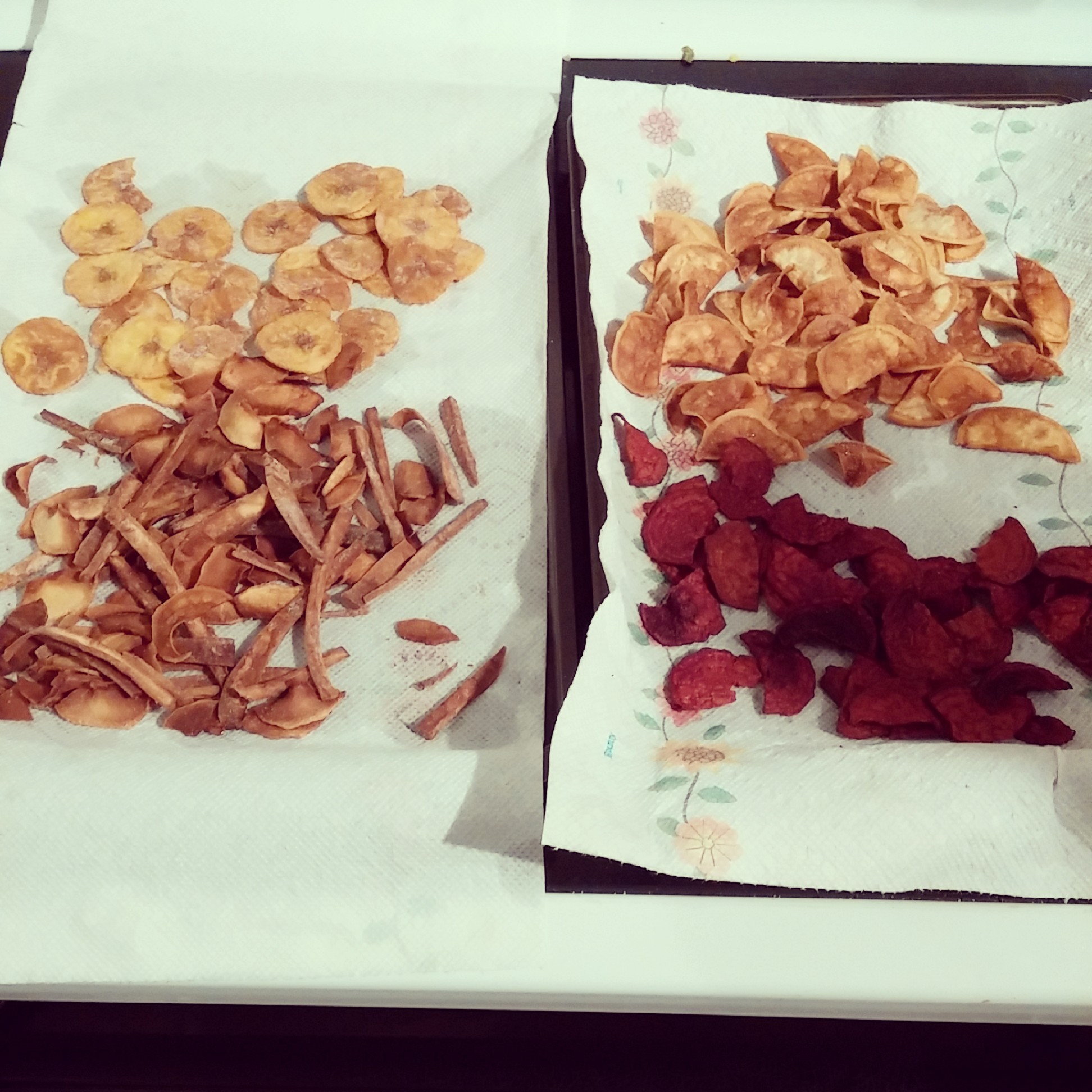
No nuts or oats? My new snacks: plantain, parsnip, sweet potato and beet chips.

No nuts or oats? My new snacks:
plantain, parsnip, sweet potato and beet chips.

My 23andMe results (I’ll go into this in more detail later) showed I have a CBS mutation. Some doctors (most notably Dr. Amy Yasko) maintain that one must deal with this “first priority mutation” before embarking on a protocol to unblock the methylation cycle. The CBS, plus two BHMT mutations, means I may have excess sulfur groups, which deplete molybdenum and BH4 and cause high taurine and high ammonia levels. I know from test results that my ammonia levels are high, so this is something I wanted to address. Working on methylation is a very long process- probably a year or two- so, if dealing with the CBS mutation is the first step, I wanted to get the show on the road. Suggestions are to eat a low-sulfur diet (my research indicated that animal protein was not as much of an issue as high-sulfur/thiol veg), so I omitted garlic, onions, most cruciferous vegetables and leafy greens and I stopped my epsom salt baths. This was hard, but I thought, It’s only for a month or so. While continuing to keep out nightshades and high-histamine foods, my allowed vegetable list was: artichokes, beetroot, carrots, celery, cucumber, lettuce, parsley, parsnips, squashes, and sweet potato.

Juice with allowed low-sulfur veg: beet, carrot, celery, cucumber, apple, ginger.

Juice with allowed low-sulfur veg:
beet, carrot, celery, cucumber, apple, ginger.

I started this at the beginning of March … aaaaannndd then I got my appointment with the medical nutrition therapist who was not only recommended by my doctor, but also by someone on one of my Facebook histamine/mast cell groups. Another side road.

The appointment was an hour and a half and she went over my symptoms and my food diary (note to self: edit your personal, private food diary before giving it to your doctor so it doesn’t say things like “want to vom”, “fight with D” and “bad poop” 😉 ). She said coconut was very high histamine which threw me for a loop since half my calories come from coconut in one form or another. I debated this fact with her for a while and eventually she said, “You’ll just have to trust me on that.” She also thought I might have a problem with salicylates, which I guess I eat in copious amounts. Joy. And she was concerned about SIBO: small intestinal bacterial overgrowth. As you can imagine, at this stage I really want to dump my diet decisions into someone else’s lap, so, while I still have health insurance that covers her service (for another few months), I am going to trust her and give her plan a fighting chance.

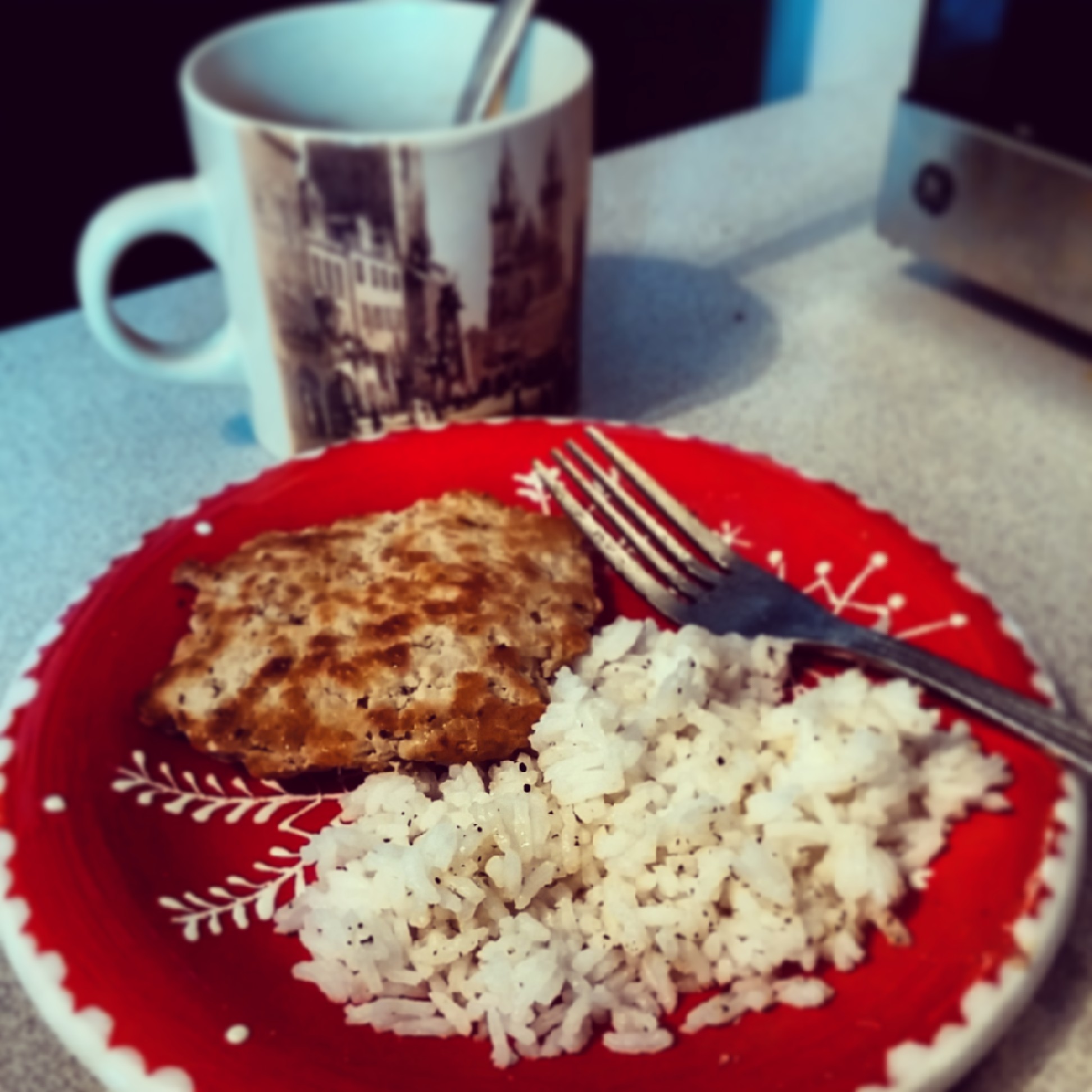
I am currently on day two of the SIBO test prep diet. I am only allowed to eat meat and rice for two days (if I’d already eliminated rice, I would only be eating meat, so thank god I procrastinated). Yesterday, I ate turkey, lamb, clear beef broth and rice with butter. Real delicious fatty decadent Kerrygold butter, for the first time in a year and a half. Butter is heaven. But no sweet treat after a meal is hell. I only eat a bit of chocolate or fruit or homemade coconut ice cream, but, judging from my extreme irritability, it is a very real addiction. I’m even salivating at the thought of a lozenge. Having an ever-present sore throat really makes lozenges a necessity!

SIBO prep meal

SIBO prep meal

I was secretly hoping that I would feel great these days on such a limited diet and it would spur me on to continue my food elimination experiments. Unfortunately, I am headachy, weak, sore and have zero appetite. Could it be the butter? Maybe, I guess, but I don’t think so. It might be because I washed my hair yesterday. It might just be ME.

In the next installment, I will tell you about my ketoacidosis scare and the strict low-histamine + low-salicylate diet that begins next week. I know you are all on the edges of your seats!

A tip from my Facebook friend, N., to excite my SIBO prep diet: Crispy waffle iron rice! (click image for recipe)

A tip from my Facebook friend, N., to excite my SIBO prep diet: Crispy waffle iron rice!
(click image for recipe)

30 Things About My Invisible Illness You May Not Know

Well, I’m a few days late (and more than a few dollars short). I’ve been working on this post for a week while not feeling well, but I’m determined to finish. Invisible Illness Awareness Week was last week and, in an effort to raise awareness, invisibleillnessweek.com has put together the “30 Things About My Illness” questionnaire below. The website offers support to patients and caregivers through articles, podcasts, illness lists and links to associations and resources. You should check it out!

30 THINGS ABOUT MY ILLNESS:

1. The illness I live with is:

Myalgic Encephalomyelitis. I have other conditions, such as mast cell activation disorder, thyroid disease, dysautonomia, hypoglycemia, IBS, dysmenorrhea, and chronic intractable migraines but these are speed bumps in relation to the Mount Everest that is ME. Undoubtedly, all these problems are connected in some way.

2. I was diagnosed with it in the year:

I was diagnosed about one year ago.

3. But I had symptoms since:

ME hit me one night like a freight train around 11pm on Halloween night, 2011. One hour I was fine, the next hour I was in the grips of what I thought was a very bad virus. Chills and drenching sweats lasted all night and… the rest is history.

Years before that, I had dealt with thyroid goiters, anaphylaxis and vasovagal syncope, but they were just blips in my otherwise healthy, normal life. ME changed that.

4. The biggest adjustment I’ve had to make is:

I could say losing my career, my social life, traveling, my income, the future I envisioned… But, really, the hardest adjustment has been a life with minimal energy expenditure: the loss of walking, running, talking exuberantly, emoting, gesticulating… I hate this still life.

5. Most people assume:

Most people assume I’m being antisocial. Most people assume that I worked too much, hit a wall and walked away and am just uncommunicative. Only my family and closest few friends know the extent of what happened to me.

6. The hardest part about mornings are:

The distressing, sinking realisation that I’ve woken up too early (and won’t go back to sleep) and had a bad night. Feeling dizzy before I’ve even opened my eyes. Being greeted with a headache and neck pain before I’ve even sat up.

7. My favorite medical TV show is:

House!! And any real life medical show like Trauma: Life in the ER. I’ve loved that stuff my whole life. They used to show real operations, graphic and unedited, on some show in Ireland when I was young and I loved watching. I’m not squeamish; I always thought I’d be working in an ER.

8. A gadget I couldn’t live without is:

My smart phone. It’s my lightweight connection to the rest of the world: news, blogs, emails, texts, photos, videos and calls. Plus, it has all my meditation CDs on it.

9. The hardest part about nights are:

For the first year I was sick, nights were lonely, terrifying, desperate, viral horror shows. There are not adequate words to describe what my nights were like. Now, the hardest part is the fear that I will not sleep well and will wake the next morning feeling worse.

10. Each day I take __ pills & vitamins.

I usually take about 26 supplements a day (double that for the number of actual pills). Currently, I’m on a vitamin and supplement hiatus, so I am only taking probiotics, magnesium, melatonin, Zyrtec, nasal spray, topical antibiotic cream, and a few times a week, when I have a headache or can’t sleep, I take Tylenol, Unisom, and Tizanidine.

11. Regarding alternative treatments I:

I have tried most of it: acupuncture, massage, craniosacral therapy, reiki, energy healers, meditation, breathing exercises, diet, stretches, Chinese herbs, supplements blah blah blagh. I don’t know what constitutes “alternative”, but I would do anything to get better.

12. If I had to choose between an invisible illness or visible I would choose:

I have a half-written blog post called “Visible Illness” because I look sick ~ or, at least, I look different than I used to ~ and I have caught myself feeling jealous of the “healthy”-looking ME patients I have seen online. However, my illness is invisible in the sense that nobody can see just how bad it is by looking at me ~ especially during the first year, when I pushed through everything to go to work.

Which would I prefer? Neither. Illness is evil and, ultimately, nobody can ever comprehend a sick person’s suffering, regardless of how bad they look on the outside.

13. Regarding working and career:

I never stop dreaming about my next career. I have a different idea every day. I miss working, I miss having responsibility and helping people, I miss being good at something, I miss having the security of an income.

14. People would be surprised to know:

Those that haven’t seen me in a while would be surprised to see that I have gone from an energetic, talkative, happy, demonstrative, busy person to someone who moves very little and doesn’t leave the house. Those close to me might be surprised to know just how black my blackness was this past year and how often I thought about suicide (it took all my guts to write that word. It’s shameful and scary, but true).

15. The hardest thing to accept about my new reality has been:

That I can’t exert energy. That’s it. It rules all else. I can’t find a new job, I can’t make plans for a different life than the one I had imagined, I can’t socialise or cook food or deal with banks or disability or do anything to adapt and move on. I only feel ok if I am flat on my back, not moving. But I keep trying to make progress and those endeavors always cause me to be in pain. And I’m intolerant to painkillers. So it’s a continual try-to-gain-ground-get-knocked-down cycle.

16. Something I never thought I could do with my illness that I did was:

Admit it – admit I was a sick person. Also, there was a time when I wondered if I’d ever laugh again. When the headaches ease up, laughter returns. It’s glorious.

17. The commercials about my illness:

There are none, but there are commercials about fibromyalgia and, of course, they show women able to move freely if they take Lyrica. Imagine the only symptom being achiness! Imagine a pill taking care of it! Sign me up!

18. Something I really miss doing since I was diagnosed is:

See this post. Dancing with my dogs on the beach, eating whatever I want, staying up late, talking nonstop, getting excited, getting angry, having a career, dreaming up future plans, driving myself places, traveling, having financial security… See the recurring theme?

19. It was really hard to have to give up:

I want to say everything in #18, but I’ll change it up and say getting dressed and feeling pretty. I miss a great pair of jeans and make-me-feel-tall boots and thinking my eyes look bright and generally feeling attractive.

20. A new hobby I have taken up since my diagnosis is:

Meditation. I couldn’t live without it now.

21. If I could have one day of feeling normal again I would:

Only one day? So not enough time to go to Europe? Can I plan this day in advance and get my loved ones to come to me? Ok, I’ll assume that’s a yes. Then I would get everyone I love to Seattle in advance and on The Day we would hike, talk, laugh, play games, eat a lot, get rip-roaring drunk, never have to rest and then sleep soundly, deeply, peacefully ~ without a cpap and with my husband and dogs.

22. My illness has taught me:

How under-equipped society is to help the disabled, sick and elderly. It is astounding and harrowing to realise how difficult and time-consuming it is to drive, park, get to a doctor’s office, get home help, get financial help ~ everything! And, when you’re sick, everything costs more, so what happens when you can’t work? I worry about old age all the time.

23. One thing people say that gets under my skin is:

When people say nothing. When friends don’t want to “burden” me with their own problems or don’t contact me because they don’t want to “impose” or don’t text me because I haven’t responded in days/weeks and they think the ball’s in my court or that they don’t want to keep “bothering” me. It is incredibly comforting when someone asks questions about my illness or vents to me about their hardships or gossips about work or continues to let me know they are thinking about me. Once in a while, I would love my husband (and family) to take a break from being the strong caregiver and wallow in a bit of mutual mourning: “This is so fucking unfair! We had dreams and plans! We had only just stopped living paycheck to paycheck! You were so alive and I am turned inside out to see your life force disappearing…” Maybe it’s selfish, but, someone else screaming at the sky would make me feel a little less alone.

24. But I love it when people:

Remind me that, even in this diminished capacity, I am still vital and worthy of being a friend.

25. My favorite motto, scripture, quote that gets me through tough times is:

“As long as you are breathing, there is more right with you than wrong with you.” ~ Jon Kabat-Zinn

Also, my mother once told me she had read that if you have one pain-free day, there is the possibility of being permanently pain-free. I think about this all the time on days like today: Just because I’m having a bad day today, it doesn’t mean I will always have bad days. There will be days again without headaches. There will be days when I can move more freely.

26. When someone is diagnosed I’d like to tell them:

You will improve. That was the first line of an email someone wrote to me and I didn’t read any further, I just closed the computer and wept. I needed to know that life could and would be bearable one day.

Also, I caution anyone recently diagnosed to not read all the horror stories about ME. It is good to raise awareness about the severity of this disease,  but, after doing tireless research for months, my fear drowned out what my body was whispering. Stop pushing yourself, rest, listen to your body and believe you will improve. 

27. Something that has surprised me about living with an illness is:

How many of us there are ~ in every country, of every age, ethnicity and socioeconomic standing. I am amazed and grateful for how many of us are online, sharing advice and giving support to each other. Sometimes, you lot are all that gets me through.

28. The nicest thing someone did for me when I wasn’t feeling well was:

Not leave me. My husband, family and a few friends have wrapped themselves around me ~ physically and virtually ~ and given me the security that I have SWAT team back-up in this war.

29. I’m involved with Invisible Illness Week because:

I’m quoting Linds: “I think it’s a great way to bring much needed awareness to the struggles others endure. The illness is invisible, not the person.”

30. The fact that you read this list makes me feel:

Honoured. Or honored, depending on where you learned to spell. 🙂

Also check out my other blamily members’ answers to this questionnaire: Jess, Marie, Christine, Luminescence, Trisha… Who have I missed? Let me know if you posted this questionnaire to your blog and I will link it here.