30 Things About My Invisible Illness You May Not Know

Well, I’m a few days late (and more than a few dollars short). I’ve been working on this post for a week while not feeling well, but I’m determined to finish. Invisible Illness Awareness Week was last week and, in an effort to raise awareness, invisibleillnessweek.com has put together the “30 Things About My Illness” questionnaire below. The website offers support to patients and caregivers through articles, podcasts, illness lists and links to associations and resources. You should check it out!

30 THINGS ABOUT MY ILLNESS:

1. The illness I live with is:

Myalgic Encephalomyelitis. I have other conditions, such as mast cell activation disorder, thyroid disease, dysautonomia, hypoglycemia, IBS, dysmenorrhea, and chronic intractable migraines but these are speed bumps in relation to the Mount Everest that is ME. Undoubtedly, all these problems are connected in some way.

2. I was diagnosed with it in the year:

I was diagnosed about one year ago.

3. But I had symptoms since:

ME hit me one night like a freight train around 11pm on Halloween night, 2011. One hour I was fine, the next hour I was in the grips of what I thought was a very bad virus. Chills and drenching sweats lasted all night and… the rest is history.

Years before that, I had dealt with thyroid goiters, anaphylaxis and vasovagal syncope, but they were just blips in my otherwise healthy, normal life. ME changed that.

4. The biggest adjustment I’ve had to make is:

I could say losing my career, my social life, traveling, my income, the future I envisioned… But, really, the hardest adjustment has been a life with minimal energy expenditure: the loss of walking, running, talking exuberantly, emoting, gesticulating… I hate this still life.

5. Most people assume:

Most people assume I’m being antisocial. Most people assume that I worked too much, hit a wall and walked away and am just uncommunicative. Only my family and closest few friends know the extent of what happened to me.

6. The hardest part about mornings are:

The distressing, sinking realisation that I’ve woken up too early (and won’t go back to sleep) and had a bad night. Feeling dizzy before I’ve even opened my eyes. Being greeted with a headache and neck pain before I’ve even sat up.

7. My favorite medical TV show is:

House!! And any real life medical show like Trauma: Life in the ER. I’ve loved that stuff my whole life. They used to show real operations, graphic and unedited, on some show in Ireland when I was young and I loved watching. I’m not squeamish; I always thought I’d be working in an ER.

8. A gadget I couldn’t live without is:

My smart phone. It’s my lightweight connection to the rest of the world: news, blogs, emails, texts, photos, videos and calls. Plus, it has all my meditation CDs on it.

9. The hardest part about nights are:

For the first year I was sick, nights were lonely, terrifying, desperate, viral horror shows. There are not adequate words to describe what my nights were like. Now, the hardest part is the fear that I will not sleep well and will wake the next morning feeling worse.

10. Each day I take __ pills & vitamins.

I usually take about 26 supplements a day (double that for the number of actual pills). Currently, I’m on a vitamin and supplement hiatus, so I am only taking probiotics, magnesium, melatonin, Zyrtec, nasal spray, topical antibiotic cream, and a few times a week, when I have a headache or can’t sleep, I take Tylenol, Unisom, and Tizanidine.

11. Regarding alternative treatments I:

I have tried most of it: acupuncture, massage, craniosacral therapy, reiki, energy healers, meditation, breathing exercises, diet, stretches, Chinese herbs, supplements blah blah blagh. I don’t know what constitutes “alternative”, but I would do anything to get better.

12. If I had to choose between an invisible illness or visible I would choose:

I have a half-written blog post called “Visible Illness” because I look sick ~ or, at least, I look different than I used to ~ and I have caught myself feeling jealous of the “healthy”-looking ME patients I have seen online. However, my illness is invisible in the sense that nobody can see just how bad it is by looking at me ~ especially during the first year, when I pushed through everything to go to work.

Which would I prefer? Neither. Illness is evil and, ultimately, nobody can ever comprehend a sick person’s suffering, regardless of how bad they look on the outside.

13. Regarding working and career:

I never stop dreaming about my next career. I have a different idea every day. I miss working, I miss having responsibility and helping people, I miss being good at something, I miss having the security of an income.

14. People would be surprised to know:

Those that haven’t seen me in a while would be surprised to see that I have gone from an energetic, talkative, happy, demonstrative, busy person to someone who moves very little and doesn’t leave the house. Those close to me might be surprised to know just how black my blackness was this past year and how often I thought about suicide (it took all my guts to write that word. It’s shameful and scary, but true).

15. The hardest thing to accept about my new reality has been:

That I can’t exert energy. That’s it. It rules all else. I can’t find a new job, I can’t make plans for a different life than the one I had imagined, I can’t socialise or cook food or deal with banks or disability or do anything to adapt and move on. I only feel ok if I am flat on my back, not moving. But I keep trying to make progress and those endeavors always cause me to be in pain. And I’m intolerant to painkillers. So it’s a continual try-to-gain-ground-get-knocked-down cycle.

16. Something I never thought I could do with my illness that I did was:

Admit it – admit I was a sick person. Also, there was a time when I wondered if I’d ever laugh again. When the headaches ease up, laughter returns. It’s glorious.

17. The commercials about my illness:

There are none, but there are commercials about fibromyalgia and, of course, they show women able to move freely if they take Lyrica. Imagine the only symptom being achiness! Imagine a pill taking care of it! Sign me up!

18. Something I really miss doing since I was diagnosed is:

See this post. Dancing with my dogs on the beach, eating whatever I want, staying up late, talking nonstop, getting excited, getting angry, having a career, dreaming up future plans, driving myself places, traveling, having financial security… See the recurring theme?

19. It was really hard to have to give up:

I want to say everything in #18, but I’ll change it up and say getting dressed and feeling pretty. I miss a great pair of jeans and make-me-feel-tall boots and thinking my eyes look bright and generally feeling attractive.

20. A new hobby I have taken up since my diagnosis is:

Meditation. I couldn’t live without it now.

21. If I could have one day of feeling normal again I would:

Only one day? So not enough time to go to Europe? Can I plan this day in advance and get my loved ones to come to me? Ok, I’ll assume that’s a yes. Then I would get everyone I love to Seattle in advance and on The Day we would hike, talk, laugh, play games, eat a lot, get rip-roaring drunk, never have to rest and then sleep soundly, deeply, peacefully ~ without a cpap and with my husband and dogs.

22. My illness has taught me:

How under-equipped society is to help the disabled, sick and elderly. It is astounding and harrowing to realise how difficult and time-consuming it is to drive, park, get to a doctor’s office, get home help, get financial help ~ everything! And, when you’re sick, everything costs more, so what happens when you can’t work? I worry about old age all the time.

23. One thing people say that gets under my skin is:

When people say nothing. When friends don’t want to “burden” me with their own problems or don’t contact me because they don’t want to “impose” or don’t text me because I haven’t responded in days/weeks and they think the ball’s in my court or that they don’t want to keep “bothering” me. It is incredibly comforting when someone asks questions about my illness or vents to me about their hardships or gossips about work or continues to let me know they are thinking about me. Once in a while, I would love my husband (and family) to take a break from being the strong caregiver and wallow in a bit of mutual mourning: “This is so fucking unfair! We had dreams and plans! We had only just stopped living paycheck to paycheck! You were so alive and I am turned inside out to see your life force disappearing…” Maybe it’s selfish, but, someone else screaming at the sky would make me feel a little less alone.

24. But I love it when people:

Remind me that, even in this diminished capacity, I am still vital and worthy of being a friend.

25. My favorite motto, scripture, quote that gets me through tough times is:

“As long as you are breathing, there is more right with you than wrong with you.” ~ Jon Kabat-Zinn

Also, my mother once told me she had read that if you have one pain-free day, there is the possibility of being permanently pain-free. I think about this all the time on days like today: Just because I’m having a bad day today, it doesn’t mean I will always have bad days. There will be days again without headaches. There will be days when I can move more freely.

26. When someone is diagnosed I’d like to tell them:

You will improve. That was the first line of an email someone wrote to me and I didn’t read any further, I just closed the computer and wept. I needed to know that life could and would be bearable one day.

Also, I caution anyone recently diagnosed to not read all the horror stories about ME. It is good to raise awareness about the severity of this disease,  but, after doing tireless research for months, my fear drowned out what my body was whispering. Stop pushing yourself, rest, listen to your body and believe you will improve. 

27. Something that has surprised me about living with an illness is:

How many of us there are ~ in every country, of every age, ethnicity and socioeconomic standing. I am amazed and grateful for how many of us are online, sharing advice and giving support to each other. Sometimes, you lot are all that gets me through.

28. The nicest thing someone did for me when I wasn’t feeling well was:

Not leave me. My husband, family and a few friends have wrapped themselves around me ~ physically and virtually ~ and given me the security that I have SWAT team back-up in this war.

29. I’m involved with Invisible Illness Week because:

I’m quoting Linds: “I think it’s a great way to bring much needed awareness to the struggles others endure. The illness is invisible, not the person.”

30. The fact that you read this list makes me feel:

Honoured. Or honored, depending on where you learned to spell. 🙂

Also check out my other blamily members’ answers to this questionnaire: Jess, Marie, Christine, Luminescence, Trisha… Who have I missed? Let me know if you posted this questionnaire to your blog and I will link it here.

Doctor follow-up: symptoms, sleep, diet.

I haven’t taken vitamins or supplements in 19 days (except probiotics in the morning, magnesium at night and fish oil here and there). When I wasn’t sleeping, I decided to wash-out everything and, when I saw the Good Doctor last week, she wanted me to hold off on adding them back until I had challenged some foods. So, in the next month, I will be challenging soy and citrus, which I haven’t eaten in a month, and corn, dairy and eggs, which I haven’t eaten in a year. Honestly, I don’t know how I will identify symptoms ~ for no reason, sleep disappears and headaches hit me like a freight train. A few days ago I woke up with all over muscle pain: thick, heavy, stiff, achy, contracted muscles from tip to toe. I started waking up in the night again in a full-body tense stretch, jaw clamped down painfully, neck and back arched. It is coupled with daytime tiredness that stopped me writing, reading, talking… This wasn’t the bricked feeling of ATP running out in my cells, this was pure tired, like I was convalescing. It’s still with me today, but I want to write, so I force myself to sit at the computer.

I hate when old symptoms return. I thought perhaps spine pain and muscle aches were gone for good, but here I am with a new bottle of Tizanidine. I made a list of what could be causing it: Scooter? Adding back legumes? No supplements? Weather? Period? This week has also felt like awfully bad allergies, which shouldn’t be happening at the end of August. I actually had to take my inhaler and I couldn’t wear my cpap last night because my nose was plugged, even after multiple shots of antihistamine nasal spray. My headaches have mostly dissipated, only rearing up when I tweak my neck (which is about every other day; the nighttime muscle contractions don’t help), but I’m left with leaden cotton wool filling my skull and plugging my orifices. It feels like an orange on a toothpick, my neck too weak to hold the bobble head. I’m chalking it up to the weather. Seattle turned into a tropical rain forest this week. The temperature in my room is 74 degrees and the humidity is 74%. I keep saying, “It’s so close!” The only way to describe it.

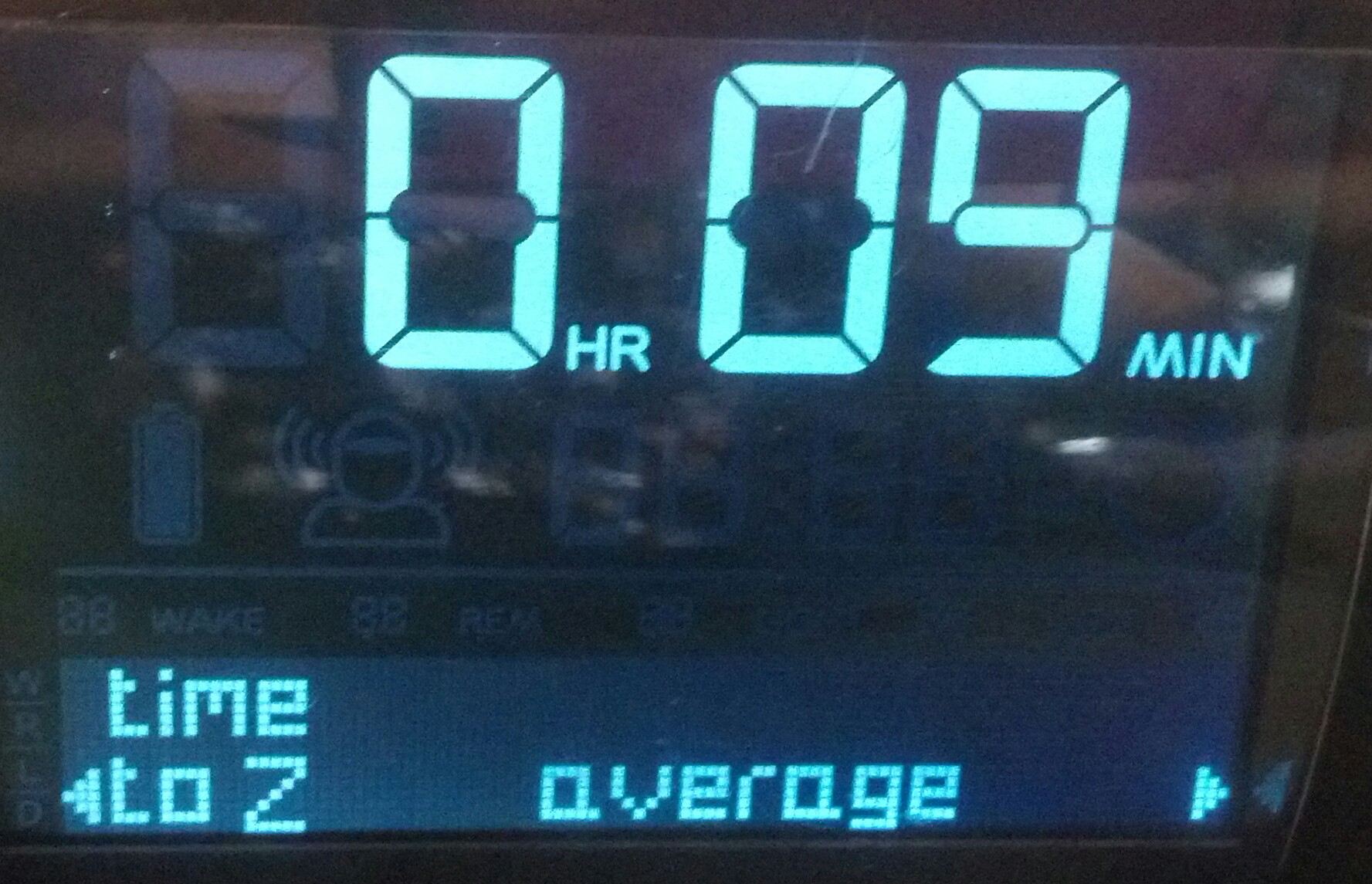
Some good news: I’ve actually slept relatively well the last 7 nights ~ with only melatonin ~ which is miraculous. I have had a resurgence of mild night sweats for the first time in a very long time. But, we’re going to ignore that and the lack of deep sleep and concentrate on the positives: My current average hours of sleep, average time awake and average time to fall asleep:

An average of 8.5 hours sleep? First time ever in my life!

An average of 8.5 hours sleep? First time ever in my life!

38 mins awake, on average,  when it used to be 2 hours!

38 mins awake, on average, when it used to be 2 hours!

A glorious average of 9 mins to fall asleep! (this was tipped by the unheard-of ONE MINUTE it took me to fall asleep last night!)

A glorious average of 9 mins to fall asleep! (this was tipped by the unheard-of ONE MINUTE it took me to fall asleep last night!)

Other things I talked about with the Good Doc: She doesn’t feel comfortable with prescribing saline IV infusions, she is thinking about digestive enzymes, she wants to get my vitmain D levels between 50 and 80 (they were 30 last March), and she doesn’t want to do a tryptase test to look for Mast Cell Activation Disorder (MCAD).

If anyone is interested in my elimination diet, she said she thought coconut sugar would be okay (I haven’t quit sugar yet; I’m a junkie) and she wanted me to avoid xanthan gum, guar gum and carageenan. This is virtually impossible using dairy-free products, so I’m not taking it too seriously. My husband spent half an hour in Whole Foods reading the labels of nut and coconut milks: if you want to avoid sugar, cane juice and soy lecithin, you won’t be able to avoid carageenan (if anyone has more info, please tell me!). The best bet seems to be Pacific Almond Milk (which has carageenan and “natural flavor”) and Rice Dream, if you don’t mind the calorie and sugar content (I love the taste, but it’s high-glycemic load causes my blood sugar to crash).

She also wanted me to watch the teas I drink, since this is the only thing I drink besides water. You can get all the info about teas from this FoodBabe blog. Basically, I am trying to stick with Numi, Traditional Medicinals, Rishi (which is even more expensive than the other expensive organic teas) and maybe Choice. I splurged and bought this yesterday: Rishi Turmeric Ginger Loose Leaf Tea ~ how good does that sound for what ails me?! (I reckon, in the good ol’ days, I would have spent about that much on one cocktail, including tip, so I deserve it. I ignored the voice that said, Uh, you have no income.)

Lastly, I saw my endocrinologist for my yearly check-up. He increased my Levothyroxine to 37.5mcg five days a week and 25mcg on the weekends and kept my liothyronine at 10mcg/day. He also thought I should see an immunologist. I didn’t even know they existed. Not that I think they could find anything… except maybe help with my MCAD theory (that’ll be another post).

That’s my update. In a few days, my Mother is coming from Ireland for THREE WEEKS to help us out and take a bit of the burden off my husband. One of my brothers is flying across the country to see me at the end of September and my other brother, the pilot, has a layover here the same week. It’s so exciting! Gratitude today, once again, is for my family. They continually help me, encourage me and remember me.

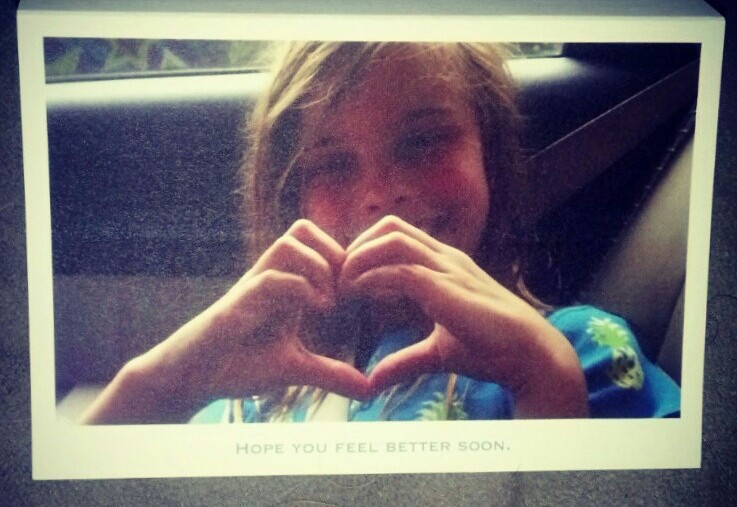
My beautiful niece sent me this card. :)

My beautiful niece sent me this card. 🙂

I was normal last night!

I realise not everyone in the world is waiting with bated breath to find out how each of my nights goes, but I’m still going to share because I have nowhere else to SHOUT IT FROM THE ROOFTOPS! Here is my Zeo graph from last night:

12am to 8am

12am to 8am

That’s 8 hours of sleep with only 6 awakenings (which might as well be zero because I only remember being awake twice briefly from nightmares). I think it is the best graph I have ever had since starting to wear the Zeo 4 years ago. This was with NO DRUGS except Melatonin!! And, this morning, I feel better than I have in so long.

I want to remember this because it was odd: I didn’t sleep for 4 nights; I stopped my supplements except probiotics, fish oil and magnesium before bed; I walked fewer steps (as in, only 500-900 steps every day this week. I know, that’s horrifically sedentary); I took 1/2 of a Unisom and slept 8 hours and felt okay; I took 1/2 of a Unisom again, slept 8 hours and, yesterday, felt absolutely horrible. I kept saying, “Why do I feel so much worse today after I got two nights’ sleep??” It was the drug. Drugs just don’t agree with me. So, although I am very grateful to have Unisom, there is no way I can take it regularly.

Last night I dared to go to bed with no sleep aids except 1mg of Melatonin and, lo and behold, 8 hours of sleep with regular sleep cycles and a graph that looks like normal people’s graphs! I am convinced that, if I could sleep like that for 6 months, I wouldn’t be sick anymore. GRATITUDE GRATITUDE GRATITUDE!

Other things I want to remember that could have contributed to good sleep: I took an epsom salt bath and did very easy stretches; I put tiger balm on my neck before bed; I wore the Wisp cpap mask instead of the nasal pillows; I ate a larger dinner than usual (rice and veg), but earlier in the evening (5ish); I cuddled with my honey…

Also, I’m sure you want to see how I spent the first few hours today in bed, “gathering my strength”:

legs trapped in bed

leg warmers

NYTimes: When Lyme Disease Lasts and Lasts; Why I Donated My Stool; The Morality of Meditation.

A few New York Times Articles for you while I try to crawl back up from a hellish low (body swollen; heart pounding away for no reason; stiff, achy, sore muscles; headache; dizzy; flu-y; despairing…):

When Lyme Disease Lasts and Lasts

Screenshot_2013-07-08-09-19-33
JULY 8, 2013
By JANE E. BRODY

Chronic Lyme disease is a highly controversial catch-all term for a host of long-lasting symptoms that may or may not stem from prior infection with the bacterium that causes acute Lyme disease. Often misdiagnosed and mistreated, chronic Lyme disease leaves thousands of people physically and mentally debilitated and without a medically established recourse.

Mary Rasenberger, 51, a New York lawyer, experienced “a series of ailments going back 10 years.” She was finally given a diagnosis of chronic Lyme disease last summer after having been told that she had multiple sclerosis.

Her long-term symptoms were “aching joints, headaches and indescribable fatigue” that made her miserable and unable to exercise. In the last few years, two additional symptoms developed: neuropathy in her limbs and face, and vision problems. In an interview, she said she “woke up every day feeling sick”; if she became overheated, she felt as if she had the flu.

Yet a test for Lyme disease came back negative. Desperate, she finally consulted a Lyme “specialist,” one of a number of doctors who treat patients with symptoms like Ms. Rasenberger’s with long-term antibiotics, despite the fact that such a regimen has shown no significant or lasting benefit in controlled clinical trials. These trials involved randomly assigning patients to the antibiotic Rocephin (often administered intravenously) or a placebo, with neither patients nor those evaluating their symptoms aware of who got what.

Still, after several months on antibiotics Ms. Rasenberger, like many similar patients, said she felt “completely healthy for the first time in years.” Each time she tries to stop the medication, her debilitating symptoms return.

Reports like Ms. Rasenberger’s are hardly unusual, and experts now realize that some people who get Lyme disease go on to develop a chronic illness even if their initial infection was promptly diagnosed and correctly treated. Approximately 10 percent to 15 percent of people who are treated for medically documented Lyme disease develop persistent or recurrent symptoms of fatigue, musculoskeletal pain and cognitive complaints.

The condition is known as post-treatment Lyme disease syndrome, or PTLDS. “It is a real disorder, although nobody really knows what’s happening,” Dr. John N. Aucott, an infectious disease specialist in Lutherville, Md., said in an interview.

“A lot of patients have been told they’re not really sick, just tired or depressed,” he added. “But this is not normal fatigue, and it’s not caused by depression” — although depression certainly can result from the patient’s seriously diminished quality of life.

Antibiotic therapy for PTLDS is based on disputed reports that these patients may harbor hidden reservoirs of the spirochete causing Lyme disease, Borrelia burgdorferi, long after their initial treatment. But researchers who have studied the therapy have found it of little or no benefit, and many say the regimen is fraught with hazards that could be even worse than the illness.

Risks include the development of an antibiotic-resistant infection, intractable diarrhea, kidney or liver damage and, as happened to a 30-year-old woman treated with an antibiotic through a catheter, death from a systemic infection called sepsis.

People with PTLDS are not hypochondriacs seeking attention or sluggards wanting to avoid work or chores, Dr. Aucott said, though they may benefit from psychotherapy that helps them cope better with their symptoms.

“These are high-functioning people — couch potatoes don’t get Lyme disease,” he said. “They are not crazy, and the doctors who treat them are not evil. These are desperate people trying to get better, and well-intentioned doctors who are trying to help them.”

But until the causes of PTLDS are discerned, it will be difficult for researchers to find effective therapies. Among the possible causes of the syndrome are prolonged post-infection fatigue and an autoimmune reaction to the infecting organism, according to a recent book by Dr. Adriana Marques of the National Institute of Allergy and Infectious Diseases.

As for why some people with PTLDS seem to benefit from intensive antibiotic therapy, at least temporarily, Dr. Aucott suggested a few theories. The antibiotics may have an anti-inflammatory effect that relieves pain and swelling. Alternatively, patients may have a low-level, persistent infection that is temporarily suppressed by antibiotics — but not killed by them. Or it may be that some PTLDS patients experience a placebo effect, improving because they believe the treatment will help and because someone is finally taking their symptoms seriously.

Complicating the picture is the fact that some people with PTLDS symptoms apparently never had Lyme disease in the first place, Dr. Marques said in an interview. There are other infectious organisms — Epstein-Barr virus, for example — that can produce similar symptoms and may be the real culprits.

But experts cannot rule out Lyme spirochete as a cause, either. Many, if not most, people who are infected with it never know they have been bitten by the tiny deer tick that spreads the bacterium from animals to people. They may never develop or notice the red rash that can result. Even when a rash occurs, only one in five is the characteristic bull’s-eye associated with Lyme disease. Most are solid red and round or oval.

Such people may never receive treatment for the infection in its early stages and end up weeks, months, even years later with the kinds of symptoms that have plagued Ms. Rasenberger. Symptoms may develop gradually, as they did in my dog, which had minimal effects from a Lyme-carrying tick until nine months later, when he collapsed, unable to eat or drink on his own.

Both Dr. Aucott and Dr. Marques said more research is desperately needed if people are to get the help they need. “This is a huge disease that’s only going to get bigger, yet it receives only a tiny fraction of the N.I.H. budget,” Dr. Aucott said, referring to the National Institutes of Health.

Given the uncertainties about chronic Lyme disease, prevention is more important than ever. Avoid walking through brush and high grass. When hiking in the woods, camping, gardening or mowing the lawn, wear long, light-colored clothing and tuck pant legs into tightfitting socks. Spray exposed skin with a 20-percent DEET insect repellent and clothing with permethrin. Remove clothes before coming back indoors, and wash and dry them separately.

Shower as soon as possible after being outdoors, using a washcloth or loofah, and check your body carefully, especially in skin folds, for attached ticks. They should be carefully removed with a tweezer without crushing them by pulling gently and steadily near the mouth. Then apply an antiseptic to the site.


Why I Donated My Stool

Screenshot_2013-07-08-09-38-39

July 6, 2013
By MARIE MYUNG-OK LEE

The microbiome of the digestive system is particularly important. At least a thousand strains of bacteria coexist in a healthy human bowel, and beneficial bacteria are involved in vitamin production, digestion and keeping “bad” bacteria in check. Thus, changes to the gut microbiome can precipitate disease. For instance, taking a powerful antibiotic wipes out both good and bad gut flora, which can lead to opportunistic bacteria taking over and causing infection.

Many people who suffer from clostridium difficile, a dangerous strain of bacteria that is becoming epidemic in hospitals and nursing homes, got it this way. The idea behind fecal transfers is that restoring colonies of healthy bacteria can either dilute or crowd out these harmful strains. And it seems to work: in January, The New England Journal of Medicine reported that the first randomized clinical trial of F.M.T.’s for clostridium difficile had been halted because the treatment worked so well that it was unethical to withhold it from the control group.

The causes of ulcerative colitis are more mysterious than those of clostridium difficile (doctors in Gene’s case did not hazard a guess), but there is some speculation that the condition can also be traced to pathogenic bacteria. A small study of children with ulcerative colitis, published this spring in The Journal of Pediatric Gastroenterology and Nutrition, found that 78 percent had a reduction in symptoms within a week of being treated with fecal transfers.

The idea of using stool as medicine is not new. In the 16th century, during the Ming dynasty, fermented fecal concoctions, euphemistically named “yellow soup,” were used for digestive problems. In the 17th century, Christian Franz Paullini, a German physician, compiled a stool recipe book for treating dysentery and other digestive ailments. In the United States, fecal transplants have long been used on sick horses, and in 1958, Dr. Ben Eiseman pioneered the concept in humans, writing about the use of a fecal enema as a last-ditch effort for a patient with clostridium difficile.

Today, around 3,000 F.M.T.’s have been performed worldwide. No significant adverse reactions have been definitively attributed to the procedure (though there have been two F.M.T.’s that may have led to the transmission of the norovirus stomach bug, both of which cleared on their own within days).

CONVINCED that the potential benefits outweighed the risks, Gene decided, early this year, to try F.M.T. However, this turned out to be harder than he’d expected. There are only about 16 centers in the country that even offer the treatment. Gene finally secured an appointment with Dr. Lawrence Brandt, one of the most experienced F.M.T. practitioners, only to find out, just before his visit, that Dr. Brandt was suspending his F.M.T. practice for ulcerative colitis on the advice of the hospital’s lawyers, in order to comply with a new Food and Drug Administration decision. In April, the F.D.A. decided to classify human stool that is used therapeutically as a drug, and thus approved for use only within an F.D.A.-approved clinical study.

Gene tried tracking down other doctors, but found to his frustration that almost all of them had stopped doing F.M.T.’s as a result of the agency’s somewhat ambiguous restrictions. He found one remaining gastroenterologist, R. David Shepard, who had an excellent record of treating ulcerative colitis with fecal transfers and was still doing them. But Dr. Shepard was in Florida, and Gene was now too sick to travel.

Dr. Shepard, however, had a solution: he would help Gene with the mechanics of performing a do-it-yourself F.M.T., something he’d done successfully with a handful of other patients. Gene just had to find a donor.

The donor question was a tricky one. The donor has to be healthy (and will be screened, via stool and blood, for transmissible diseases like H.I.V., as well as for pathogens and parasites); has to avoid any foods the patient might be allergic to; and has to be nearby, as freshness is an issue: the bacteria mix may begin to change once the stool leaves the body.

THIS is where I enter the story. My friends know me as being somewhat evangelical about eating fresh fruits and vegetables. I also eat a lot of naturally fermented vegetables, which contain beneficial bacteria as well as the kind of fiber that nourishes good bacteria in the gut, and I follow a gluten-free diet (Gene had found that his colitis did better off gluten). Finally, I’m regular, which is also important. In the end, it was kind of inevitable that he ask me.

After the initial weirdness of the request wore off, I told him I’d be happy to do it.

The screening took one visit to the lab. The procedure is, of course, messy and odoriferous, but it’s also simplicity itself. Gene’s marching orders were to procure a dedicated blender and sieve, enema tubing and syringe, and lots and lots of newspaper. F.M.T. basically consists of blending stool with saline, straining it, and reintroducing it into the colon via enema.

I delivered my first donation, in Tupperware, and Gene took it into the privacy of his bathroom. I stayed, just in case I was needed, and after about half an hour, he came out and told me, with a look of wonder, that he was feeling better already. Already? We checked with Dr. Shepard, who told us that, indeed, one can feel the effects that quickly.

However, a few hours later, the cramps returned. The good bacteria appeared to be doing something, but hadn’t gained a foothold in Gene’s gut. We would need to keep doing the transfers — first twice a day, then just once a day.

By early May, Gene felt well enough to get on a plane to Dr. Shepard’s center in Florida, where he received a colonoscopic F.M.T. The doctor confirmed that instead of the multiple ulcers Gene once had, there’s only a single small one remaining.

He can’t declare his ulcerative colitis “cured,” because it could still return. However, for now, the diarrhea, bleeding and mental misery are in the past.

Of course, his experience is only one story, hardly a double-blind clinical trial. And there could be risks we don’t know about: could moving the genetic material of one person to another also transfer unwanted characteristics, like a propensity toward diabetes or cancer? More studies are needed. But at the same time, the F.D.A. needs to fast-track research into this field, though it is neither glamorous nor capable of promising a blockbuster drug payoff for some corporation.

Thankfully, just two weeks ago, the agency announced that it was easing some of the restrictions it imposed in April on the use of F.M.T. for clostridium difficile. But this does not apply to ulcerative colitis. Gene had been lucky to have received one of Dr. Shepard’s last F.M.T.’s.

Gene was also lucky (or desperate enough) to find a donor. Some patients have resorted to Craigslist. There is the possibility of creating synthetic stool, but given that there are thousands of unknown species of bacteria in human stool, there’s no way to know if it would be effective. In an ideal future, a universal screening panel will be put in place so that healthy people can donate their microbiota, the way you can with blood.

The upside for patients would be huge. In a maelstrom of skyrocketing health care costs, think of what we could save, in terms of quality of life and money, with this procedure. Clostridium difficile infections alone kill about 30,000 a year and cost billions of dollars. The prescription drugs for Gene’s ulcerative colitis, let alone the doctor visits and one hospitalization, ran into the tens of thousands of dollars. The F.M.T. was basically the cost of the blender and the enema materials.

Gene gained back much of the weight he’d lost and recently returned to work. He was feeling so good that, last month, he gave a party. He’d kept his illness very private and thus most people hadn’t seen him at his sickest — to them he probably just looked like himself. But I remembered how skeletal and hollow-eyed he looked and the incredible journey he took just to fight his way back to normal. Now, thanks to some doctors who are promoting the curative powers of what we once used to think of as “waste,” Gene has a new medicine, one that’s replenishable and has no co-pay.

As for me, in a normal world, I would prefer not to discuss my stool in a public forum. But seeing my friend restored to health has made me change my attitude. Every morning (like I said, I am very regular), I find myself with a new appreciation for this bacterial world that we share.


The Morality of Meditation

Screenshot_2013-07-08-09-44-13

July 5, 2013
By DAVID DeSTENO

MEDITATION is fast becoming a fashionable tool for improving your mind. With mounting scientific evidence that the practice can enhance creativity, memory and scores on standardized intelligence tests, interest in its practical benefits is growing. A number of “mindfulness” training programs, like that developed by the engineer Chade-Meng Tan at Google, and conferences like Wisdom 2.0 for business and tech leaders, promise attendees insight into how meditation can be used to augment individual performance, leadership and productivity.

This is all well and good, but if you stop to think about it, there’s a bit of a disconnect between the (perfectly commendable) pursuit of these benefits and the purpose for which meditation was originally intended. Gaining competitive advantage on exams and increasing creativity in business weren’t of the utmost concern to Buddha and other early meditation teachers. As Buddha himself said, “I teach one thing and one only: that is, suffering and the end of suffering.” For Buddha, as for many modern spiritual leaders, the goal of meditation was as simple as that. The heightened control of the mind that meditation offers was supposed to help its practitioners see the world in a new and more compassionate way, allowing them to break free from the categorizations (us/them, self/other) that commonly divide people from one another.

But does meditation work as promised? Is its originally intended effect — the reduction of suffering — empirically demonstrable?

To put the question to the test, my lab, led in this work by the psychologist Paul Condon, joined with the neuroscientist Gaëlle Desbordes and the Buddhist lama Willa Miller to conduct an experiment whose publication is forthcoming in the journal Psychological Science. We recruited 39 people from the Boston area who were willing to take part in an eight-week course on meditation (and who had never taken any such course before). We then randomly assigned 20 of them to take part in weekly meditation classes, which also required them to practice at home using guided recordings. The remaining 19 were told that they had been placed on a waiting list for a future course.

After the eight-week period of instruction, we invited the participants to the lab for an experiment that purported to examine their memory, attention and related cognitive abilities. But as you might anticipate, what actually interested us was whether those who had been meditating would exhibit greater compassion in the face of suffering. To find out, we staged a situation designed to test the participants’ behavior before they were aware that the experiment had begun.

WHEN a participant entered the waiting area for our lab, he (or she) found three chairs, two of which were already occupied. Naturally, he sat in the remaining chair. As he waited, a fourth person, using crutches and wearing a boot for a broken foot, entered the room and audibly sighed in pain as she leaned uncomfortably against a wall. The other two people in the room — who, like the woman on crutches, secretly worked for us — ignored the woman, thus confronting the participant with a moral quandary. Would he act compassionately, giving up his chair for her, or selfishly ignore her plight?

The results were striking. Although only 16 percent of the nonmeditators gave up their seats — an admittedly disheartening fact — the proportion rose to 50 percent among those who had meditated. This increase is impressive not solely because it occurred after only eight weeks of meditation, but also because it did so within the context of a situation known to inhibit considerate behavior: witnessing others ignoring a person in distress — what psychologists call the bystander effect — reduces the odds that any single individual will help. Nonetheless, the meditation increased the compassionate response threefold.

Although we don’t yet know why meditation has this effect, one of two explanations seems likely. The first rests on meditation’s documented ability to enhance attention, which might in turn increase the odds of noticing someone in pain (as opposed to being lost in one’s own thoughts). My favored explanation, though, derives from a different aspect of meditation: its ability to foster a view that all beings are interconnected. The psychologist Piercarlo Valdesolo and I have found that any marker of affiliation between two people, even something as subtle as tapping their hands together in synchrony, causes them to feel more compassion for each other when distressed. The increased compassion of meditators, then, might stem directly from meditation’s ability to dissolve the artificial social distinctions — ethnicity, religion, ideology and the like — that divide us.

Supporting this view, recent findings by the neuroscientists Helen Weng, Richard Davidson and colleagues confirm that even relatively brief training in meditative techniques can alter neural functioning in brain areas associated with empathic understanding of others’ distress — areas whose responsiveness is also modulated by a person’s degree of felt associations with others.

So take heart. The next time you meditate, know that you’re not just benefiting yourself, you’re also benefiting your neighbors, community members and as-yet-unknown strangers by increasing the odds that you’ll feel their pain when the time comes, and act to lessen it as well.

Update: Symptoms and Doctor Appointments

Where to start? I am so behind on chronicling my life. You’d think it would be a one-liner (“Stayed home this month again, felt crappy, tried to keep spirits up.”), but there are so many subtleties to symptoms that I keep meaning to mention and so many tiny tweaks to treatments. There are so many interesting articles and blog posts that I want to comment on here and so many reasons to be hopeful and frustrated at current medical endeavors. I’ve written 100 blogs in my head this year that I thought were important and interesting ~ maybe even entertaining ~ but they never made it to the page and I’ve forgotten much of what I wanted to say. So, today, just an update.

Symptoms

First, the good news: my throat hasn’t been very sore in a while (if I don’t talk too much); my pain (below the neck) is minimal (if I don’t move too much); my dizziness is better (if I don’t stand up too much); my mood is ok (if I don’t think too much); 🙂  Haha, writing that was actually cracking me up! But, seriously, the underlying perma-symptoms of ME are stable and predictable if I don’t change my life up too much: exhaustion, achiness, tremors, horrid skin, blurry vision, stiffness, and fluishness are all manageable and (my) normal. The reality is, I feel unwell all day every day. Sometimes it makes me feel like I’m okay, I’m going to be fine and sometimes it makes me feel like I don’t want to die, I’m scared, I can’t do this anymore. My most pressing concerns lately have been, of course, the headache, terrible sleep, horrific bloating and constipation, and my free fall into less and less mobility and activity with higher and higher heart rate. Also, my brain torpor frightens me to the point that I can’t talk about it.

Thankfully, my brain pain train morphed from the high-speed TGV** to a kiddy carnival choo-choo. It still comes chugging through my skull in the afternoons and after I stare at a screen for too long, but, for the past 4 days or so, it is not torturing me. I stopped taking my Chinese herbs for a week; I don’t know if that is what caused or helped my headache, but I started them again yesterday (back down to 1/day) and we’ll see what happens.

3 weeks ago, in a place of desperation and panic about my disappearing sleep and unrelenting headache, I rummaged in my “Drugs I Don’t Take Drawer” and found gabapentin. The first night I took about 50mg (half a pill) and immediately my sleep was better. I still woke up a lot and it was unrefreshing as ever, but I slept for 8-9 hours rather than 6. That slice of heaven lasted a little over a week and now I’m back to the same terrible sleep, exacerbated by a very rare Seattle heat wave with no air conditioning. I added melatonin and went up to 150mg of gabapentin, but no relief (unless the gabapentin is the reason my headache is a better). I was prescribed trazodone for sleep, but haven’t gotten the nerve up to take it yet. I had planned to increase my dose of gabapentin first and then add doxylamine succinate and then swap the doxylamine for trazodone, if needed. Maybe I should just swap the gabapentin for trazodone since, just like last year, the gabapentin has caused awful constipation.

Let’s talk about that a bit. Within 48 hours of my first dose, things just stopped moving. It’s reached critical mass. I take a stool softener, I put soluble fiber in my tea, I drink raspberry leaf tea (thanks to a tip from Jess over at My Journey Thru ME, who wrote a great post on IBS), I take 400mg of magnesium before bed and I have been taking Miralax every single night. I’m still in bad shape, very uncomfortable, and worried that this is more dangerous than it would be in a healthy person because of my gut dysbiosis. The Good Doctor said, “You have to keep things moving because your bowels are in bad shape.” I think I’ll actually have to stop gabapentin to get back to normal.

My scariest symptom lately is my inability to do any activity without my heart rate skyrocketing. I’ve been sitting on the bathroom floor, washing my cpap equipment every week for the last 8 months. It’s never been an issue. Yesterday, my heart rate kept revving up to 110+ bpm while I sat in that same position, doing the same slow, careful scrubbing I’ve always done. This keeps happening. Taking pictures in the garden, reaching up to pick berries, talking a little too animatedly, putting sun cream on, adjusting a blanket, petting the dogs… Normally, if I were sitting down, these activities wouldn’t cause problems. Now, even sitting or lying, I feel that telltale sign (which initially registers as breathlessness, not as tachycardia), look at my HR monitor and am surprised every time: Oh, what was I thinking jiggling my foot while talking at the same time? How dare I wash my hands so vigorously. I should know better!

I can’t help thinking it is a direct result of deconditioning. It could be a direct result of illness ~ I know this is common is so many of us ~ but, the less I move, the less I’m able to move and that scares the shit out of me. So, every day I wonder: Should I push myself to “exercise” more so my body maintains some strength and life force? Or is that exactly what got me here and I should do less, less, less? This is one of the many contradictory evils of this disease: The less activity you are able to do, the more you panic and want to try doing more.

Medical professionals

I’ve had a some new appointments in the past few months:

1. An amazingly wonderful physical therapist whom I have been seeing each week. He is not really a PT; I don’t know the name for what he does. I lie on his plinth (I learned this name when I said to him, “That pain made me come off the bed. Sorry ~ ‘table’.” And he said, “Actually, ‘plinth’.”) and he finds the rotten-apple spots in my muscles and then eliminates them by restoring the circulation with magic fingers. I don’t have to move and there is very little energy expenditure (besides our tendency to talk nonstop about music, movies, books, and food. We never talk about my illness except for the initial update on my current problem areas. I probably chat more “normally” to him than anyone else in my life and always leave smiling ~ that, in itself, is worth every penny and drop of ATP). This treatment is the number one first time I have had a very obvious FIX to a problem. He worked on my lower spine pain and coccyx burning and, that evening, IT WAS GONE. And it stayed gone! He’s a magic man.

2. Stupidly, obtusely, naively, I went to see a cardiologist about my BP and HR issues, plus the fact that bowel rumbling triggers a sort of vasovagal heart flutter and lung tightening. I’m sure most of you people with ME know what’s coming. This doctor said, “I see a lot of you girls with low blood pressure and syncope problems and you all have one thing in common: low body weight. You need to gain some weight. Eat more protein and salt. I know everyone is concerned about being thin and looking good, but it’ll help. Start walking more and lifting 5 or 10lb weights and come back in 6 months.”

As carefully and stoically and graciously as I could, I said, “I am 5 foot tall. This is the heaviest I have been since college. [Here he interjected: “Right. And I bet you feel better.”] No, I don’t feel better, you moron. If I gain weight, it’ll just be fat because I can’t move very much. I don’t care what I look like because I’m just trying not to die I don’t ever get dressed or leave the house, you condescending bastard. I can’t imagine using 10lb weights because I wouldn’t be able to leave the bed for weeks can barely lift my arms, but I’ll try increasing my steps. See you never.” He’d be happy to know that I have since gained another 5lbs from the gabapentin and, shockingly, I don’t feel any different except I am even more uncomfortable in my body than I was last month (and, no, Dr. Iseealotofyougirls, I don’t mean uncomfortable with how I look, I mean it is not comfortable to lose most of your muscle tone and gain 12lbs of fat in its place!)

3. The saga of the oral appliance (OA) for sleep apnea. Here’s the wrap up: I saw the orthodontist in April, waited over a month before being told I had to see a sleep specialist again for insurance to approve the OA, and then waited over ANOTHER month before being called in to fit the OA (a 2 hour appointment!). I slept with it in for 5 hours and woke up in extreme pain. Yes, it had the obvious repercussions, such as temporarily changing my bite and making my TMJ sore, but the big problem was pain stabbing into my top and bottom right canines. It felt like they had been drilled into without anesthetic. So, back to the orthodontist for another fitting, which ended in a decision to send the appliance back to the lab for tweaking. Milo’s Law: if it can go wrong, it will go wrong for me. It’ll be another 3 weeks before it comes back from the lab.

4. On a good note, after I saw my GP, she sent me a letter saying she was shocked by my decline and panicked to find something to help me and sorry the medical community is failing me and honored that I allowed her to take this journey with me. I wish I could reprint the letter here because it could restore some faith in medical professionals, but I want to be respectful of her privacy. She is leaving for her annual 2-month break, but is seeing me next week on her last day and is willing to run some new tests (finally!). I’ve researched nonstop for the last month, trying to decide what tests to request, but I’ve ended up more confused than when I started. I need to email her tomorrow with my list. If anyone has any advice, please let me know. I can always talk to her about additional tests at the appointment. Here are my thoughts:

  • Mycoplasma tests
  • Cytokine profile
  • NK cell function test
  • Hormones (ACTH, LH, HGH, testosterone, insulin like growth factor(?))
  • RNase L Panel
  • Immunoglobulin
  • Lactic acid
  • folate
  • DHEA sulphate
  • Heavy metals
  • Amino Acid
  • IgG (?)
  • potassium, copper and …?

For disability (but really don’t want to do):

  • Neuropsychological Testing
  • VO2 Max (although it would be a 1-day stress test done by somebody who doesn’t know about ME)
  • tilt table test


Daily gratitude:
I am grateful for the few friends I have.
I am grateful for the few hours I sleep.
I am grateful for the little energy I have.
I am grateful for the still life I lead.

** I’m sure there are faster trains now, but, back in the 90s, I took the TGV all over Europe and its speed made a lasting impression. I still say “tay gjay vay”, pronouncing the letters in French, which is how I learned it.